These tips circulate every storm and cold snap. Here is what actually works, with the limits and warnings that matter.
If you suspect carbon monoxide poisoning, get everyone outside and call 112 or 999. Stay out until advised it is safe. Fresh air alone does not treat poisoning.[5]
If a carbon monoxide alarm sounds or you suspect a gas leak, switch off appliances, open doors and windows, go outside and call Gas Networks Ireland on 1800 20 50 50. Do not go back in until it is safe.[5]
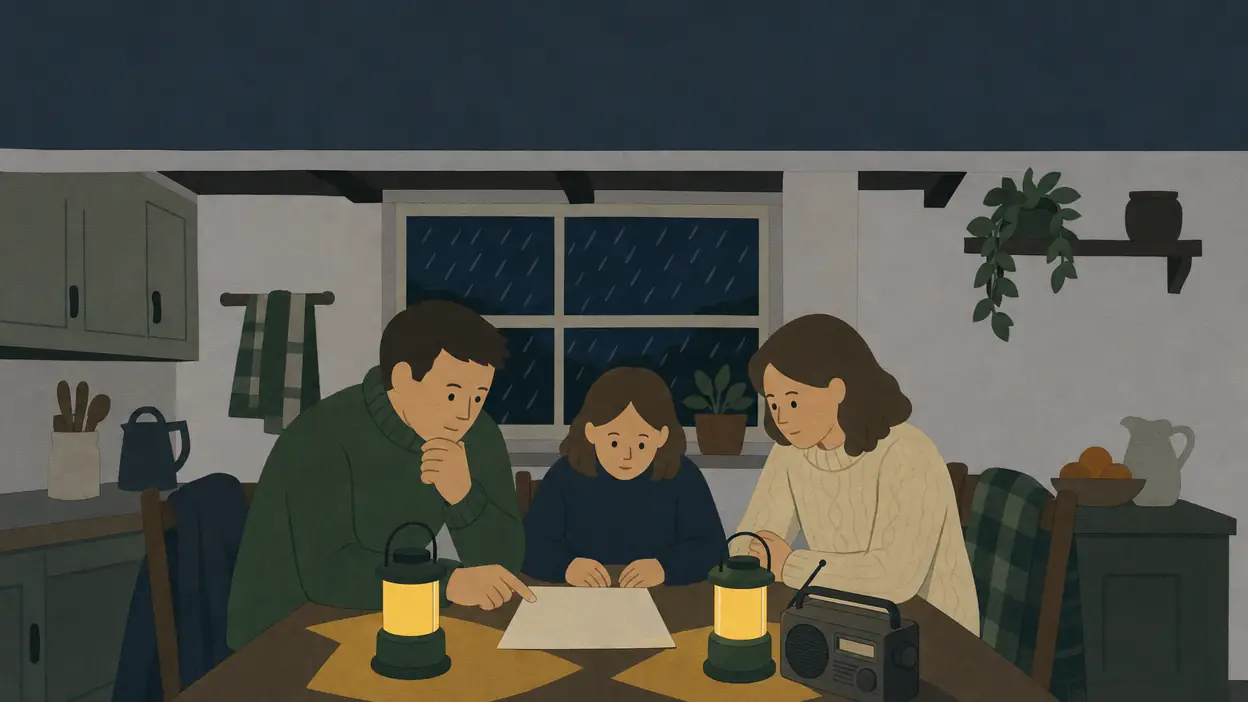
Keeping warm
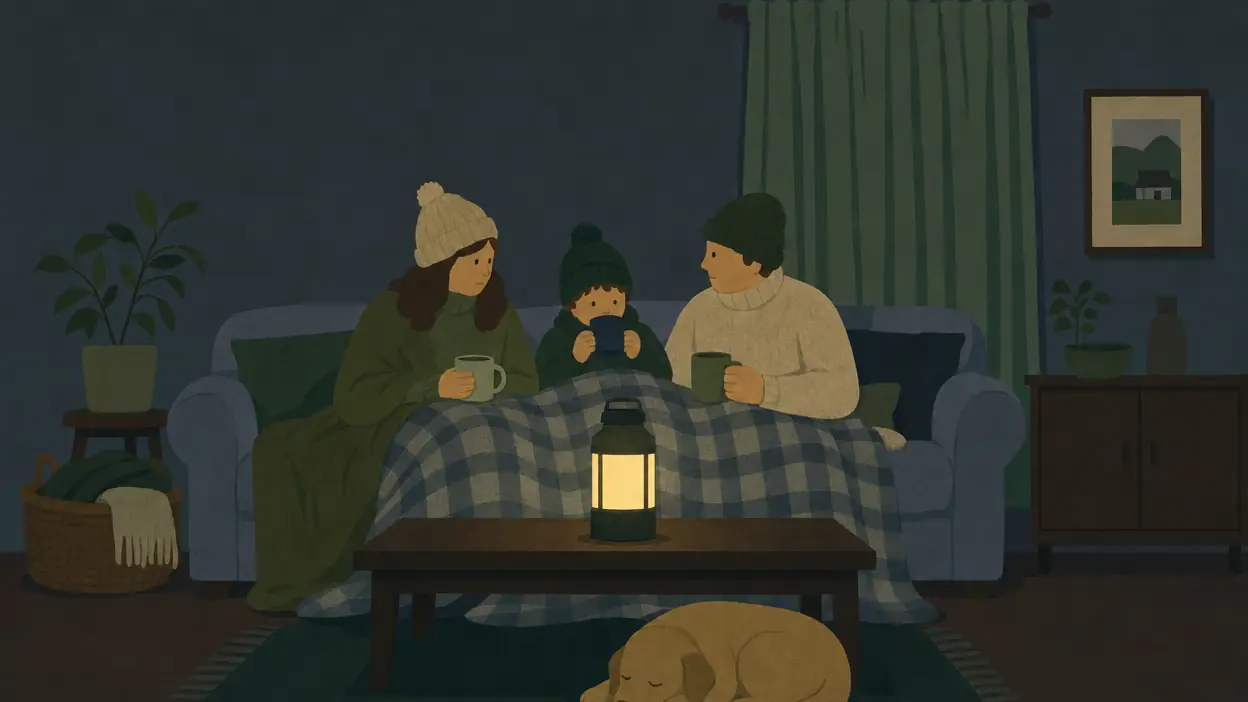
Read the full guides to keeping warm and cooking without power, Carbon monoxide and fire at home in Ireland and being stranded in a car.
Myth: Tea lights under a terracotta pot make a safe room heater
What actually happens: A hot flowerpot is not evidence that a room is being heated adequately. This circulating TikTok tip has caused a documented fire: Derbyshire firefighters said heat weakened the terracotta supports, the device collapsed and melted wax ignited. Around 50 residents had to evacuate the building.
Do this instead:
- Use dry layers, blankets and sleeping bags, and gather in one room.
- Plan a warmer place to go if you cannot keep comfortably warm.[1][2]
Myth: Leave the oven on or light the gas hob to heat the kitchen
What actually happens: Gas Networks Ireland explicitly warns against using an indoor cooking appliance to heat a room. Fuel-burning cookers can produce carbon monoxide, particularly with inadequate ventilation. An electric oven avoids combustion fumes but still should not be repurposed as a room heater.
Do this instead:
- Use cooking appliances for cooking, following their instructions.
- Keep warm with clothing and bedding, and leave required wall vents clear.[3][4][2]
Myth: A barbecue or camping stove is safe indoors if you open a window
What actually happens: These appliances can cause fatal carbon monoxide poisoning indoors, inside tents or under cover. A porch or awning is not a safe substitute for an outdoor cooking position. A charcoal barbecue can continue releasing carbon monoxide after it appears to have gone out.
Do this instead:
- Use outdoor cooking equipment only outdoors, in a well-ventilated position and according to its instructions.
- If conditions make outdoor cooking unsafe, eat food that needs no cooking.
- Keep a used barbecue outside while it cools.[5][4][3]
Myth: Sitting in a running car is a safe way to keep warm anywhere
What actually happens: Never run a car in a garage or another enclosed space. Outdoors, a snow-blocked exhaust can also cause carbon monoxide to build up. The HSE advises checking that the exhaust is clear before starting the engine.
Do this instead:
- Carry blankets, warm clothing and a charged phone.
- If stranded in snow, keep the engine off when you cannot check and maintain a clear exhaust.
- UK council guidance suggests about 10 minutes of engine use each hour, with a window slightly open and repeated exhaust checks. That routine does not make a blocked exhaust safe.[5][6]
Myth: A patio heater or paraffin heater is safe in a closed room
What actually happens: Patio heaters are outdoor appliances: Gas Networks Ireland says never to use them indoors or under cover. Paraffin heaters require a different distinction, because some are designed for indoor use, but inadequate ventilation can create a carbon monoxide risk. The HSE specifically says never to sleep in a room with a paraffin heater or gas fire that has no flue.
Do this instead:
- Keep patio heaters outdoors.
- Use an indoor heater only in the conditions its manufacturer permits, with required ventilation unobstructed.
- Never sleep with an unflued paraffin heater or gas fire operating in the room.[3][5][4]
Myth: A drink of alcohol warms you up in the cold
What actually happens: Alcohol can make your skin feel warmer while your core temperature falls. It widens blood vessels near the skin and can impair judgement and the perception of cold. Hypothermia means a body temperature below 35°C and is a medical emergency.
Do this instead:
- Use dry layers, shelter and blankets.
- Give someone with suspected hypothermia a warm non-alcoholic drink only if they are fully awake.
- Call 112 or 999 for signs such as slurred speech, slow breathing or confusion. Do not give alcohol.[2][11][12]
Myth: Fill a hot water bottle straight from a freshly boiled kettle
What actually happens: Boiling water creates a serious scald risk, and NHS burns guidance explicitly says never to use it in a hot water bottle. Old or deteriorating bottles can also leak or burst. A protective cover is necessary, but it does not make boiling water safe.
Do this instead:
- Use hot water that has cooled from boiling, following the bottle manufacturer’s instructions.
- Fill no more than two thirds full, carefully release excess air and secure the stopper.
- Use a cover, check for deterioration and never sit or lie on the bottle. The Children’s Burns Trust advises replacing bottles more than two years old.
- Never use an electric blanket and a hot water bottle together.[2][21][22]
Myth: A hot bath or vigorous rubbing will quickly bring someone with hypothermia round
What actually happens: Hypothermia means body temperature has fallen below 35°C. It is a medical emergency, not something to treat with a very hot bath or by rubbing cold limbs. NHS guidance explicitly warns against hot baths, hot water bottles, heat lamps and rubbing the arms, legs, feet or hands because these actions can make matters worse.
Do this instead:
- Call 112 or 999 for suspected hypothermia.
- Move the person into shelter, remove wet clothing and wrap them in dry blankets or towels, covering their head.
- Stay with them. Give a warm drink and sugary food only if they are fully awake.[12]
Storms, floods and power lines
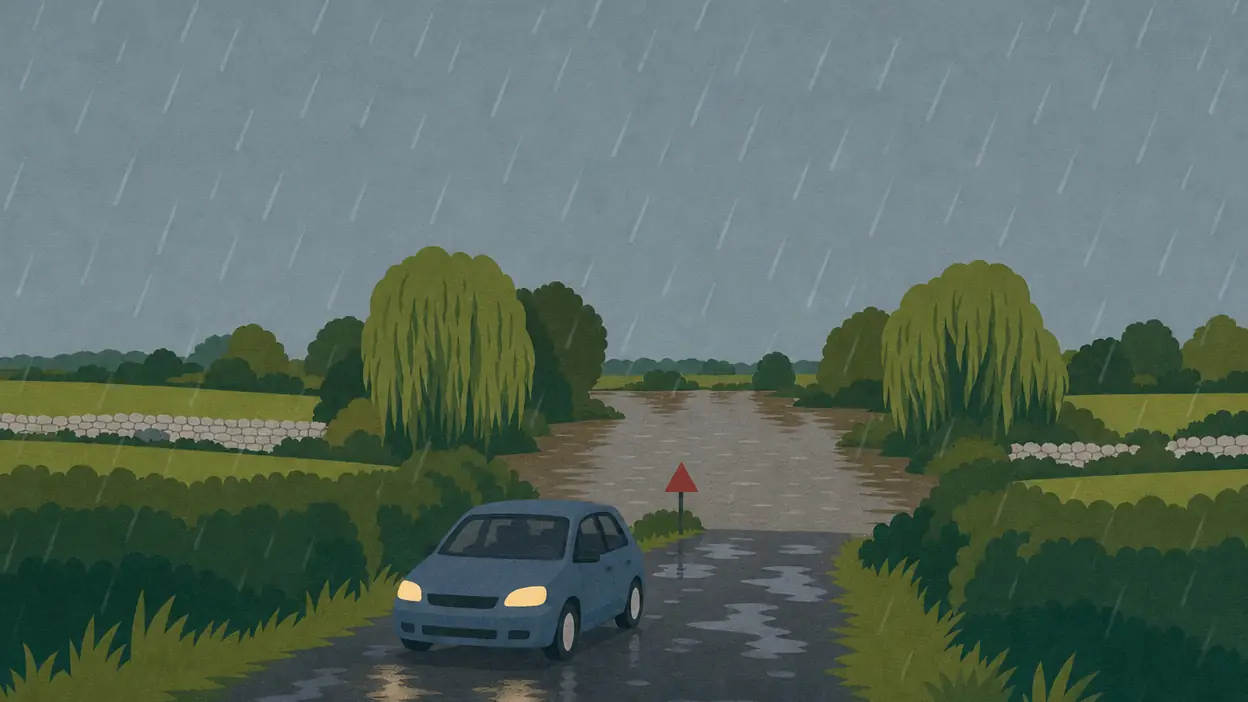
Read the full guides to Storms: what to do before, during and after, Flooding: prepare, stay safe and recover and Frozen and burst pipes: what to do.
Myth: Floodwater that looks shallow is safe to drive or walk through
What actually happens: OPW warns that flowing water just 300mm deep can move a vehicle. Even shallow water flowing at 2 metres per second can knock children and many adults off their feet. These are examples of danger, not safe crossing limits; floodwater can also contain sewage, chemicals and debris.
Do this instead:
- Turn back and find a route that avoids the floodwater.
- Do not walk through it to check the depth or guide a driver.[13]
Myth: Open a window during a storm to equalise the pressure and protect the house
What actually happens: Opening a window is contrary to the UK Met Office’s storm advice, which says to close and securely fasten windows and external doors, particularly on the side facing the wind. It also warns that loose objects can be blown into glazing and break it. An open window should not be treated as storm protection.
Do this instead:
- Before the storm, securely fasten windows and external doors.
- Secure loose garden objects while conditions are safe.
- Stay indoors during the storm and leave repairs until it has passed.[14]
Myth: A fallen power line is safe if it is not sparking
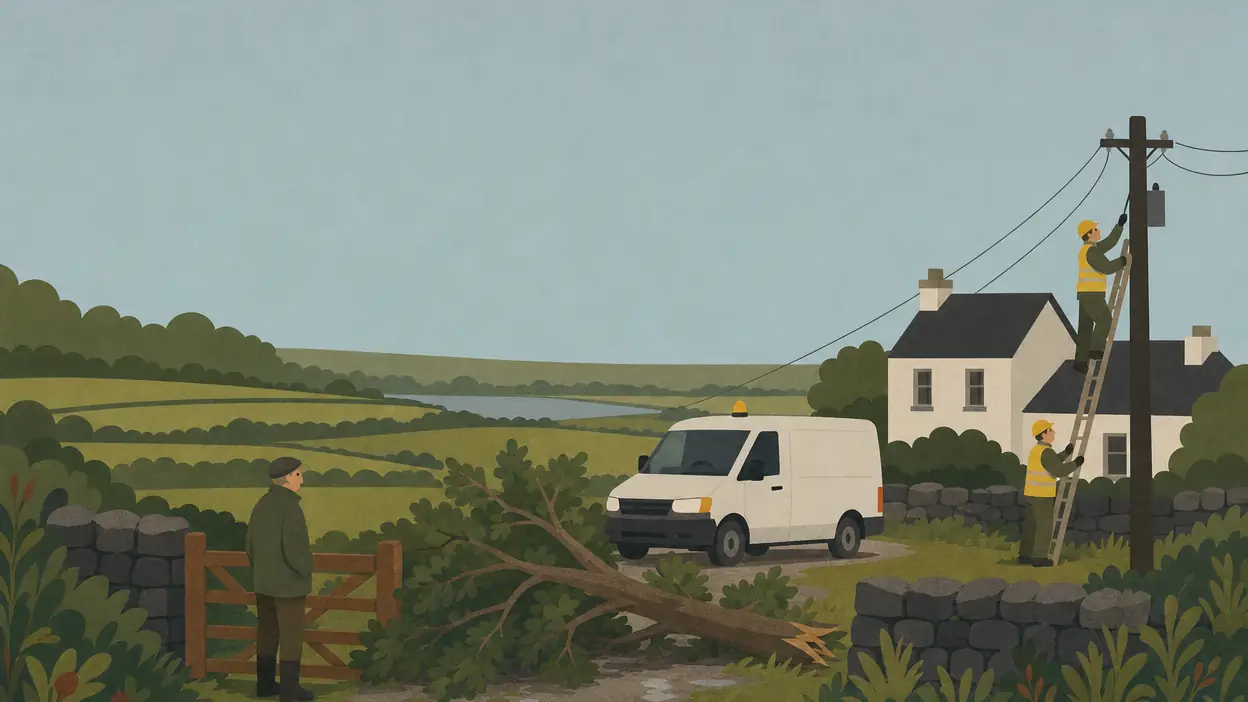
What actually happens: ESB Networks says to assume electricity wires are always live. Whether a fallen wire is sparking does not change that instruction. Approaching or handling it risks fatal electric shock.
Do this instead:
- Stay clear and keep other people away.
- Report it immediately to ESB Networks on 1800 372 999.
- Do not try to move the wire yourself.
- If anyone is injured or in contact with the wire, call 112 or 999 and do not touch them.[15]
Myth: Use a blowtorch, heat gun or naked flame to thaw frozen pipes quickly
What actually happens: Uisce Éireann warns never to thaw pipes by switching on the immersion or central heating, or with a blowtorch. UK official guidance also rules out hot air guns: heating pipes too quickly can make them burst, while naked flames can damage pipes and start a house fire. A pipe may already have cracked while frozen and begin leaking as it thaws.
Do this instead:
- Turn off the water supply, including the stopcock on the cold water tank (usually in the attic), and open nearby cold taps to relieve pressure. Uisce Éireann says not to open hot taps at this stage.
- If you understand the plumbing and the pipe is intact, Uisce Éireann advises gentle warming with a hairdryer on its lowest setting, starting nearest the tap. Keep electrical equipment away from water.
- Call a plumber if the pipe is damaged, inaccessible or you are unsure.[18][19][20]
Power and generators
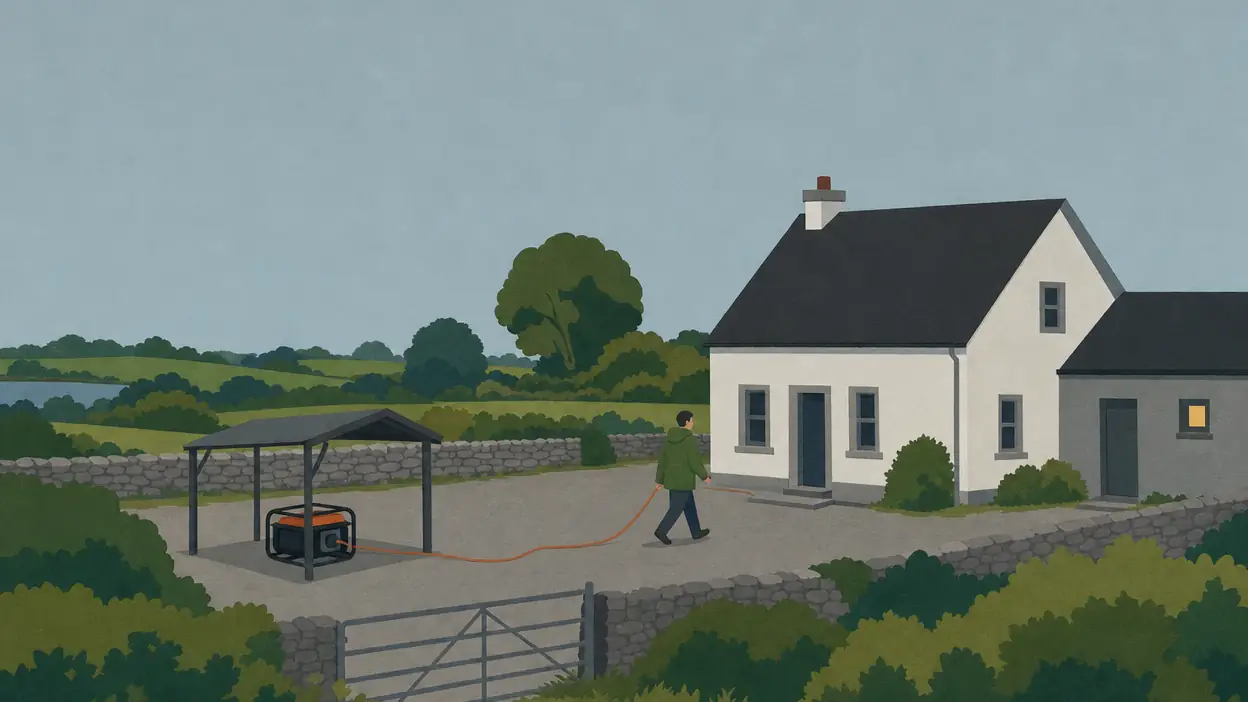
Read the full power cuts guide and carbon monoxide and fire guide.
Myth: A generator is safe in the garage with the door open, or just outside a window
What actually happens: Petrol and diesel generators produce carbon monoxide. An open garage door does not make an enclosed space safe, and exhaust from an outdoor generator can enter through doors, windows or vents. Gas Networks Ireland warns against operating generators indoors, under cover or close to these openings.
Do this instead:
- Operate the generator outdoors, away from doors, windows and ventilation openings, following its instructions.
- Never use a garage or shed as its operating position.
- Plan a location that meets both the exhaust-clearance and weather-protection instructions before an outage.[3][4]
Myth: Plug a generator into a wall socket to power the house
What actually happens: Feeding a generator into a household socket can make the fuse board and connected network live. ESB Networks explicitly identifies this practice as a danger to life, including on its network where crews may be working. A properly designed standby connection needs protection and a changeover arrangement that prevents the generator and mains supply being connected together.
Do this instead:
- Never connect a generator’s output to an ordinary household socket.
- Have a Registered Electrical Contractor design and install any connection to the home’s fixed wiring, including the appropriate changeover protection.[16][17]
Myth: Candles are safe to leave burning overnight or beside a sleeping child
What actually happens: A burning candle needs an awake adult watching it. The HSE says never to leave candles unattended and to supervise children whenever candles are lit. Curtains, bedding and clothing can catch fire, even when the candle itself is in a holder.
Do this instead:
- Use a torch or battery light beside beds and for moving around.
- Extinguish candles before sleeping or leaving the room.
- Keep any supervised candle away from fabrics and out of children’s reach.[7][8]
Water, food and scams
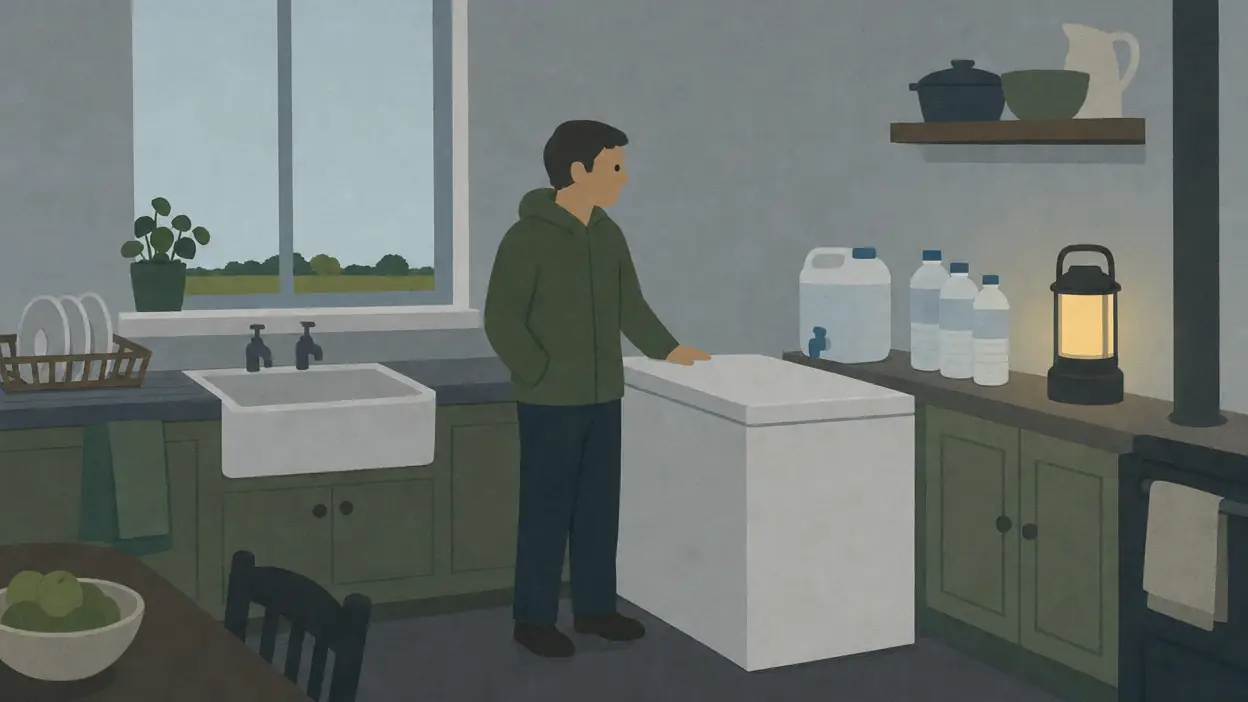
Read the full guides to Water outages and boil water notices, Power cuts in Ireland: what to do and Cyber attacks: protect your household.
Myth: Water left in the attic tank is safe drinking water during an outage
What actually happens: Water being cold, clear or already inside the house does not establish that it is drinking water. Uisce Éireann advises against drinking from bathroom cold taps because they usually draw from an attic tank. Its advice is to use the kitchen cold tap for drinking and cooking, after confirming that it comes directly from the mains.
Do this instead:
- Keep bottled drinking water for an outage.
- When using tap water, use the confirmed mains-fed kitchen cold tap and follow any supply restriction.
- Do not substitute attic-tank water for drinking, cooking or making infant formula.[24]
Myth: Boiling makes any water safe, including floodwater or water contaminated by fuel or chemicals
What actually happens: Boiling kills disease-causing microbes but does not remove harmful chemical contamination. Uisce Éireann explicitly says boiling will not make water under a Do Not Consume Notice safe to drink. Its instruction to boil water vigorously for one minute applies to a Boil Water Notice, not to collecting and treating floodwater.
Do this instead:
- Use bottled water or another confirmed safe supply where chemical contamination is suspected.
- Read the exact notice: Boil Water, Do Not Consume and Do Not Use require different actions.
- If a private well has been flooded, use an alternative supply and seek advice from the local authority or HSE Environmental Health service.[25][26][27]
Myth: A full freezer keeps everything safe for days, whatever you do
What actually happens: Holding times depend on keeping the door closed, the freezer’s fullness and its performance. Safefood gives about 24 hours for an unopened freezer; UK Food Standards Agency guidance estimates up to 48 hours when full, or 24 hours when half full, with doors kept closed as much as possible. These are estimates, not guarantees that every item remains safe. Smell and taste cannot establish food safety.
Do this instead:
- Note when the power failed and keep the fridge and freezer shut. Safefood says a fridge keeps food cold for about 4 hours if unopened; after that, use perishable foods such as meat, leftovers, dairy and ready meals immediately or throw them out.
- When power returns after a prolonged cut, assess foods individually using Safefood’s guidance.
- Safefood says to discard baked goods with cream icing or filling, puddings and ice cream, and thawed cooked foods and shellfish that have been above 5°C for more than two hours. If safety is uncertain, discard them.[9][10]
Myth: Once the power returns, everything that thawed can just go back in the freezer
What actually happens: Restored power does not establish that food remained safe during the outage. Safefood allows raw meat, poultry, fruit and vegetables to be refrozen where they still contain ice crystals and feel cool. It says baked goods with cream icing or filling, puddings and ice cream, and cooked foods and shellfish that have thawed and spent more than two hours above 5°C, must be discarded; smell or taste cannot reliably establish safety.
Do this instead:
- Check food individually rather than refreezing the freezer’s entire contents.
- Apply Safefood’s specific food and temperature rules. Do not taste food to test it.
- Discard food if you cannot establish that it is safe.[9]
Myth: A familiar sender name or caller number proves an outage message is genuine
What actually happens: ComReg documents both caller-number spoofing and text sender-name spoofing, which make communications appear to come from a trusted organisation. ESB Networks also warns about impersonation attempts using convincing branding and cloned websites. A request for banking details or a one-time passcode can expose money needed for emergency essentials.
Do this instead:
- Check outage information by opening the official utility website yourself. ESB Networks says it will never send texts, calls or emails with a link to a log-in page.
- Since July 2025, ComReg labels texts from unregistered sender names “Likely Scam”. Do not click links or call numbers in a labelled text. A missing label does not prove a text is genuine.
- Do not use links or contact numbers supplied in an unexpected message. Verify the organisation through independently obtained details.
- Do not disclose passwords, bank details or one-time passcodes in response to an unexpected contact.[28][29][30]
Sources (30), all checked 2026-10-29
Sources checked 2026-10-30. UK sources are labelled below.
- ITV News, reporting Derbyshire Fire and Rescue Service’s investigation, Warning after TikTok heater-hack caused fire in Derbyshire tower block. UK.
- HSE, Keeping warm in winter. Irish.
- Gas Networks Ireland, Advice for customers during severe weather. Irish.
- National carbon monoxide awareness campaign, Causes. Irish.
- HSE, Carbon monoxide poisoning. Irish.
- Ceredigion County Council, Snow and ice. UK.
- HSE, Fire dangers in your home. Irish.
- Scottish Fire and Rescue Service, Heating and gas. UK.
- Safefood, Food safety in emergencies. Irish.
- Food Standards Agency, Food safety in a power cut: advice for consumers. UK.
- Drinkaware, Alcohol and cold weather. UK.
- NHS, Hypothermia. UK.
- OPW, Impacts of flooding. Irish.
- UK Met Office, Stay safe in a storm. UK.
- ESB Networks, Report a fallen wire. Irish.
- ESB Networks, Guidebook for standards for electrical services in housing schemes. Irish.
- ESB Networks, National Code of Practice for Customer Interface. Irish.
- Uisce Éireann, Frozen or burst pipes. Irish.
- Welwyn Hatfield Borough Council, Protecting your pipes from cold weather. UK.
- UK Met Office, What to do if you have a frozen or burst pipe. UK.
- Mid and South Essex NHS Foundation Trust, Burns prevention and tips. UK.
- Children’s Burns Trust, Hot water bottles. UK.
- HSE, Winter and older people. Irish.
- Uisce Éireann, Lead in drinking water. Irish.
- Uisce Éireann, Do Not Consume Notices. Irish.
- Uisce Éireann, Boil Water Notice. Irish.
- UK Health Security Agency, How to recover from flooding. UK.
- ComReg, Combatting scam calls and texts, ComReg 24/24. Irish.
- ComReg, SMS Sender ID Registry. Irish.
- ESB Networks, Fraudulent phishing attempts. Irish.