First, check for immediate danger
If neighbours still have power, the problem may be within your home. Check your trip switch only if it is safe and you know how. Do not open electrical equipment or attempt repairs. ESB Networks distinguishes faults on its network from faults in your own installation, which need a registered electrical contractor.[6]
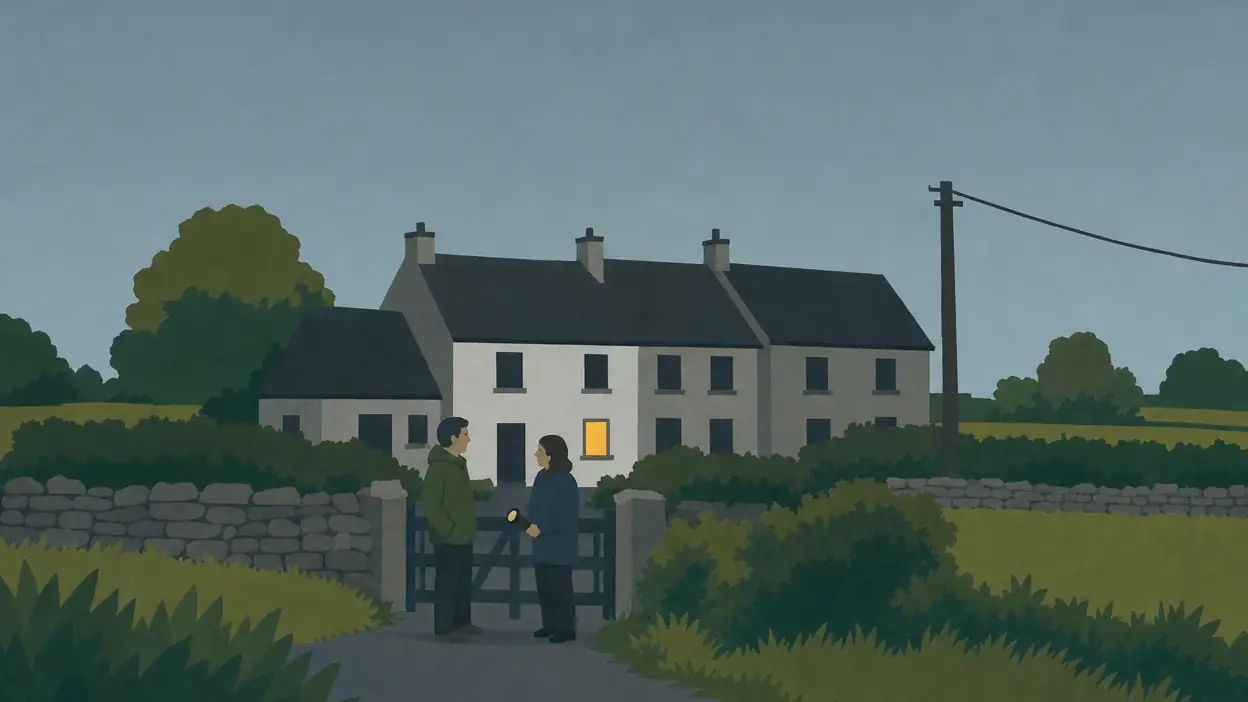
Use a torch to get around. Keep your MPRN, the electricity connection reference on your bill, with the emergency number so you can identify the supply when reporting it.[7]
Report it and follow the updates
Keep a written note of when the power stopped and when you reported it. This is a practical record if you later ask about a customer-charter claim, which has a reporting-based time threshold and a claim deadline.[8]
What should you switch off?
Do not assume wiring is safe to work on because the lights are out. ESB Networks warns that electricity can return at any time during an interruption.[2]
How long will food keep?
| Appliance | Published household guidance |
|---|---|
| Fridge, door kept shut | Safefood says it keeps food cold for about 4 hours.[3] |
| Full freezer, door kept shut | FSAI says about 2 days, or 48 hours.[10] |
| Half-full freezer, door kept shut | FSAI says about 1 day, or 24 hours.[10] |
After four hours without power, take a cautious approach to refrigerated meat, fish, dairy, leftovers and other perishables. Discard them if you cannot establish that they stayed safely chilled. Do not use taste or smell as a safety test.[3]
For freezer contents, FSAI says partly frozen food with ice crystals can be used or refrozen. It says to discard food that has been warmer than 5°C for more than two hours. If the time or condition is uncertain, throw it out.[10]
See the equipment categories linked at the end of this guide.
Before an outage: get to know your heating and water
Here is a useful project for a quiet evening: work out what your heating needs to run. An oil tank or gas connection does not make central heating independent of electricity. Conventional oil boilers and most gas appliances need electrical power. Heat pumps also run on electricity. Include the loss of their heating and hot-water production in your outage plan.[11][12][13]
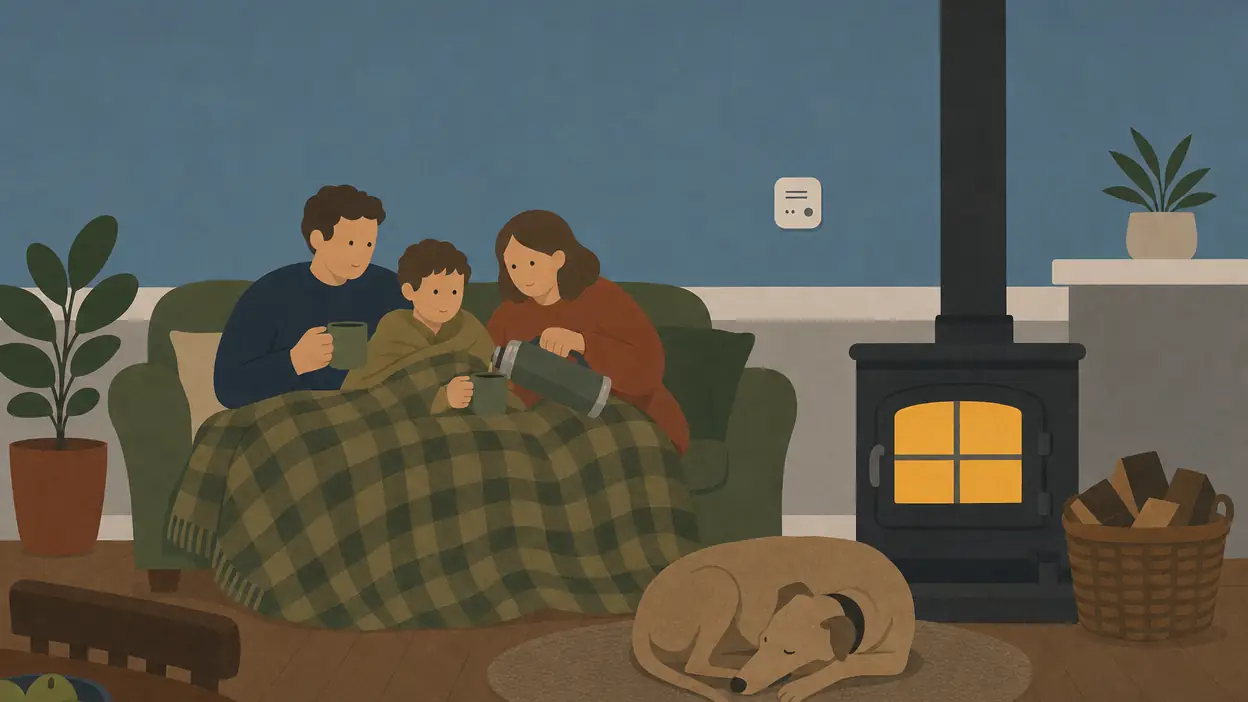
Use layers and extra bedding, and gather in one room for warmth. Read Snow and cold: keep warm and protect your water supply for safe heating fallbacks.[5]
If your private well has an electric pump, that pump will stop when its power supply fails. Make storing drinking water and writing a separate water plan part of your preparation before a forecast storm. This electrical dependency is described by the Virginia Department of Health; Irish water-quality advice comes from the EPA.[14][15]
Before an outage: make a medical equipment plan
Start by contacting your electricity supplier to join the vulnerable-customer register. Your supplier passes the details to ESB Networks. Talk through battery backup and when to move elsewhere with your healthcare team. Registration provides support and communications but does not prevent storm faults.[4]
If a device fails and someone is in immediate danger, call 112 or 999. Do not wait for a restoration estimate to solve an urgent medical problem.[5]
Do not improvise a power or heating supply
Never run a generator indoors, under cover or near doors, windows or vents. Never bring a barbecue or outdoor heater inside. Their exhaust can cause fatal carbon monoxide poisoning.[12]
Do not connect a generator to the house through a wall socket. It must not feed electricity back into the network, where it could endanger others. Have any connection to fixed wiring designed and installed by a registered electrical contractor.[16]
When power returns
Booklet material used: torches, stored essentials, warmth and written contacts are adapted from Be Emergency Ready.[5]
prepared.ie is independent and is not affiliated with the Government of Ireland, Met Éireann, ESB or any agency. In an emergency, call 112 or 999.[5]
Sources (17), all checked 2026-10-28
Footnotes
-
ESB Networks, Storm Austen preparedness advice and PowerCheck. Reporting route checked 2026-10-28; no live outage status reproduced. ↩2 ↩3
-
ESB Networks, Planned outages and safety warning. Safety warning applies during any interruption; checked 2026-10-28. ↩ ↩2 ↩3
-
Safefood, Food safety in emergencies. Checked 2026-10-28. ↩ ↩2 ↩3 ↩4 ↩5 ↩6
-
ESB Networks, Vulnerable customers. Checked 2026-10-28. ↩ ↩2 ↩3 ↩4
-
Office of Emergency Planning, Be Emergency Ready booklet and resources. Supplied booklet and checklist read with pdftotext; checked 2026-10-28. ↩ ↩2 ↩3 ↩4 ↩5
-
ESB Networks, Power outage questions. Checked 2026-10-28. ↩
-
ESB Networks, Outage safety advice. Checked 2026-10-28. ↩
-
ESB Networks, Current linked customer charter, guarantee 1. Retrieved from the customer-charter page and read with pdftotext on 2026-10-28. ↩
-
Scottish Fire and Rescue Service, Power cuts. General appliance and lighting safety only; UK contact numbers not used. Checked 2026-10-28. ↩
-
Food Safety Authority of Ireland, Storing food safely: power cuts. Consumer guidance checked 2026-10-28. ↩ ↩2 ↩3 ↩4 ↩5 ↩6
-
OFTEC, Trouble shooting tips. Technical primary source for oil-fired heating; checked 2026-10-28. ↩ ↩2
-
Gas Networks Ireland, Severe weather advice. Checked 2026-10-28. ↩ ↩2 ↩3
-
SEAI, Smart energy technologies combined. Heat-pump electricity dependence checked 2026-10-28. ↩
-
Virginia Department of Health, Private wells and onsite sewage systems before and after storms. Used only for electric pump dependence; checked 2026-10-28. ↩
-
EPA, Household wells. Checked 2026-10-28. ↩
-
ESB Networks, Generation during a network outage and required isolation. Checked 2026-10-28. ↩
-
Office of Public Works, After a flood. Checked 2026-10-28. ↩