Prepare while you can get out safely
Follow Met Éireann’s warning for your area and check travel conditions before leaving. Avoid going out in extreme weather where possible. Cold weather can worsen existing health problems and increase the risk of falls and hypothermia.[1][6]
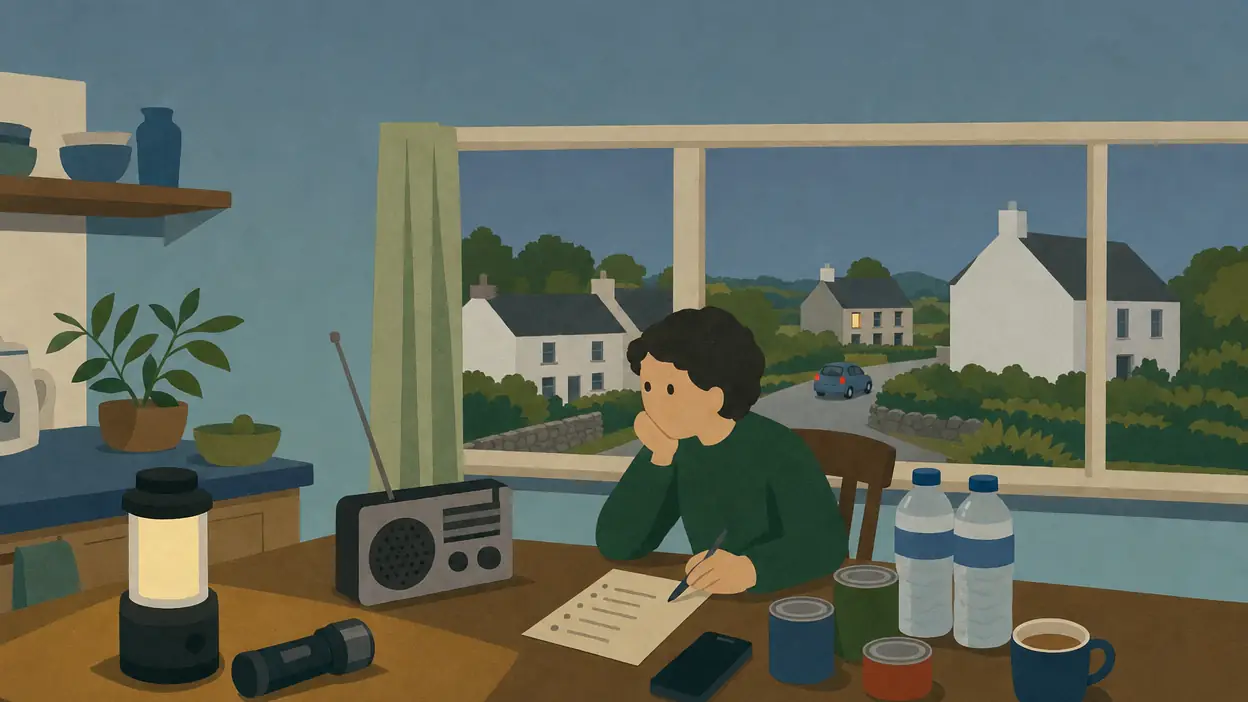
Make this a small household project before winter. Work through what you already have, then add what you need as you go:[1][7]
- Food you normally eat that keeps without a fridge and needs little preparation.
- Drinking water, a torch and working batteries.
- Regular medicines and copies of prescriptions.
- Warm layers, blankets and bedding you can reach easily.
- A charged phone, power bank and written contact numbers.
Ask your pharmacist about keeping your regular prescription available if bad weather could interrupt collection. Do not leave the question until the medicine is about to run out.[1][7]
If pipes freeze, turn off the water supply and call a plumber if you are unsure what to do.[4] Check regularly on older neighbours and call 112 or 999 for signs of hypothermia.[5]
Keep warm without creating another hazard
Wear several light layers and keep moving gently indoors if you can. HSE advice is to heat the room you use most to about 18 to 21°C, and the rest of the home to at least 16°C, if possible. Curtains and draught excluders help retain heat, but do not block wall vents.[6]
During an outage, gather in one room and use extra blankets or sleeping bags. Choose a room you can reach and use safely. See the equipment categories.[7]
If you have a stove or open fire, use it only with a clean chimney, the proper guards and working alarms. Keep portable heaters clear of curtains and furniture. Never use a cooking appliance to heat a room or bring outdoor combustion equipment inside: carbon monoxide can kill.[6][2]
Get to know your heating
Choose a quiet evening to get to know your heating. Having fuel does not necessarily mean you will have heat during a power cut. Gas appliances commonly need electricity for their controls, fans or pumps. Conventional oil-fired heating systems also need an electrical supply. Heat pumps use electricity to provide heating and hot water.[2][3][8]
| Your heating | Question to settle before severe weather |
|---|---|
| Oil or gas boiler | What stops when electricity fails, and what checks does the manufacturer require when it returns?[2][3] |
| Heat pump or all-electric heating | Where could you stay if electricity and heating remain unavailable?[8][7] |
| Stove or open fire | Is the chimney clean, are guards in place and are smoke and carbon monoxide alarms working?[6] |
If you need a powered medical device or cannot stay safely warm at home, plan with your healthcare team and someone who can help. Register with your electricity supplier for vulnerable-customer support. That preparation still matters during an unplanned outage.[9]
Prevent frozen pipes
Put pipe protection on your before-winter list. Insulate exposed water pipes, including vulnerable pipes in the attic, and protect outdoor taps. Make finding the internal stop valve a small job to tick off before there is a leak. If you rent, ask the landlord or agent to show you where it is and arrange any necessary plumbing work.[10][4]
If a tap stops working in freezing weather, check whether neighbours also have a supply problem. If they do, it may be a wider outage. If they do not, a frozen pipe is one possible cause.[4]
For a suspected frozen pipe, Uisce Éireann advises turning off the supply and opening nearby cold taps to relieve pressure. Do not turn on hot taps for this step. Do not try to thaw pipes with a blowtorch, the immersion heater or central heating. If you cannot safely locate the problem or do not understand the plumbing, call a plumber.[4]
If a pipe bursts
Turn off the water supply if safe. Switch off central heating and the immersion heater and contact a plumber. If water is near electrical equipment, only isolate electricity where it is safe: do not touch a wet switch. Have the system repaired and refilled before restarting the boiler or immersion.[4]
In an apartment, make sure the building manager knows about the leak and ask which valve serves your home. Shared supplies need care so that shutting off water does not unexpectedly affect neighbours.[4]
Check on older neighbours
Agree a regular call or visit when it is safe. Ask about warmth, meals and practical help, rather than assuming that no request means no need. HSE advises checking on older people regularly in winter and identifies them as at greater risk of hypothermia.[5]
Warning signs include shivering, pale cold skin, slurred speech, slow breathing, unusual tiredness or confusion. Call 112 or 999 if someone shows signs of hypothermia.[5]
Booklet material used: supplies, warm bedding, written contacts and planning where to go are adapted from Be Emergency Ready.[7]
prepared.ie is independent and is not affiliated with the Government of Ireland, Met Éireann, ESB or any agency. In an emergency, call 112 or 999.[7]
Sources (10), all checked 2026-10-28
Footnotes
-
HSE, Preparing for severe weather. Checked 2026-10-28. ↩2 ↩3 ↩4
-
Gas Networks Ireland, Severe weather advice. Checked 2026-10-28. ↩2 ↩3 ↩4
-
OFTEC, Trouble shooting tips for oil-fired heating. Technical primary source; checked 2026-10-28. ↩2 ↩3
-
Uisce Éireann, Frozen or burst pipes. Checked 2026-10-28. ↩ ↩2 ↩3 ↩4 ↩5 ↩6
-
HSE, Winter and older people. Checked 2026-10-28. ↩ ↩2 ↩3
-
HSE, Keeping warm in winter. Checked 2026-10-28. ↩ ↩2 ↩3 ↩4
-
Office of Emergency Planning, Be Emergency Ready booklet and resources. Supplied booklet and checklist read with pdftotext; checked 2026-10-28. ↩ ↩2 ↩3 ↩4 ↩5 ↩6
-
SEAI, Smart energy technologies combined. Used only for heat pumps’ electricity dependence; checked 2026-10-28. ↩ ↩2
-
ESB Networks, Vulnerable customers. Checked 2026-10-28. ↩
-
Department of Defence, Home safety advice and community resilience. Checked 2026-10-28. ↩