Start with the household checklist
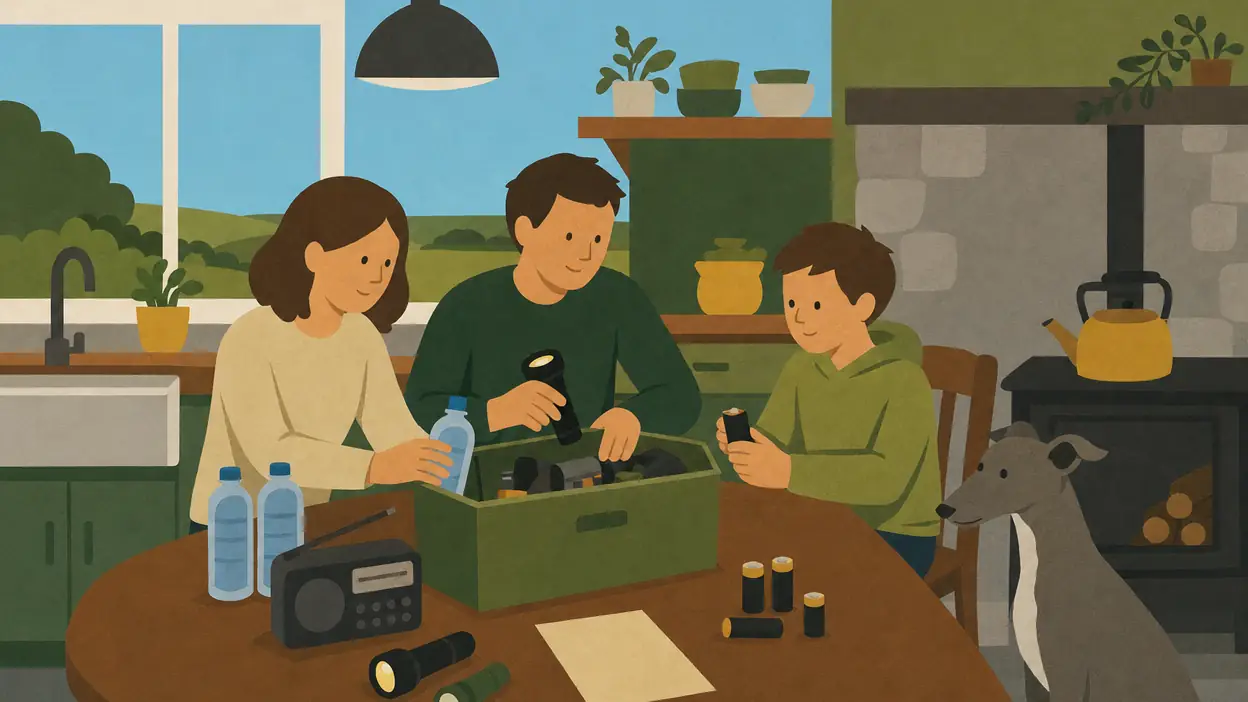
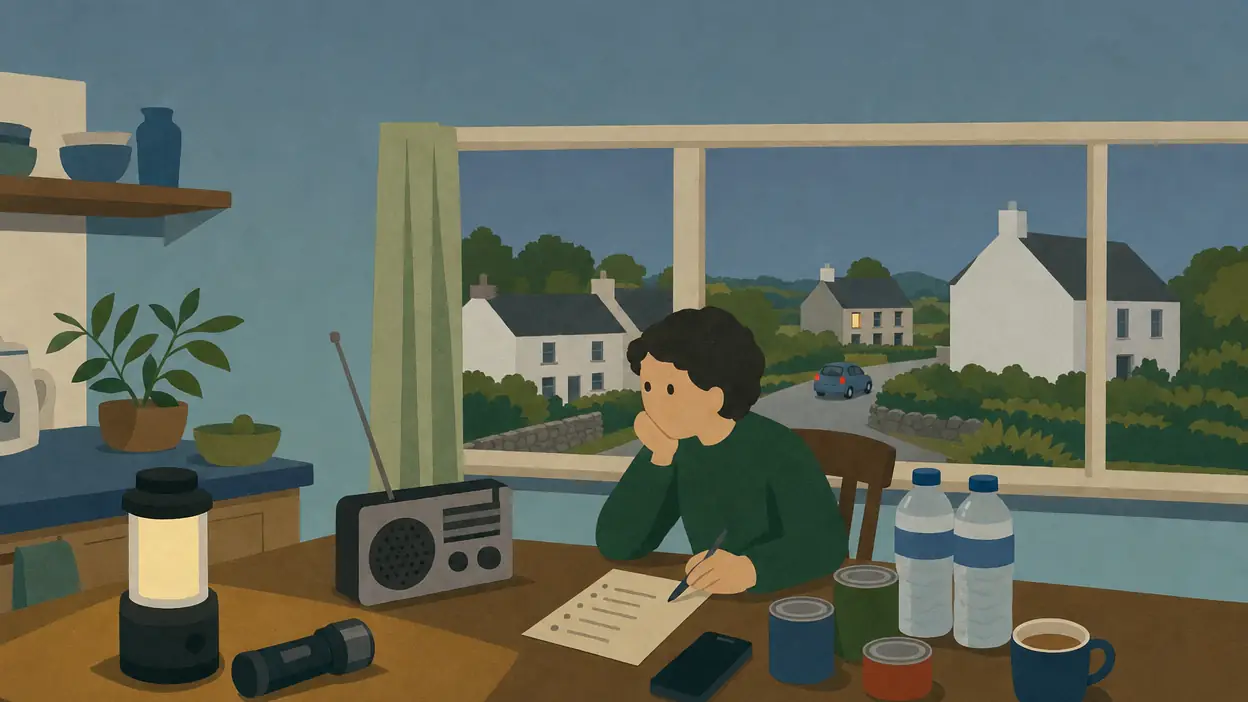
Take the official checklist a step at a time. Check drinking water, familiar non-perishable food, regular medicines, warm bedding, a torch, radio and charged power banks. Talk with your neighbours and agree how to share information and help. See When phones and internet are down in Ireland and A nuclear incident abroad: what to do in Ireland for the details. [9] [2]
Booklet material used: the risks, household planning, basic supplies, offline contacts, radio and neighbour support sections have been rewritten from the Office of Emergency Planning’s Be Emergency Ready booklet and checklist. [2] [9]
The EU Preparedness Union Strategy includes a minimum 72-hour self-sufficiency goal, while national guidance varies. In Ireland, use the official Be Emergency Ready checklist and follow current instructions from the relevant authorities. [1] [2]
Why European governments are talking about preparation
The European Commission’s March 2025 strategy addresses conflict, cyber threats, information manipulation and natural hazards together. Its household-related actions include developing guidance for people to manage independently for at least 72 hours. That is a preparedness goal, not a prediction that an emergency will last exactly three days. [1]
Finland explains the practical reason: when households can manage basic needs for a few days, authorities can concentrate on controlling the incident and supporting people who need help most. Start with what you can afford and build gradually. [3]
What other European countries advise
These are each country’s recommendations, not additional Irish requirements. Norway is included as a European comparison. [4] [3] [5] [6] [7] [8]
| Country | Household guidance |
|---|---|
| Sweden | Prepare to manage for at least one week without electricity, water or shopping. [4] |
| Finland | Keep food, water, medicines and other essentials for at least three days. [3] |
| Norway | Aim to manage for one week. DSB increased its recommendation from three days in 2024. [5] |
| Germany | Aim for ten days where possible. BBK says three days of supplies already help, and you can build from there. [6] |
| Lithuania | LT72 asks people to be ready to look after themselves and those close to them for at least 72 hours. [7] |
| Poland | The Safety Handbook recommends home supplies for at least three days, including food, water, lighting, a radio and cash. [8] |
Ireland’s supplied Be Emergency Ready booklet and checklist do not set a fixed number of days. They ask you to maintain essentials, make a plan and stay connected. Do not describe the EU’s three-day goal as a duration specified in the Irish booklet. [2] [9]
What disruption could mean in Ireland
Start by asking which service you would struggle without. The dependencies below can help you plan. They are not forecasts of particular incidents. [2]
Undersea data cables
Subsea telecommunications cables connect Irish networks to overseas data and cloud services. Government policy also emphasises having different routes, including the IRIS connection towards Iceland, to improve resilience if a route fails. A damaged cable should not automatically be read as the loss of all Irish internet access. [10] [11]
Keep essential contacts and instructions on paper as well as on your phone for your household plan. The Irish booklet specifically recommends a written plan for situations where electricity, phones or internet are unavailable. [2]
Gas supplies and electricity interconnectors
Gas Networks Ireland reports that imports from the UK met 80% of the Republic’s gas demand in 2024, with Corrib supplying about 20%. That is a dated annual figure, not a live reading. The report describes supply through a twinned interconnector system. [12]
Gas also supplied 41% of Ireland’s electricity demand in 2024. A household’s reliance on gas therefore extends beyond having a gas cooker or boiler. [13]
Electricity interconnectors are a separate system from gas pipelines and data cables. EirGrid lists the East West and Greenlink connections between Ireland and Wales, and Moyle between Northern Ireland and Scotland. They allow electricity to move between systems. The practical planning implication is to allow for power interruptions, without assuming that the loss of one link necessarily causes a blackout. [14]
Cyber attacks, services and payments
The HSE’s account of the 2021 cyber attack describes ransomware encrypting files and blocking access to them. Digital disruption can therefore affect the organisations you rely on even when your lights remain on. Keep your medication list and important contact details accessible offline, as the Irish booklet advises. [15] [2]
Payment systems also depend on electricity, communications and banking systems. Finland’s official guidance identifies card failures, inaccessible online banking and delayed transfers as possible effects. See Cash and payments during an outage in Ireland for a modest cash reserve and other options. [16]
Fuel and deliveries
SEAI says all oil products supplied to the Irish market ultimately depend on international imports. Some arrive as finished fuels; others are refined here from imported crude. This is why overseas supply disruption is relevant to transport and heating fuel. [17]
The Irish booklet includes disruption to critical supply chains among the risks to consider. Keep a rotating supply of ordinary food and essential items. Finland advises against hoarding during an incident because it disrupts shops and supplies for other people. [2] [3]
Check information before acting on it
The European Commission recommends checking who produced a claim, what evidence supports it and whether reliable sources confirm it. Apply that to alarming screenshots and forwarded messages before sharing them. [18]
Open the responsible organisation’s own website. Find the original notice, then check its date and the area it covers. Use government emergency information for national instructions, your service provider for its outage, and EPA radiation advice when relevant. If internet access fails, the Irish booklet recommends local radio. [2] [19]
Where neutrality fits
The Department of Foreign Affairs describes Ireland’s military neutrality as non-membership of military alliances and common or mutual defence arrangements. It also describes Ireland’s peace and security work through the UN and EU. Those are statements of policy; they do not remove the energy and communications dependencies described above. [20] [12] [10]
Sources (20), all checked 2026-10-28
- European Commission, EU preparedness union strategy. Checked 2026-10-28.
- Office of Emergency Planning, Be Emergency Ready booklet. Checked 2026-10-28.
- Finnish government, Suomi.fi: General instructions on preparedness. Checked 2026-10-28.
- Swedish authorities, Krisinformation: Home preparedness. Checked 2026-10-28.
- Norwegian Directorate for Civil Protection, Self-preparedness. Checked 2026-10-28.
- German BBK, Planning ahead for crises and disasters: guide and checklist. Checked 2026-10-28.
- Lithuanian civil protection, LT72. Checked 2026-10-28.
- Polish government, Safety Handbook: Prepare your surroundings. Checked 2026-10-28.
- Office of Emergency Planning, Your checklist. Checked 2026-10-28.
- Department responsible for communications, International Connectivity for Telecommunications consultation. Checked 2026-10-28.
- Government of Ireland, IRIS subsea cable between Galway and Iceland. Checked 2026-10-28.
- Gas Networks Ireland, Annual Report and Financial Statements 2024, printed page 42. Checked 2026-10-28.
- Gas Networks Ireland, Overall gas demand increases by 2% in 2024. Checked 2026-10-28.
- EirGrid, How the Market and Grid Interact. Checked 2026-10-28.
- HSE, Cyber-attack and HSE response. Checked 2026-10-28.
- Finnish government, Suomi.fi: Disruptions in payment systems. Checked 2026-10-28.
- SEAI, First Look: Ireland’s Energy Supply and Security of Supply 2024, section 5.2. Checked 2026-10-28.
- European Commission, Identifying conspiracy theories. Checked 2026-10-28.
- EPA, Nuclear and radiological emergencies. Checked 2026-10-28.
- Department of Foreign Affairs, Ireland’s policy of military neutrality. Checked 2026-10-28.