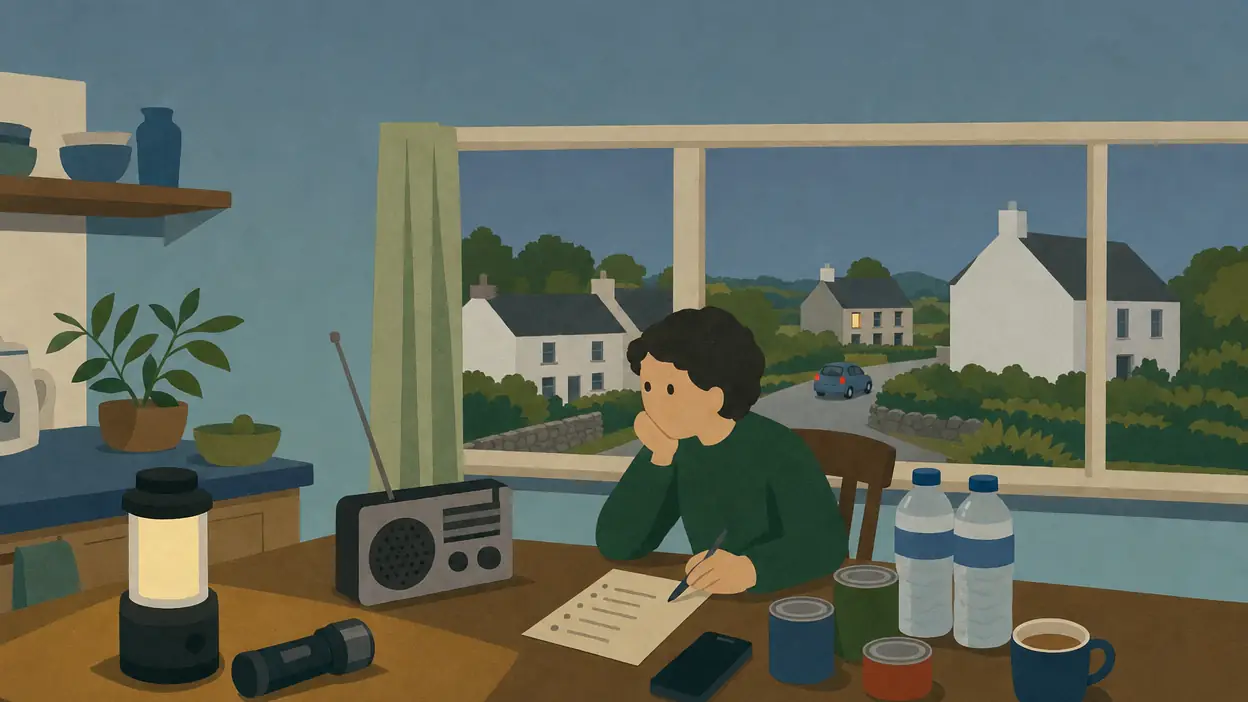
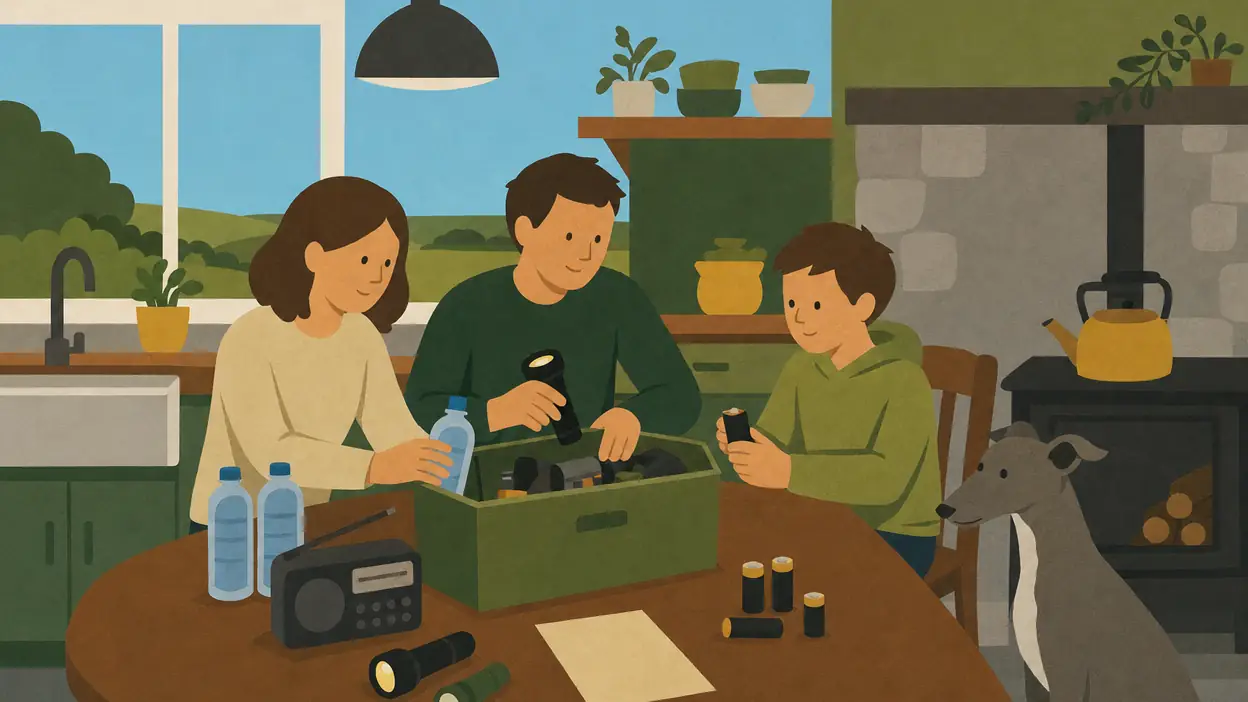
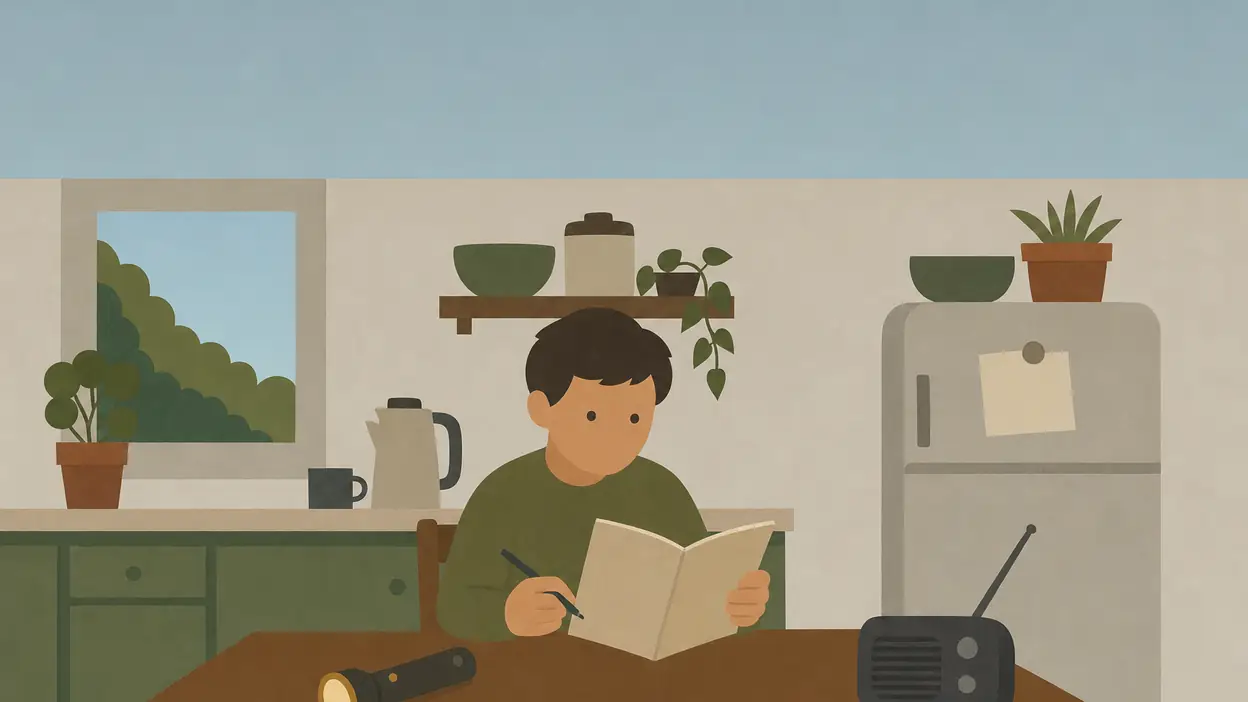
Pick something you would enjoy knowing. Book a course with a friend. Give yourself a small Saturday challenge. You do not need to become the person who can build a shelter from three twigs before you learn where the stop valve lives.
First aid: book the practical bit
Choose a course that gives you time to practise. Order of Malta’s Emergency First Aid course, for example, includes hands-on work with casualty assessment, bleeding, CPR and choking.[3] Tell the provider what you want to learn and check the delivery format before paying.
- Irish Red Cross: check practical, cardiac and family course formats, dates and current fees.[2]
- Order of Malta: check open-class availability and current fees; attendance is not a workplace qualification.[3]
- Civil Defence is an ongoing volunteering route, not a promise of a free public weekend course.[4][5]
If you need a workplace qualification, ask about First Aid Response and the current HSA requirements.[15]
Make a small follow-up task: find your first-aid kit, check its contents and tell another adult where it is. The official Irish checklist recommends keeping one ready.[1]
See the equipment categories linked at the end of this guide.
Irish Red Cross and Order of Malta offer public first aid courses, while Civil Defence provides training through volunteering.[2][3][4] Practise fire and outdoor cooking skills only with suitable equipment and the right safety precautions.[6][9]
Civil Defence: make learning a regular thing
Civil Defence accepts volunteer applications from adults and has units in every county. Its published expectation is about two hours of training each week, plus occasional duties. Training includes first aid, searching for missing people, communications and flood response.[4]
Its medical training pathway includes Cardiac First Response and other qualifications, with refresher training for volunteers.[5] This is a commitment to a team and its work. Do not treat it as a shortcut to a free weekend course.
Start with the county contact on the Civil Defence joining page. Ask about the next intake, training nights, accessibility and expected duties. You can decide whether the routine suits you before applying.
Learn your fireplace before lighting it
A quiet afternoon is a good time to ask a chimney sweep or competent installer to explain your existing fireplace or stove. Dublin Fire Brigade advises chimney cleaning at least annually, and more often depending on fuel. Have an unused or questionable installation assessed before making it your backup heat source.[6]
Make your learning session cover four things:
- Keeping it burning: learn the manufacturer’s fuel-loading and airflow settings. Do not overload it or block room ventilation.[16]
- Keeping the room safe: use a spark guard for an open fire; keep clothing, fuel and other flammable items away.[6]
Fit and maintain carbon monoxide alarms where fuel-burning appliances are used. Alarms do not replace servicing or ventilation.[9]
Buy the right fuel in Ireland
The nationwide solid-fuel rules introduced in October 2022 restrict commercial supply to approved fuels. The smoky coal ban is not just a rule for the old town-based smoke-control zones. Buy an approved low-smoke product suitable for your appliance; do not assume a bag being advertised makes it compliant.[7]
Check the current household fuel rules for moisture and packaging requirements before buying. Do not rely on an old timetable.[7][8]
Ask the supplier for the declared moisture level and keep the fuel dry. Do not burn treated timber, rubbish or scraps from a building job.[6]
Cook outdoors, with a no-cook option ready
Try a simple meal with your camping equipment on a calm day. Read the appliance instructions first, including the correct fuel, pan size and clearances. Make the first attempt deliberately easy: soup rather than a three-course dinner.
Do not use a camping stove or barbecue indoors or inside a tent. Carbon monoxide can be fatal. A garage or other enclosed space is not a safe substitute.[9]
For an outdoor barbecue, use level ground away from combustible structures, keep children away, supervise it throughout and let it cool before moving it.[17] Follow the equivalent siting instructions for your stove. If you cannot meet them, choose food that needs no cooking. Do not move outdoor equipment inside because the weather turns.
See the equipment categories linked at the end of this guide.
Make the battery radio familiar
The Irish booklet recommends a radio that can work without mains power, plus spare batteries where needed.[1] Try yours with its mains lead unplugged. Select FM, extend the aerial and find two useful stations. Write their names and the frequencies that actually work in your home on a card beside it.
- RTÉ Radio 1: RTÉ lists its main FM range as 88 to 90 MHz.[10]
- A local station: check the station’s own website. For example, Kfm lists 97.3 and 97.6 FM for Kildare.[11]
Make it a five-minute challenge: can someone else turn it on and find the station using only your card? Keep the card with the radio rather than in a phone app.
See the equipment categories linked at the end of this guide.
Three home skills worth a daylight walk-through
| Skill | Practise this | Know when to stop |
|---|---|---|
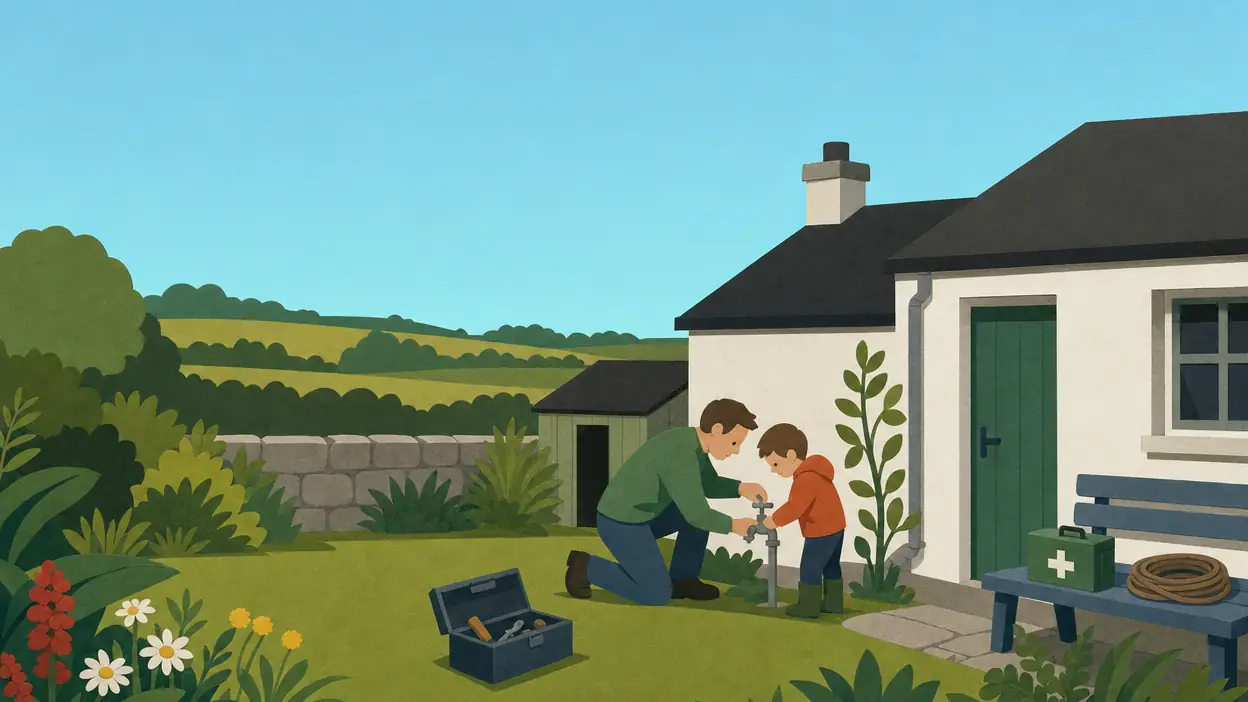
| Water | Locate the inside stop valve and learn how yours operates. It is often under the kitchen sink, but locations vary.[12] | If you cannot find or operate it, get a plumber’s help.[12] |
| Gas | Locate the meter shut-off valve. Learn the procedure from Gas Networks Ireland; do not interrupt supply just for this exercise.[13] | If you smell gas, avoid flames and electrical switches; call 1800 20 50 50 from outside the immediate leak area.[13] After emergency isolation, have a qualified engineer restore supply.[1] |
| Fuse board | Identify the trip switch and circuit labels. ESB Networks says to turn appliances off before resetting a tripped switch.[14] | If it trips again, stop and use a Registered Electrical Contractor. Never open covers or interfere with the sealed ESB fuse or meter.[14] |
If there is water damage, burning, smoke or uncertainty about electrical safety, leave the equipment alone and seek qualified help. This is a familiarisation exercise, not a wiring lesson.[14]
Booklet material used: the first-aid prompt, radio and spare-battery advice, first-aid kit and utility shut-off awareness are adapted from the Office of Emergency Planning booklet and checklist. The course routes and practice activities are additions.[1]
Sources (17), all checked 2026-10-28
All sources checked 2026-10-28.
- Office of Emergency Planning, Be Emergency Ready booklet and checklist.
- Irish Red Cross, first aid courses and prices.
- Order of Malta Ireland, Emergency First Aid.
- Civil Defence, joining and volunteer commitment.
- Civil Defence, medical response and volunteer training.
- Dublin Fire Brigade, stoves, fires and chimney safety.
- EPA, current solid-fuel requirements.
- Irish Statute Book, S.I. 389/2025: wood moisture timetable.
- HSE, carbon monoxide prevention.
- RTÉ, how to listen and FM ranges.
- Kfm, station frequencies.
- Uisce Éireann, find and turn off your water supply.
- Gas Networks Ireland, gas safety and shut-off guidance.
- ESB Networks, checking a trip switch and electrical safety boundaries.
- Health and Safety Authority, workplace first aid and FAR requirements.
- Greater Manchester Fire and Rescue Service, fire-lighting and stove-use precautions. Used for safety precautions, not UK fuel law.
- Gloucestershire Fire and Rescue Service, outdoor barbecue safety.