Which Irish advice should you use?
You may find older references to the National Emergency Plan for Nuclear Accidents, or NEPNA. It was replaced by the National Plan for Nuclear and Radiological Emergency Exposures. The current document linked by the EPA is dated 2026. Use that document alongside the EPA’s public guidance. [3] [2]
The HSE’s Health Protection Surveillance Centre also directs readers to the national plan and EPA information. Under the plan, the HSE establishes a national health protection incident team to provide public health advice to the National Emergency Co-ordination Group. [4] [2]
Check Irish official websites and radio or television broadcasts for instructions. Check where and when those instructions apply. [1]
The EPA says an emergency at a working UK nuclear facility would not require people in Ireland to shelter, evacuate or take iodine tablets. Do not take iodine tablets on your own initiative. [1] [2]
What is the assessed risk here?
The 2026 plan describes the possibility of widespread but low-level contamination following an accident abroad. Its assessment of operating UK facilities says sheltering, evacuation and iodine tablets would not be necessary in Ireland. Food controls could still be needed. This is the basis for the advice here, rather than instructions written for people living beside a reactor. [2]
What sheltering in place means
Shelter if authorities instruct you to. The EPA does not anticipate this being needed for a UK nuclear facility emergency. [1]
The UK Health Security Agency gives these general sheltering steps. Irish incident instructions take precedence. [5]
- Go into the nearest suitable building. Do not travel home simply to shelter there.
- Close external doors and windows. Follow instructions about ventilation that draws outdoor air inside, while retaining safety-critical ventilation.
- Stay inside and listen for updates. Do not leave to collect someone elsewhere when instructed to remain indoors.
- Follow official advice about when to leave shelter. Do not choose a fixed sheltering period yourself. [5]
Buildings provide more protection than vehicles. Avoid self-evacuation; follow any evacuation instructions authorities issue. [5]
Iodine tablets: the Irish policy
Ireland distributed iodine tablets to households in 2002. In 2008, the Department of Health decided not to reissue them, based on expert risk advice and the low risk of a radioactive iodine release affecting Ireland. That historical decision is separate from advice issued during any future incident. [6]
Do not buy or stockpile iodine tablets on the basis of this page. The current Irish assessment does not call for their use. [2]
Stable iodine protects the thyroid against radioactive iodine only. It is not protection against every radioactive substance, and timing matters. Do not treat it as a general radiation remedy or take it because a foreign social media post recommends it. [5]
Food and drinking water
The EPA identifies food and agricultural produce as the main potential concern if contamination reaches Ireland. Authorities would sample food and the environment and, where needed, restrict affected products. Drinking water would also be monitored; the EPA considers restrictions on its use highly unlikely. Follow the actual notice for the affected product or supply. [1]
How radiation is monitored
The EPA’s national network continuously measures ambient gamma radiation at 23 monitoring stations, with data sent to the EPA hourly. It also samples airborne material. An automatic alarm alerts the EPA to elevated readings so that specialists can investigate. [7]
You can view the EPA’s public radiation measurements. Natural radiation varies between places and over time. Rain can produce a temporary rise through a process called radon washout, which the EPA says poses no health risk. A changing graph is therefore not, by itself, evidence of an accident. [8] [7]
Check the timestamp on measurements and follow official instructions. This page does not display live radiation readings. [8]
Prepare the ordinary essentials
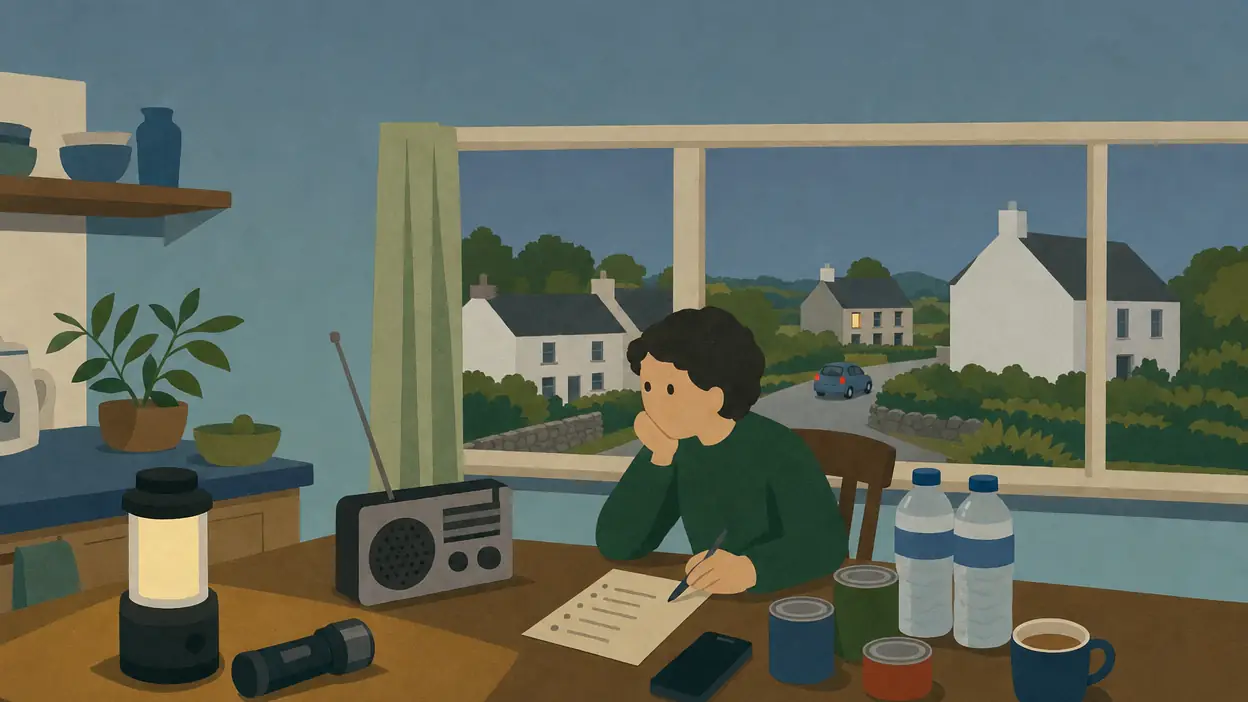
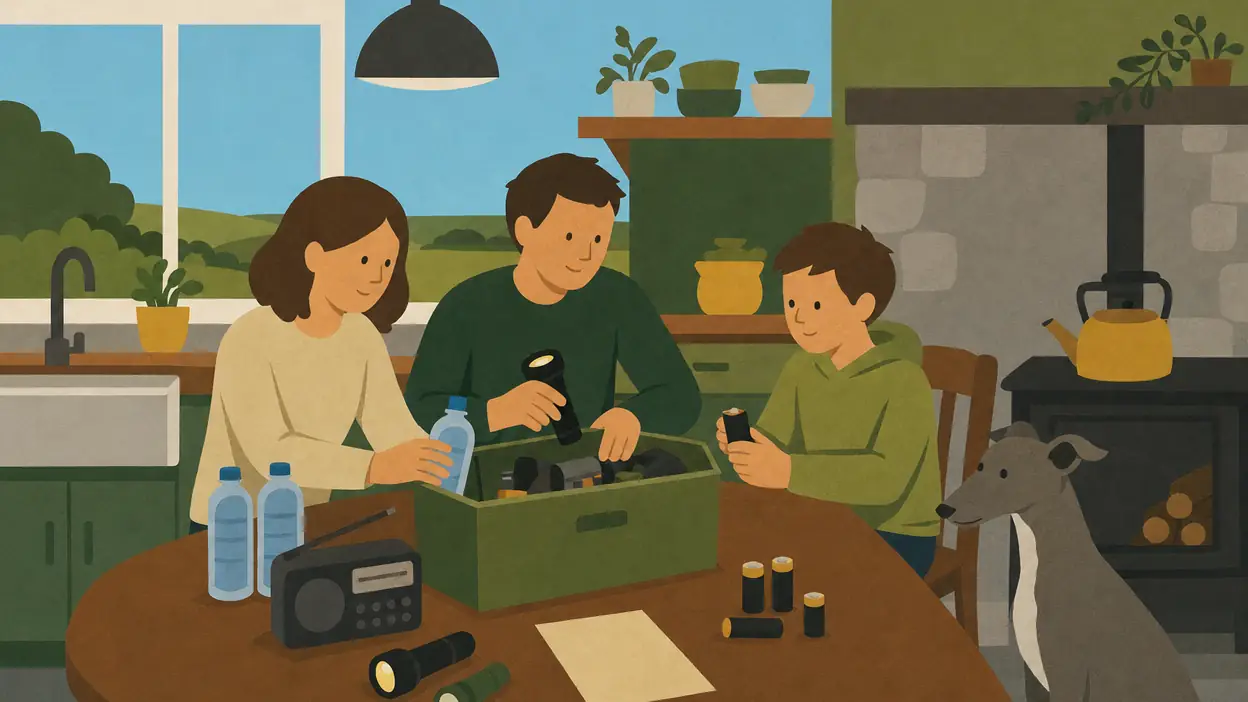
Work through the Irish checklist at your own pace: water, food, regular medicines, a torch, a battery radio and charged power banks. Write important contacts on paper. Agree how to support anyone who cannot easily receive an announcement. These ordinary household preparations also help during storms and outages. [9] [10]
Booklet material used: the final household preparation section adapts the Be Emergency Ready checklist and communication advice. Nuclear and iodine information comes from the specialist sources above. [10] [9]
Sources (10), all checked 2026-10-28
- EPA, Nuclear and radiological emergencies. Checked 2026-10-28.
- Government of Ireland, National Plan for Nuclear and Radiological Emergency Exposures, 2026. Checked 2026-10-28.
- Government of Ireland, National Plan for Nuclear and Radiological Emergency Exposures: publication page. Checked 2026-10-28.
- HSE Health Protection Surveillance Centre, Radiation. Checked 2026-10-28.
- UK Health Security Agency, What to do in a radiation emergency. Checked 2026-10-28.
- Department of Health, Decision to Discontinue the Future Distribution of Iodine Tablets, 3 April 2008. Checked 2026-10-28.
- EPA, National Radiation Monitoring Network. Checked 2026-10-28.
- EPA, Ambient gamma dose rate data. Checked 2026-10-28.
- Office of Emergency Planning, Your checklist. Checked 2026-10-28.
- Office of Emergency Planning, Be Emergency Ready booklet. Checked 2026-10-28.