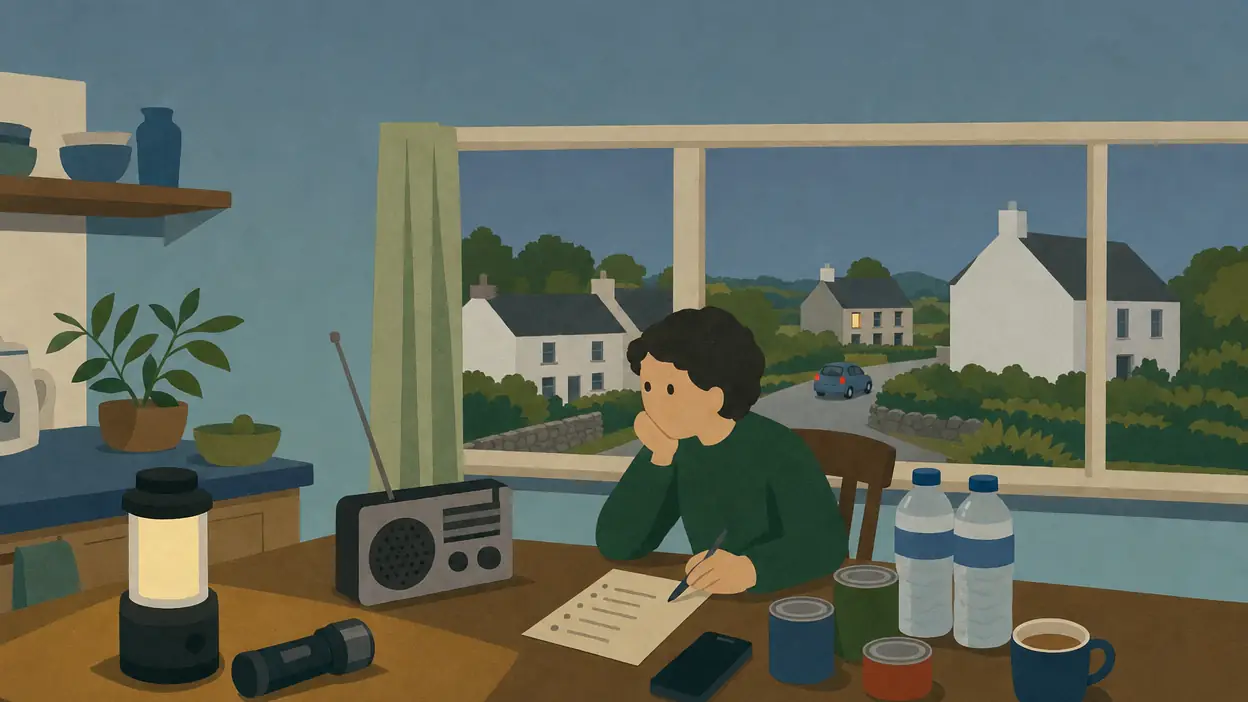
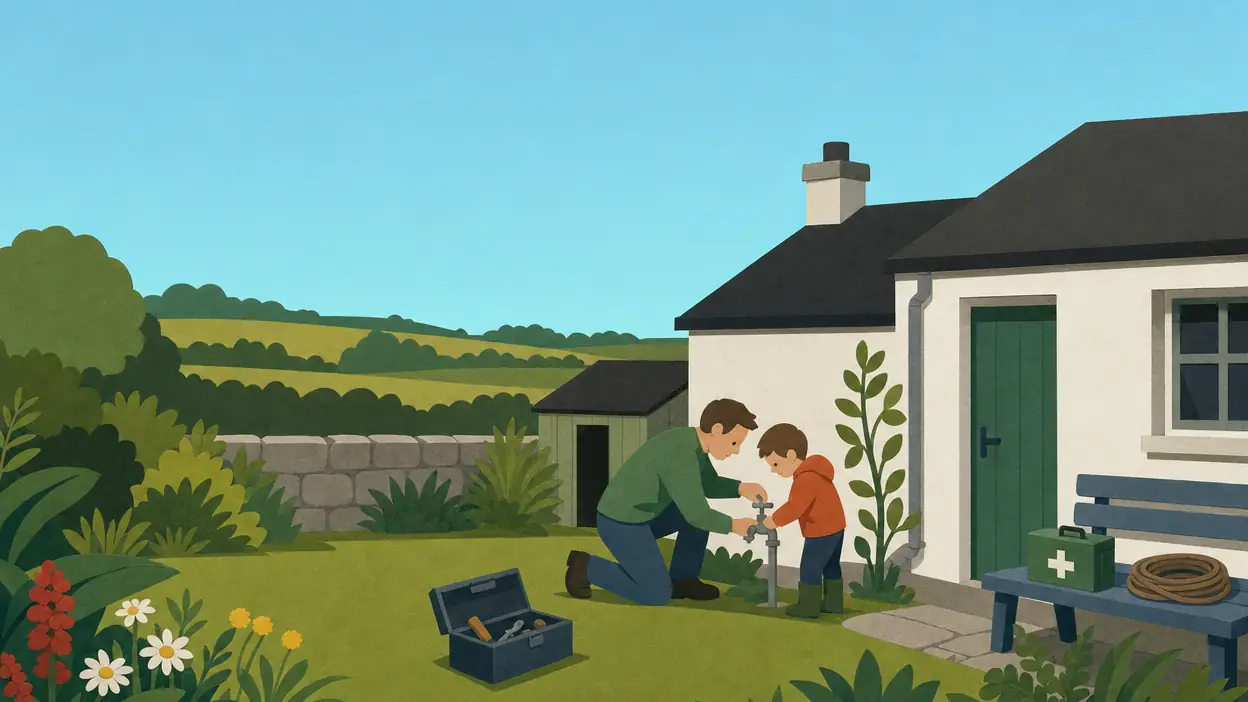
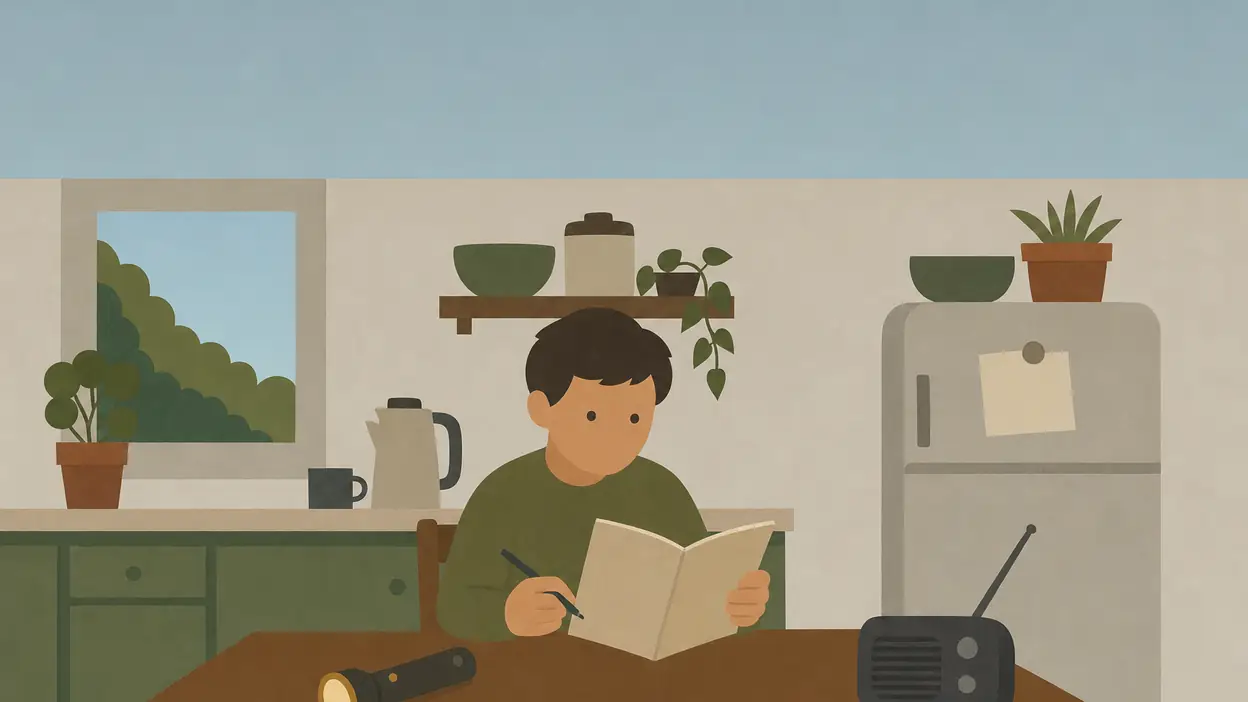
These are suggested activities, not an official exercise programme. They put the Irish booklet’s advice to build supplies gradually, write a plan and stay connected into practice.[1] You choose the pace. There is no prize for the most miserable evening.
Try a practice power-cut evening
Pick an ordinary evening when everyone knows what is happening. Start with an hour. Call it an indoor picnic if that sounds more appealing than an emergency exercise.
Simulate the inconvenience. Leave the electricity supply on. Keep fridges, medical equipment, alarms, heating needed for health and other essential systems operating. Switch off only the room lights and entertainment you have agreed to do without. Keep a charged phone available for real calls.
| When | Your small challenge |
|---|---|
| Before starting | Agree an end time and an easy stop signal. Put a working torch within everyone’s reach. |
| First ten minutes | Find the kit and light the room with torches or battery lamps. Can everyone reach the toilet comfortably? |
| Next ten minutes | Tune the battery radio using the card beside it. Find a national and a local station. |
| Mealtime | Assemble a no-cook meal from familiar food. Try the manual tin opener. |
| After eating | Charge a phone from the power bank. Play cards, read aloud or let someone choose a board game. |
| At the end | Write down three annoyances and choose one to fix. |
Those kit items reflect the official checklist’s lighting, food, radio and phone-power advice.[1] The schedule is our suggestion. Nobody needs to sit in darkness to prove a point.
Choose battery lighting for this activity. Do not introduce a camping stove indoors: HSE warns against indoor camping-stove and barbecue use because of carbon monoxide.[2] An outdoor cooking practice can be a separate, fair-weather activity using the safe cooking guidance.
Your notes might say: “The radio batteries were missing”, “The power bank cable did not fit” or “Nobody liked the emergency crackers”. Excellent things to discover on a quiet evening. Fix the awkward bit, then try again another month.
Then build your household kit from things you already own, adding one useful item or skill each month. Keep essential equipment powered and make every activity voluntary, especially for children.
Give the kit one weekend
Keep the sessions short enough that people still want to help at the end.
Saturday morning: the household treasure hunt
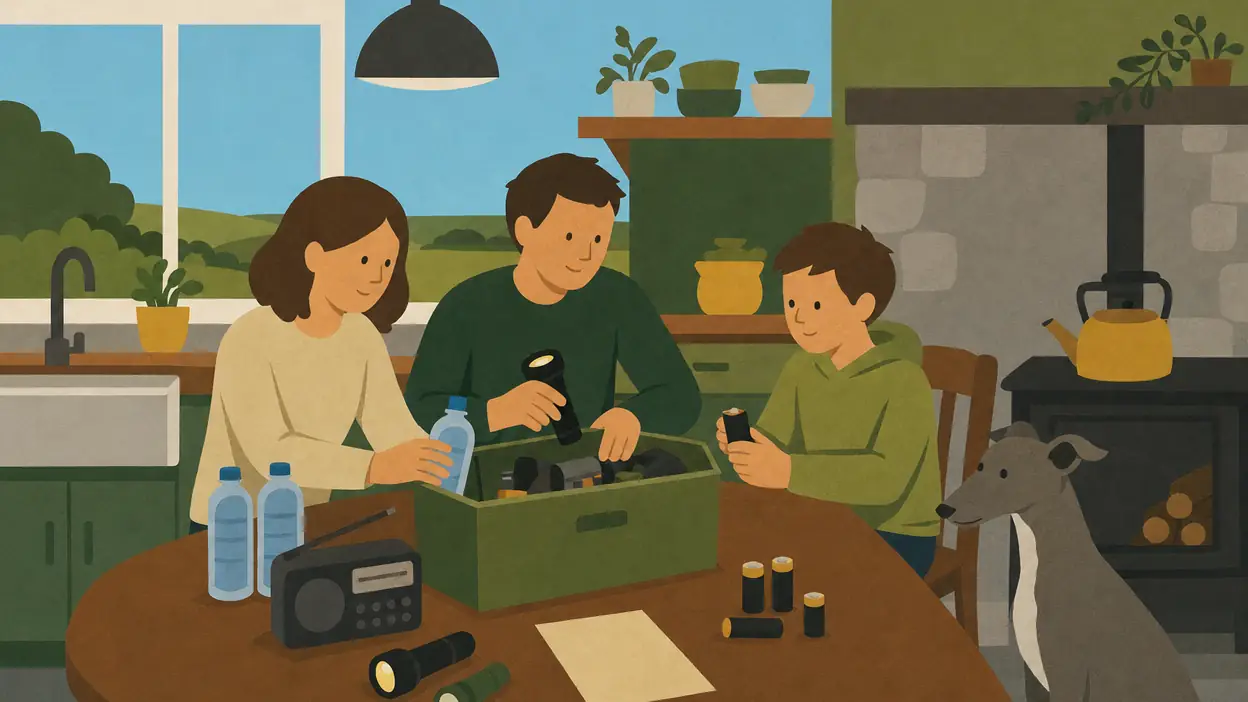
Put a box on the table. Find the torches, radio, chargers, first-aid supplies, spare batteries and manual opener you already own. Test them. Keep only the working items you understand how to use.
Use the official checklist to review water, food, warmth, medicines, hygiene supplies and documents too. It recommends storing kit somewhere dry and accessible and rotating food before it expires.[1] Do not buy a second version of everything just to fill a matching box.
For a starter drinking-water calculation, the Irish checklist says 2 to 3 litres per person each day. Choosing three days at the upper end gives 9 litres per person, or 36 litres for four people, before cooking and hygiene water. Three days is our starter target here, not a duration specified by the Irish booklet.[1]
Saturday afternoon: choose food you would actually eat
Let each person nominate a shelf-stable option. Include food that needs neither cooking nor a fridge before opening, and follow its label. Check dietary needs and make a plan for opened leftovers. Try the meal while normal kitchen facilities are available.
The test is whether your household likes it, can open it and knows how to serve it. A tin opener earns its place by opening a tin.
Sunday: make it easy to find
Label the kit location. Write a contents list and keep a copy inside. Put contact details in a waterproof pouch and save a photo of the plan, following the booklet’s approach.[1] Keep private documents out of children’s activity sheets.
Finish by asking someone who did not pack the kit to find three things. If they have to ask where you hid them, improve the labels.
See the equipment categories.
A checklist children can own
Let children name the kit, draw the symbols and choose a small comfort item. Offer the following as a printable activity, adapted to age and ability. They are helpers; adults remain responsible for safety and supplies.
My ready list
- I know where my torch lives.
- I can switch it on and show an adult if it needs attention.
- I have chosen a book, game or comfort item.
- I have picked a snack with an adult.
- I know which adult to ask for help.
- I can point to our contact card.
- I know I can stop the practice whenever I want.
Adults handle loose batteries, medicines, fuel, flames and utility controls. Practise describing your location to an adult using a pretend phone call. Do not dial an emergency number for practice. The official booklet identifies 112 or 999 for real emergencies and recommends that household members know their Eircode.[1]
Avoid surprise blackouts or pretending somebody is hurt. The aim of this activity is familiarity, and a child can join in with the drawing without taking part in the evening.
Twelve months, one useful thing each month
Start in any month. Use what you already own. Prices need checking: use the home-plan builder for expiring shopping examples. Professional work, food, travel and course fees are separate.
- Write county contacts and agree a check-in with a neighbour.
- Find the torches and check their batteries.
- Check drinking-water storage and rotate bottles.
- Try a voluntary no-mains evening. Leave essential and medical systems on.
- Find a first-aid course and check current dates and fees.
- Choose familiar foods that need no refrigeration or cooking.
- Tune the radio to your local station and write down the frequency.
- Put warm layers and blankets where everyone can reach them.
- Gather essential documents for a grab bag.
- Ask which heating, water and internet systems need electricity.
- Let children find the torch with an adult. Keep it a short game.
- Review the plan together and replace anything used.
Booklet material used: gradual kit-building, checklist categories, daily drinking water, food rotation, contact cards, document protection and emergency-number awareness. The activities, children’s sheet and monthly plan are our additions.[1]
Sources (2), all checked 2026-10-28
All sources checked 2026-10-28.
- Office of Emergency Planning, Be Emergency Ready booklet and official checklist.
- HSE, carbon monoxide prevention.