Make the area safe before documenting damage
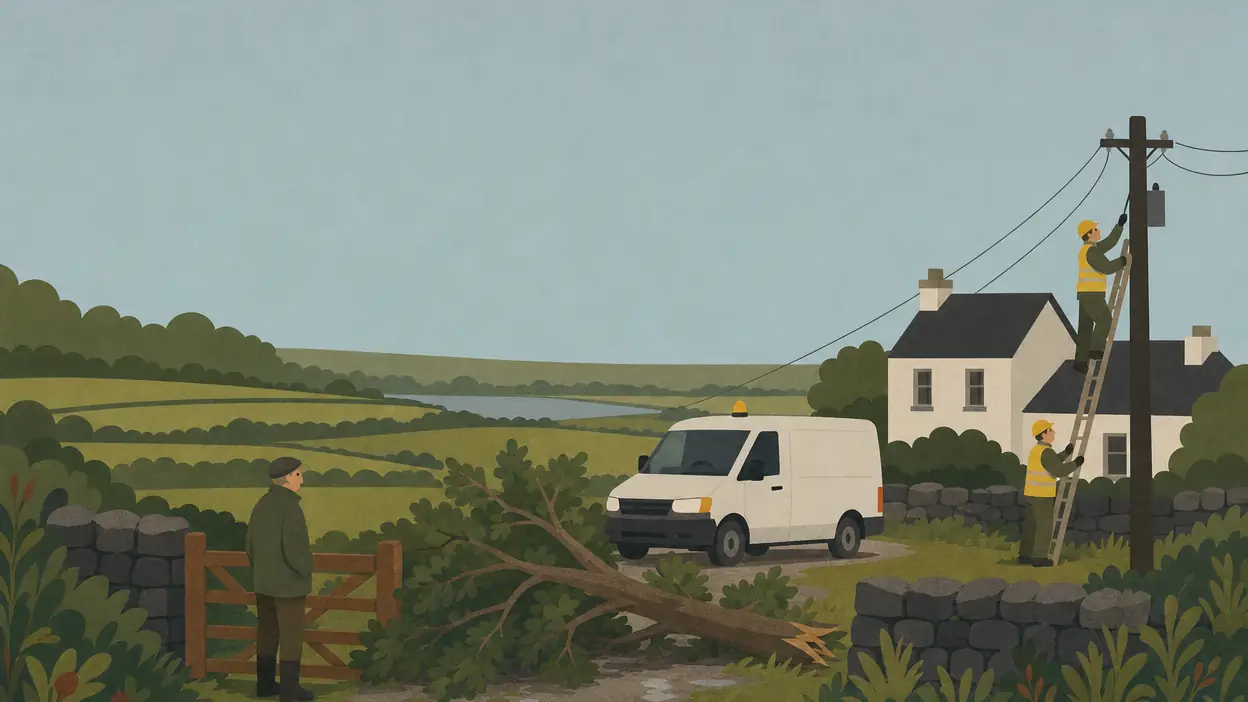
Keep clear of fallen wires and report them to ESB Networks on 1800 372 999. Assume they are live. Look for loose roof tiles from a safe distance, and do not put yourself under damaged roofing to take a photograph.[5][2]
If your home flooded, have affected electricity, gas and fuel-based services checked professionally before turning them back on. Stay out if there are signs of serious structural damage. Do not rush to pump out a basement while the ground outside is saturated.[1]
If someone is in immediate danger, call 112 or 999. Deal with that before a claim or clean-up.[6]
The Department of Social Protection’s Emergency Response Payment, formerly the Humanitarian Assistance Scheme, may help eligible households with essential needs and repairs.[3] ESB Networks’ published Network Repair Guarantee excludes exceptional cases such as storms and extensive disruption.[4]
Start an insurance claim
Contact your insurer promptly. Ask what your policy covers. Check what evidence it needs and which repairs need approval. Cover and limits depend on the policy, so do not assume that a neighbour’s settlement describes yours.[1]
From a safe place, take photographs and make a list of damaged items. Keep receipts for emergency repairs, such as making damaged windows or roofing safe. Ask your insurer about the next steps before commissioning substantial work.[2]
Keep these details together in your claim record:[1][2]
- Your policy and claim reference.
- Photographs or video showing the damage.
- A list of affected belongings and repair estimates.
- Receipts and invoices.
- Notes of calls, emails, instructions and agreed next steps.
If you must leave, give your insurer a working contact number. Ask whether your policy covers alternative accommodation. For a flooded property, record the water level as part of the evidence when safe.[1]
What about spoiled food?
Check whether your policy includes fridge or freezer food loss. It may do, but an outage alone does not establish cover for every expense, including accommodation.[7]
Photograph spoiled items and make a loss list before disposing of them if safe. Do not keep unsafe food simply to preserve a claim: the OPW advises photographing items when they cannot be retained for assessment. Keep any relevant receipts and ask the insurer what evidence it accepts.[1][2]
Use the timings and temperature checks in Power cuts in Ireland: what to do. For freezer food after an outage, FSAI says to discard food that has been above 5°C for more than two hours. Restored electricity does not establish the food’s temperature history.[8]
Financial help and outage compensation
Use the Department of Social Protection payment finder to check eligibility and the application window for your event. Check the current terms. Do not assume a power cut alone qualifies or that every loss is covered.[3]
Read the ESB Networks customer charter before claiming. Its Network Repair Guarantee has exclusions for exceptional cases such as storms or extensive disruption. Check the current terms; a long storm outage is not an automatic payment entitlement.[4]
What can the council help with?
Ask your council about local clean-up arrangements and practical support after flooding. The Department of Social Protection says dehumidifiers and skips are outside its payment scheme because councils provide them where required. Confirm availability and arrangements locally before paying for something you expect to be supplied.[3]
If you rent, tell the landlord or housing provider what happened and ask about building repairs. The household payment scheme’s exclusion for structural repairs to rented properties makes it especially important to identify who is arranging that work.[9]
Keep the paperwork together
Keep your policy, claim details, photographs and support applications together. Keep an accessible backup too. The emergency booklet recommends keeping key documents safe and waterproof. Having them together makes the next call easier when you are dealing with several organisations.[6]
Booklet material used: protecting documents and keeping important contacts accessible are adapted from Be Emergency Ready.[6]
prepared.ie is independent and is not affiliated with the Government of Ireland, Met Éireann, ESB or any agency. In an emergency, call 112 or 999.[6]
Sources (9), all checked 2026-10-28
Footnotes
-
Office of Public Works, After a flood. Checked 2026-10-28. ↩2 ↩3 ↩4 ↩5 ↩6
-
Aviva Ireland, Home storm safety tips. Primary insurer guidance on photographs, safe inspection and repair receipts; no policy cover assumed. Checked 2026-10-28. ↩2 ↩3 ↩4 ↩5
-
Department of Social Protection, Emergency Response Payment, formerly Humanitarian Assistance Scheme. Published page last updated 2026-05-12; indexed primary-page text checked 2026-10-28. Direct page retrieval returned 403; check the current official terms. ↩ ↩2 ↩3
-
ESB Networks, Customer charter landing page and currently linked customer charter PDF. Guarantee 1 and general exceptions read with pdftotext on 2026-10-28. The linked PDF itself is marked revised April 2020. ↩ ↩2
-
ESB Networks, Storm Austen preparedness advice. Checked 2026-10-28. ↩
-
Office of Emergency Planning, Be Emergency Ready booklet and resources. Supplied booklet read with pdftotext; checked 2026-10-28. ↩ ↩2 ↩3 ↩4
-
Aviva Ireland, How to cope after a bad storm. Primary insurer guidance; individual policy terms control cover. Checked 2026-10-28. ↩
-
Food Safety Authority of Ireland, Storing food safely. Consumer power-cut advice checked 2026-10-28. ↩
-
Department of Social Protection, Emergency Response Payment announcement and Community Welfare Service contact. Contact checked 2026-10-28; historical storm activation not presented as a current open application window. ↩