The scene this guide is for
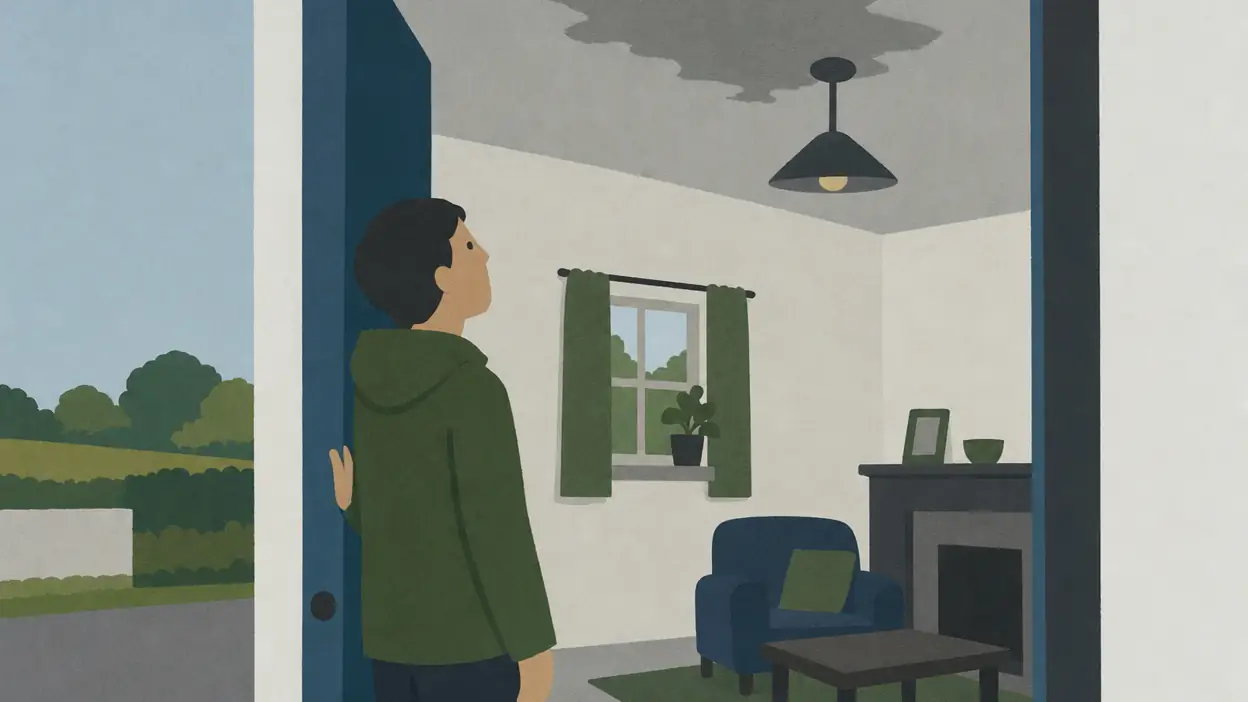
Seven on a January morning. The kitchen cold tap gives a cough and stops. Upstairs, the toilet cistern has not refilled. By lunchtime the frost has lifted, and a dark patch starts spreading across the landing ceiling.
The quiet interval matters. Uisce Éireann warns that pipes can crack in freezing weather and start leaking when temperatures rise.[1] A thaw is a time to inspect the house, even if the taps appear to be working again.
Do not touch a wet electrical switch. If the fault is on the public supply, call Uisce Éireann, 1800 278 278, available around the clock.[1][4] To prevent freezing, insulate exposed pipes and keep heating on low for longer periods. Never use the heating or immersion to thaw a pipe that is already frozen.[1][2]
Find the valve before you need it
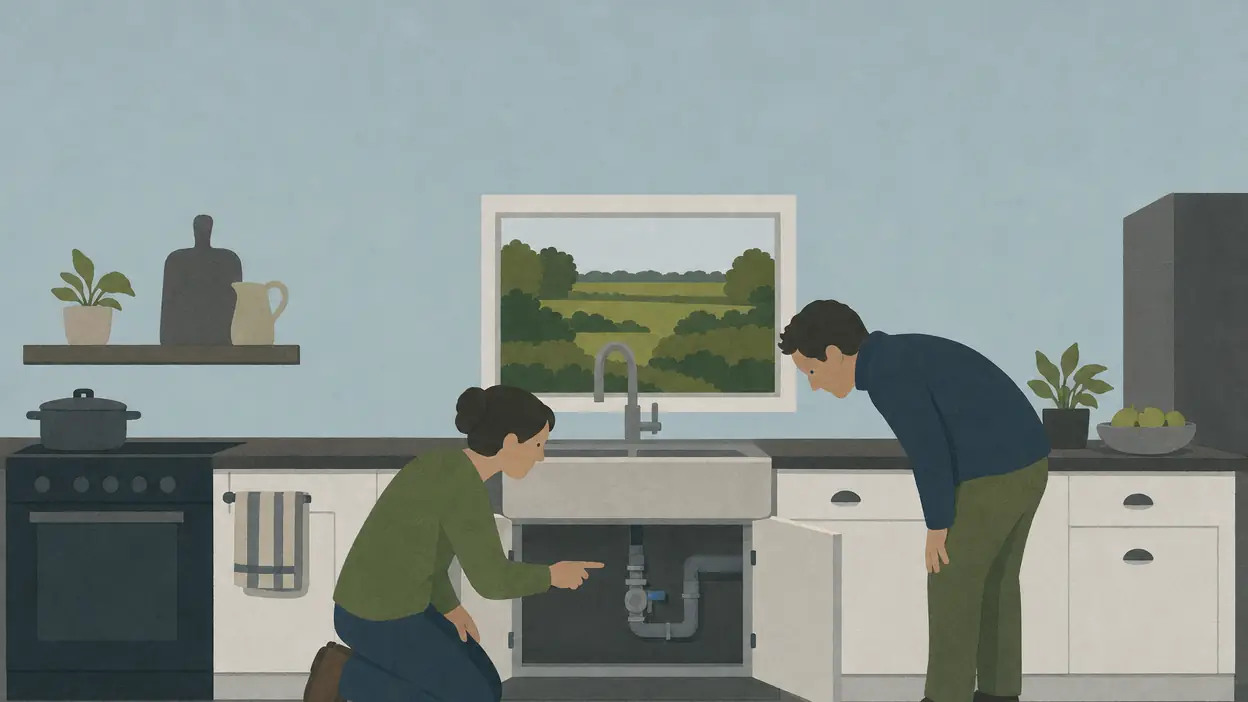
The inside stop valve, often called the stopcock, controls incoming water. The Office of Emergency Planning’s winter booklet says it is usually under the kitchen sink.[3] Find yours in daylight. Move cleaning bottles or stored bags out of the way so someone can reach it quickly.
Make a simple household record:
- Photograph the inside stopcock. Include enough surrounding cupboard or wall to identify it.
- Ask a plumber to show you how it closes, particularly if it is stiff or you are unsure which valve it is. Do not wait for water to be coming through the ceiling.
- Identify any cold-water tank shut-off. Uisce Éireann’s frozen-pipe instructions include turning off the stopcock at the cold-water tank, usually in the attic.[1] Ask how this applies to your system.
- Show another adult in the household. Put the photograph and plumber’s number somewhere accessible without an internet connection.
- In an apartment, ask the management company about access. Uisce Éireann says a shared supply stopcock is usually where water enters the building. Check whether closing it affects neighbours.[1]
This record is an editorial checklist built from the official shut-off advice. It is useful precisely because plumbing layouts differ: an outside valve, an inside valve and a tank valve are not interchangeable instructions.
Before a freeze: protect the vulnerable places
Uisce Éireann recommends insulating exposed pipes and water tanks, fixing dripping taps, reducing draughts and servicing the boiler.[2] Pipe insulation is also called lagging. Look beyond the warm kitchen: the winter booklet specifically includes attic pipes, where insulating the attic floor can leave the space above colder.[3]
Walk through the house with these jobs in mind:
| Place | Action before the cold arrives |
|---|---|
| Attic and other unheated spaces | Have exposed pipes and tanks insulated. Ask the plumber about awkward joints and valves.[2][3] |
| Outside tap | Fix drips and protect it against frost. Water dripping onto a path can also become a slip hazard.[3] |
| Cold cupboards or rooms | Let warm air circulate to unheated areas while the house is occupied.[2] |
| Boiler | Arrange regular servicing; find the service contact before a breakdown.[2][3] |
| Drinking water | Keep a separate supply in case the pipe freezes or bursts.[2] |
Keep the heating on at a lower setting for longer periods, including while away, as Uisce Éireann advises.[2] Neither source gives a universal thermostat setting that guarantees every pipe is protected. The right question for your plumber is which parts of your system remain exposed, particularly during a power cut.
Do not leave taps running to prevent freezing. Uisce Éireann says this does not prevent frozen pipes, can cause frozen drains and puts pressure on the wider supply.[2] For warmth during an outage, use Staying warm and cooking without power in Ireland and Snow and cold: keep warm and protect your water supply.
No water: establish which problem you have
Use this order before assuming a pipe has frozen:[1][4]
- Ask a neighbour whether their supply is affected. Several homes without water may indicate a supply fault.
- Check Uisce Éireann’s supply updates, or ring 1800 278 278 if you cannot check online.
- Notice which taps work. One failed tap and a whole-house loss of water give the plumber different information.
- Look only at safely accessible pipework. Uisce Éireann identifies uninsulated pipes, nearby draughts, unusually cold pipes and visible damage as clues.
- If uncertain, call a plumber. The operator’s thawing guidance is for people with basic plumbing knowledge, not an instruction to dismantle the house.
With a frozen mains supply, the winter booklet advises caution with heating, washing machines and other water-dependent appliances.[3] Stop and ask a plumber if you cannot establish whether the system has water.
A frozen pipe that has not visibly burst
Uisce Éireann gives a specific sequence:[1]
- Turn off the inside stop valve and the cold-water tank stopcock, where applicable.
- Open nearby cold taps to relieve pressure. Do not open hot taps at this stage.
- Move or protect possessions that could be damaged when the ice melts.
- Only consider gentle thawing if the pipe and fittings are not cracked or broken.
- If using Uisce Éireann’s suggested hairdryer method, use its lowest setting and start at the end nearest the tap. Never use electrical equipment where water could reach it. Galway County Council warns of electrocution if a damaged pipe starts leaking during thawing.[5]
Do not use a blowtorch or other naked flame. Do not switch on the heating or immersion to thaw the pipe.[1] If the pipe is inaccessible, damaged, or near water and electrics, leave thawing to the plumber.
The distinction is timing: low heating helps before freezing; an already frozen system needs the separate procedure above.
A pipe has burst: limit the damage
Follow Uisce Éireann’s order, with electrical safety first wherever water has reached fittings:[1]
- Turn off incoming water and the tank shut-off where applicable.
- Open cold taps and flush toilets to drain the system.
- Switch off central heating and the immersion. If using solid fuel, let the fire die out.
- Only after water heating is completely off, open hot taps to drain further.
- If water is near sockets, switches or appliances, isolate electricity only if safe. If the main switch is wet, do not touch it: call a qualified electrician.
- Call a plumber for a permanent repair. Tell them where water is escaping and which supplies you have shut off.
- Warn adjoining homes or building management if water or a shared shut-off could affect them.
Do not switch the immersion or boiler back on until the hot-water system has been refilled.[1] Make this a question for the plumber at handover, not a guess based on whether a tap briefly runs.
When the thaw comes
Galway County Council specifically advises checking for leaks and bursts when the thaw begins or supply returns.[5] Inspect accessible pipe routes and rooms below tanks. Look for a new ceiling stain, dripping joints or water appearing where it should not be. Keep the stopcock accessible during these checks.
Decision rules:
- New leak: shut off water and use the burst-pipe sequence.[1]
- Wet electrics: keep clear and get an electrician.[1]
- Supply restored but heating drained: have the system refilled before restarting it.[1]
If the problem has left you without drinking water, use Water outages and boil water notices. A restored flow is not permission to ignore a separate water-quality notice.
Who to call, and what to keep for insurance
For a burst inside the home, call a plumber. For wet electrical fittings, call a qualified electrician. For a leak on public property, Uisce Éireann asks people to report it; its customer-care number is 1800 278 278.[1][4] Its leak-repair schemes have eligibility rules, so do not assume every pipe on private land is repaired free.
Citizens Information distinguishes buildings cover from contents cover, which can be held separately.[7] The Competition and Consumer Protection Commission advises checking the full insurance policy and contacting the insurer or broker promptly.[6] Ask whether emergency repairs are covered and what evidence they need. Keep photographs, the time you discovered the damage, and repair receipts together. The winter booklet recommends photographs or video of flood damage.[3]
Check the amount you must pay yourself before claiming, and any conditions for an unoccupied home. Cover varies; this guide cannot promise that a burst pipe, the damaged pipe itself, or every resulting loss is insured.[6] If going away, agree shut-off and draining arrangements with a plumber, and leave a keyholder able to check for leaks.[3]
Sources (7), all checked 2026-10-29
All checked 2026-10-29. All Irish.
- Uisce Éireann, frozen or burst pipes.
- Uisce Éireann, winterproofing.
- Office of Emergency Planning, Be Winter-Ready 2024-2025, hosted by Met Éireann.
- Uisce Éireann, leaks.
- Galway County Council, severe cold weather.
- CCPC, making an insurance claim.
- Citizens Information, types of insurance.
prepared.ie is independent public information, published by Gallan Software. It is not affiliated with the Government of Ireland or any agency. In an emergency call 112 or 999.