Get to know the OPW maps
Open the OPW flood map viewer. Start with your own area. Have a look at past flood records, then predictive mapping. Read each layer’s description as you go. A record of an earlier flood and a modelled future flood are different kinds of information.[1][5]
The maps describe community flood risk. They do not certify that an individual house is safe. Areas outside the mapped flood extent can still flood from sources or river sections that have not been modelled.[1][5]
Ask about previous flooding locally, especially if you have recently moved. OPW also highlights low ground, basements and proximity to watercourses as reasons to consider your exposure. Existing flood defences reduce risk but do not remove it.[6]
Never drive, walk or cycle through floodwater.[3] Follow evacuation instructions and have flooded electrical and heating systems checked before using them again.[2][4]
Before flooding: prepare to leave safely
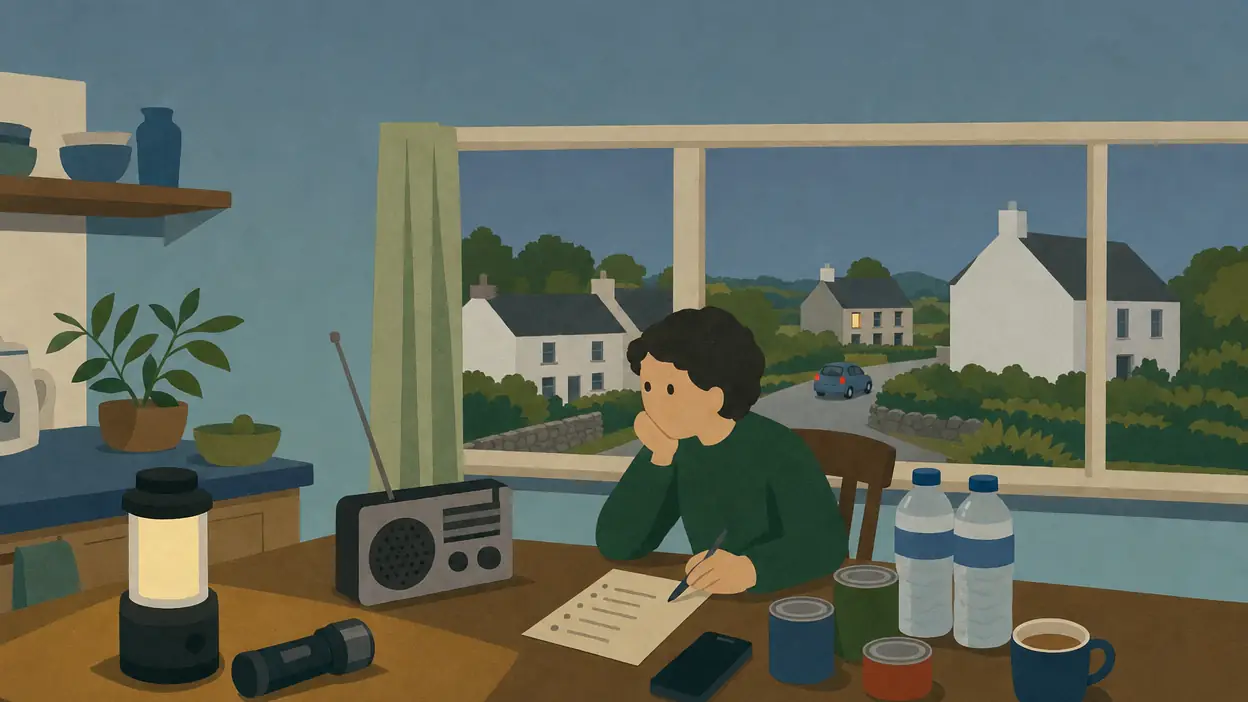
Set aside some time with the people you live with to put your plan together. Talk through what you would take, who may need help and how you would stay in contact. Write the plan and important numbers on paper as well as keeping them on your phone. That is a useful bit of preparation done together.[7]
While it is safe and there is time:[2][6]
- Move medicines, documents and irreplaceable belongings upstairs or above expected floodwater.
- Raise small electrical items and valuables off the floor.
- Move your vehicle to higher ground without entering floodwater.
- Keep warm waterproof clothing, a torch, drinking water and essential medication ready.
- Know where your water, electricity and gas shut-offs are. Only operate them if it is safe.
Do not delay an evacuation to move furniture. Follow the emergency services’ instructions. Your bag should include identification, medicines, hygiene items, phone and charger, keys and suitable clothing.[2][7]
Can you get sandbags from the council?
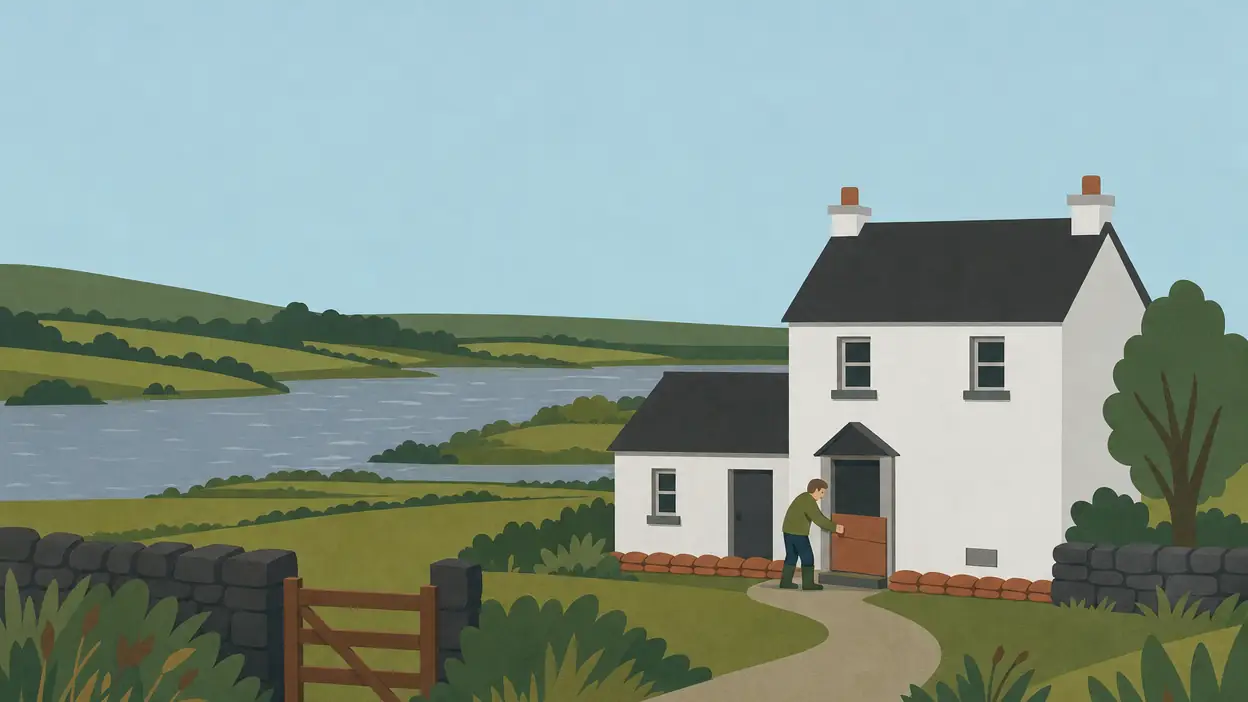
Check your own council’s current flood notice or contact its emergency service. Do not assume sandbags will be delivered to every home. For example, Limerick City and County Council prioritises its flood response work and may make bags available to at-risk premises or collection points depending on conditions. That is a local policy, not a nationwide entitlement.[8]
Ask these practical questions before setting out: Is a collection point operating? Does it serve your area? Are bags already filled? Can someone help if you cannot collect or lift them? These questions follow from the council’s conditional distribution arrangements and OPW’s warning that sandbags can be difficult to handle.[6][8]
Sandbags are not completely watertight. They take time to prepare and can retain contamination after contact with floodwater. Make reading the OPW guidance for your property a job for a quiet weekend. Plan your barriers in advance, rather than relying on a last-minute supply.[6]
During flooding: keep out of the water
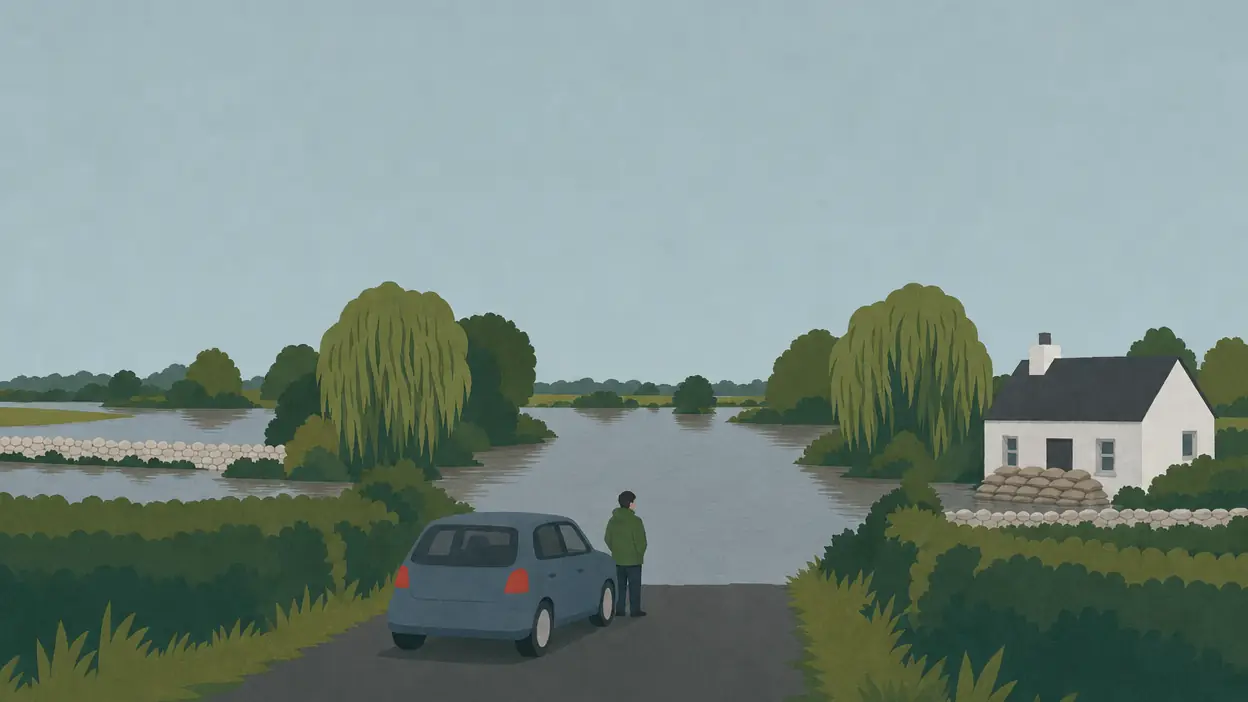
Never drive through a flooded road, even if another vehicle has crossed. Do not walk or cycle through it either. Floodwater can hide open drains, debris and other hazards. Avoid flooded riverbanks and keep children away.[3][9]
| Situation | What to do |
|---|---|
| You are told to evacuate | Follow the instructions and take your essential bag if it is safe to do so.[2][7] |
| Someone is in immediate danger | Call 112 or 999.[7] |
| A wire has fallen near the flood | Keep clear and call ESB Networks on 1800 372 999.[10] |
| Floodwater reaches electrical equipment | Keep away. Do not touch wet switches or attempt repairs.[4][11] |
After flooding: make the home safe first
Do not treat a dry-looking room as proof that the building is safe. Flooding can damage structures and services. OPW advises having electricity, gas and fuel-based services checked by professionals before turning them back on. Do not rush to pump a flooded basement while the surrounding ground is saturated; unequal pressure can damage the walls.[4]
For cleaning, follow the HSE Health Protection Surveillance Centre’s guidance. Wear waterproof gloves and boots, cover cuts and wash your hands. Keep children away from floodwater and cleaning equipment.[11]
Discard food that touched floodwater. Clean and disinfect affected food preparation surfaces and equipment before using them. Do not taste food to decide whether it is safe.[12]
Photograph damage when safe and speak to your insurer before major work. The after-the-storm page covers evidence, financial help and the limits of outage compensation.[4]
If you use a private well, contact your local authority for advice on its safety after flooding. The EPA’s household well guidance explains protection and testing. Do not assume water is drinkable just because it looks clear.[13]
Booklet material used: written plans, evacuation essentials and protecting documents are adapted from Be Emergency Ready.[7]
prepared.ie is independent and is not affiliated with the Government of Ireland, Met Éireann, ESB or any agency. In an emergency, call 112 or 999.[7]
Sources (13), all checked 2026-10-28
Footnotes
-
Office of Public Works, About the flood maps. Checked 2026-10-28. ↩2 ↩3
-
Department of Defence, Flooding advice. Checked 2026-10-28. ↩2 ↩3 ↩4 ↩5
-
Kilkenny County Council, Flood advisory within Storm Chandra support notice. Safety advice checked 2026-10-28; historical payment deadline not reused. ↩ ↩2
-
Office of Public Works, After a flood. Checked 2026-10-28. ↩ ↩2 ↩3 ↩4
-
Office of Public Works, Flood map viewer and layer guidance. Checked 2026-10-28. ↩ ↩2
-
Office of Public Works, Before a flood. Checked 2026-10-28. ↩ ↩2 ↩3 ↩4
-
Office of Emergency Planning, Be Emergency Ready booklet and resources. Supplied booklet read with pdftotext; checked 2026-10-28. ↩ ↩2 ↩3 ↩4 ↩5 ↩6
-
Limerick City and County Council, Policy for the distribution of sandbags. Checked 2026-10-28. ↩ ↩2
-
Department of Defence, Flooding advice: general safety. Checked 2026-10-28. ↩
-
ESB Networks, Storm Austen preparedness advice. Checked 2026-10-28. ↩
-
HSE Health Protection Surveillance Centre, Flooding: protecting health and cleaning up. Checked 2026-10-28. ↩ ↩2
-
Safefood, Food safety in emergencies. Checked 2026-10-28. ↩
-
EPA, Household wells. Checked 2026-10-28. ↩