The scene this guide is for
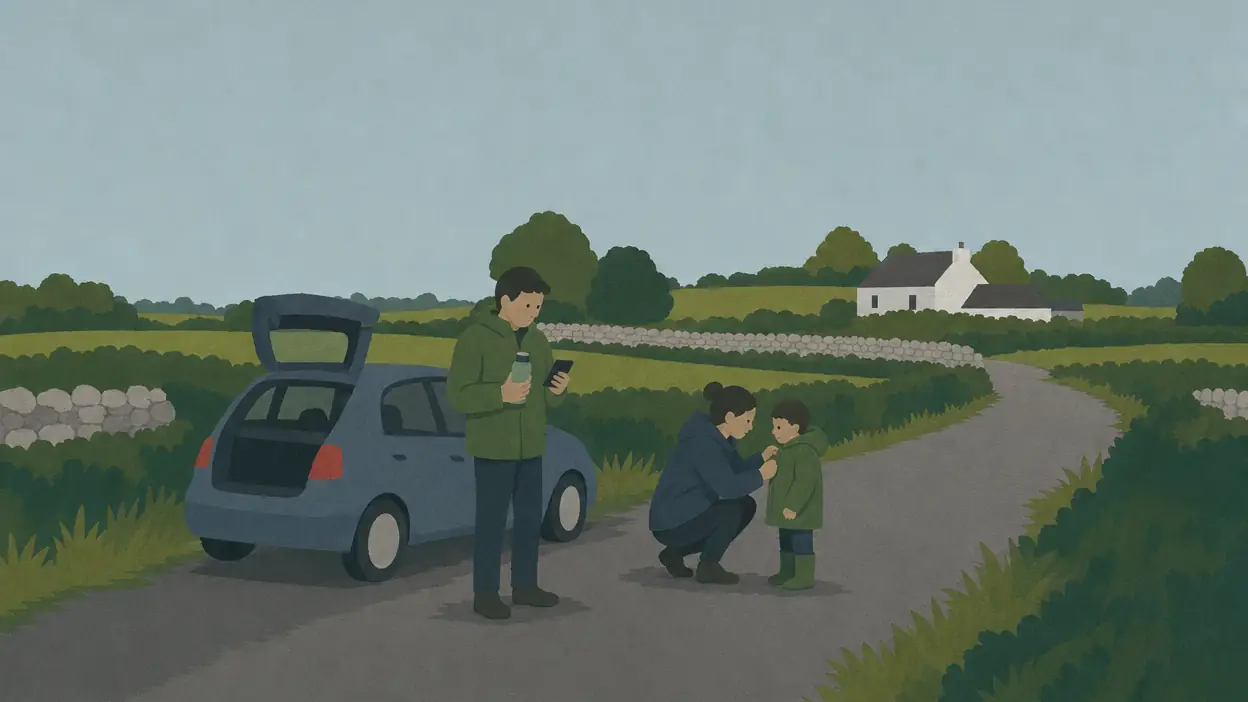
Saturday afternoon. Your child has caught a hand on a sharp garden edge. You find the red zip bag, but its only dressing was used on holiday. There are plenty of tiny plasters and no gloves. The useful question is whether the kit can handle the injury in front of you.
Put a contents card in the bag. After every use, write down what needs replacing before you put it away.
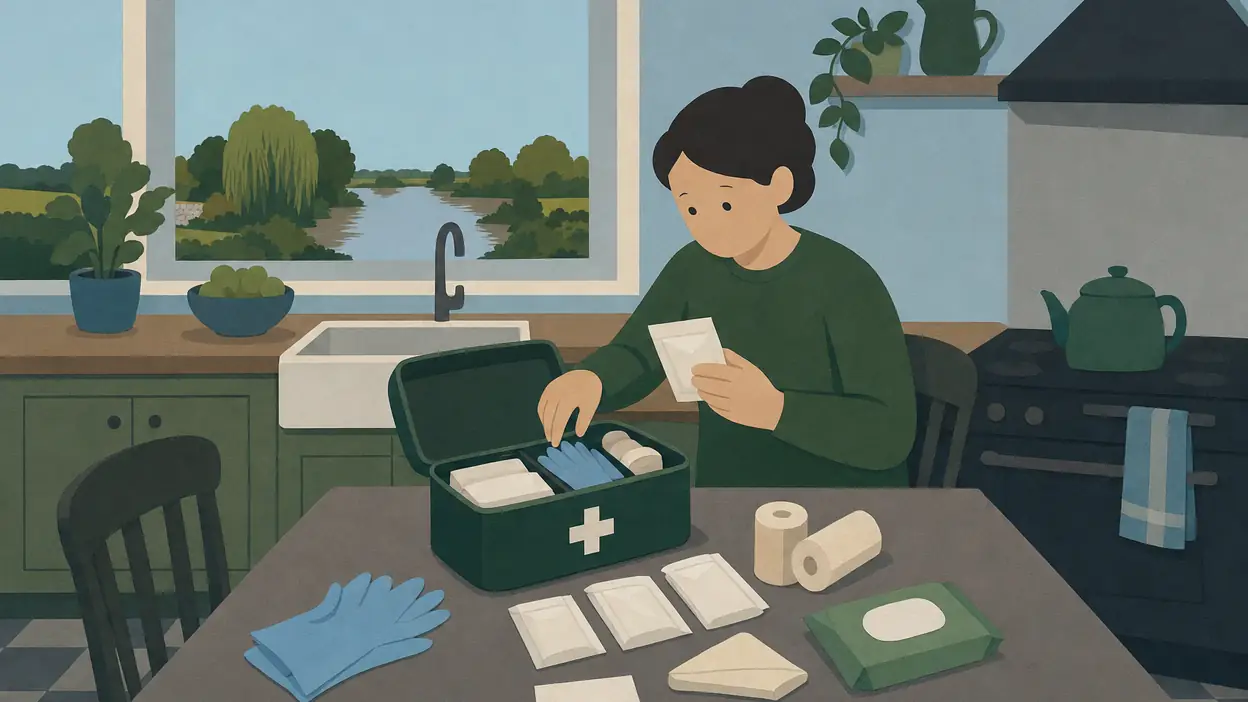
Start with gloves, sterile dressings, plasters, bandages, scissors and instructions, then adapt it to the people and activity.[1] Check expiry dates on individual sterile items.[7] A kit needs someone who knows how to use it: PHECC sets Ireland’s recognised first aid training standards.[6]
Start with the core, then choose where it lives
The Health and Safety Authority publishes a workplace box and travel-kit list.[1] It is a useful Irish starting point, not a statutory shopping list for a private home. Our adapted household packing list below groups its supplies by purpose; quantities depend on which version you choose.
| Core supply | What it is there for |
|---|---|
| Disposable examination gloves kit options | Protecting hands when helping someone with a wound.[2] |
| Assorted individually wrapped plasters | Covering small cleaned cuts.[2] |
| Sterile wound dressings in several sizes kit options | Covering wounds and supporting pressure on bleeding.[2] |
| Triangular and crepe bandages, safety pins | Securing dressings and the supports taught on a course.[1] |
| Sterile eye pads | A separate dressing supply on the HSA list.[1] |
| First aid scissors | Cutting dressing material; the HSA specifies shears.[1] |
| Pocket resuscitation mask | A barrier item on the HSA list; learn its use in training.[1][6] |
| Contents card and first aid instructions | Our organisational addition: identify missing items without opening sterile packs. |
The HSA also lists cleaning wipes, sterile water and water-based burn dressings. Its water and burn-dressing provisions are conditional on access to wholesome tap water.[1] Do not treat every supplied wipe as a wound cleaner: HSE warns that non-sterile, alcohol-free wipes can introduce bacteria.[2]
One person
Use the core supplies above. Keep the bag where you can reach it and tell a regular visitor where it lives. A single-person household still needs larger dressings and gloves: the injured person may be you, with someone else helping.
Our packing suggestion is to separate small-cut supplies from the larger dressings. Label the compartments in ordinary words. Put emergency contacts beside the contents card, rather than relying on a locked phone.
Home and family
Use the same core, with refills for items your household regularly uses. Choose assorted plaster sizes that suit the people living there. Keep the kit accessible to responsible adults and stored safely away from small children.
Agree who checks it. A bag moved between the house, car and school trip is easy to leave behind; separate locations deserve separate kits. This is an organisational recommendation, not an official requirement to buy a particular number of bags.
Keep the children’s burn instructions accessible. HSE says a baby or small child with a burn needs emergency-department assessment, and gives specific ambulance triggers for burns affecting areas including the face, hands and feet.[3] A home kit does not change those thresholds.
Car
Start with the HSA travel list. It specifies 20 plasters, 2 eye pads, 2 triangular bandages, 6 safety pins, one each of medium, large and extra-large sterile dressings, and 3 pairs of gloves, alongside its other supplies.[1] Compare an actual contents list with that list before buying; a bag’s total piece count is a poor description of its usefulness.
Pack the kit where a passenger can identify and retrieve it. Read each product’s storage instructions rather than assuming anything can live indefinitely in a hot or damp car. At each check, look for crushed packets and supplies borrowed for the house.
For breakdowns, traffic danger and keeping warm, use Stranded in a car in snow, flood or breakdown in Ireland. Dressings do not replace a torch, warm layers or a safe place away from traffic.
Specialist tiers: add the setting, not a second medical cabinet
These are adapted packing plans. Choose these with a trained leader or instructor. The additions below combine agency advice about exposure and rescue with the core kit; they are not separately certified specialist kit specifications.
| Activity | What changes | Read next |
|---|---|---|
| Hiking | Carry dressings and a survival blanket, with spare warm clothing, shelter and a way to call for help. Galway Mountain Rescue stresses both first aid skills and protection from exposure.[8] | Hill walking in Ireland: plan the return before the summit |
| Open water | Keep a dry kit with the shore belongings. Prioritise a towel, dry clothes, shelter and a waterproof means of calling; the Coast Guard warns that cooling continues after leaving the water.[9] | Open-water swimming in Ireland: decide before you get in |
| Angling | Protect the core kit from spray. Clothing, grip, eye protection near casting lines and a worn lifejacket address hazards that a dressing cannot prevent.[10] | Angling safely from shore, rocks and boats in Ireland |
| Caving | Take the group’s first aid supplies underground in suitable containers, with spare lighting, emergency shelter and writing materials. SUI also recommends a more substantial comfort bag near the entrance.[11] | Caving in Ireland: rain, call-out plans and getting help |
A waterproof outer bag kit options is a useful organising option for outdoor kits. Check the seal before departure. Keep the contents card readable without unpacking everything into rain or mud.
For kayaking or sailing, the first aid kit belongs within the boat’s wider emergency equipment plan, with everyone shown its location.[9] See Kayaking and sailing in Ireland: a safe plan before launch.
What the kit can do while help is arranged
Decision rules for wounds:[2]
- Wash and dry your hands; wear disposable gloves if available.
- For a simple cut, apply pressure if bleeding, then clean it before covering it. HSE advises running tap water for 5 to 10 minutes.
- Do not pull out something stuck in a wound. Get medical advice.
- Seek care for a large, deep, dirty or very painful wound, or a bite. HSE says all bites need medical attention.
- If bleeding continues after 10 minutes of pressure, get medical advice. Severe bleeding or someone becoming seriously unwell warrants an emergency call; follow the call handler’s instructions.[12]
This is why dressings, gloves and access to clean water earn space before extra gadgets. The Irish Red Cross has a home-kit demonstration covering cuts; use it as a prompt to practise the skills properly.[4]
For a child’s burn, HSE says cool the injured skin under cool running water for about 20 minutes, keeping the rest of the child warm. Use burn gel only when cool running water is unavailable, then use water when available. Do not apply ice, butter or sticky dressings.[3] A little gel sachet is not the same thing as a water supply.
Medicines and personal needs
The HSA says medicines should not be kept in a workplace first aid box.[1] At home or on a personal trip, keep prescribed medicines identifiable and follow the person’s own care plan. Ask the pharmacist about storage and replacement rather than decanting tablets into an unlabelled kit compartment.
Our planning recommendation is to list allergies, essential medicines and an emergency contact on a separate personal card. Share it with the person likely to help, with consent. For equipment dependence and medicine storage during outages, see Medically dependent at home in a power cut in Ireland.
Check expiry without wasting good supplies
The National Transport Authority notes that sterile items generally have expiry dates which should be observed.[7] The date on the outer bag cannot tell you which replacements were added later.
Use this checking routine:
- Empty the bag onto a clean, dry surface and compare it with its contents card.
- Read the expiry on each dated item, including sealed washes and dressings. Replace expired supplies.
- Check the wrapping is intact. Set aside damaged or opened sterile packs for replacement; do not count them as sealed stock.
- Refill used supplies, check scissors and closures, and return everything to its labelled place.
- Write the check date and the next expiry on the card. Check again before a trip and after use.
The checking sequence is our practical recommendation. We have not found an official universal replacement interval for a whole household kit. Follow product instructions, not a made-up rule that every bag expires together.
Put training on the list
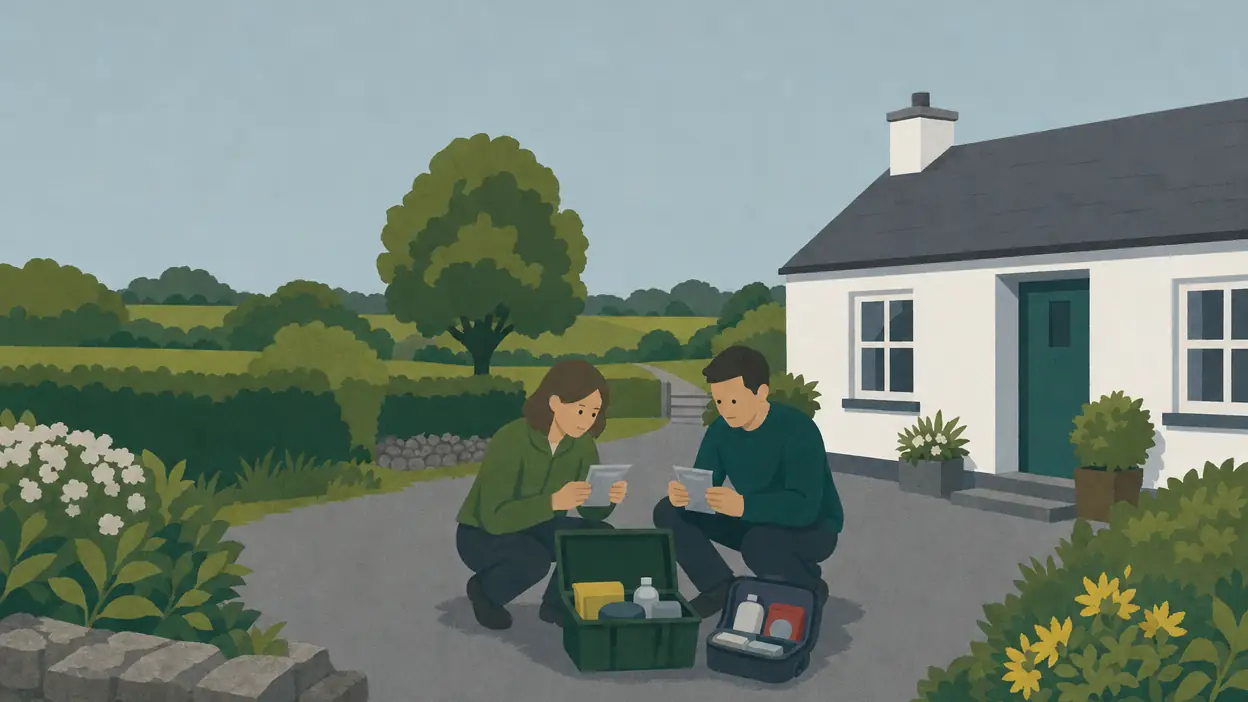
PHECC’s standards include first aid response and cardiac first response, delivered through recognised or approved institutions.[6] Order of Malta Ireland publishes responder training resources, including refresher material.[5] Book a course appropriate to your household or activity, then check what needs refreshing with the provider.
Practise locating the kit and opening its compartments with clean hands. For outdoor groups, agree who carries it and who calls for help. Put the learning alongside Skills worth learning before you need them: a well-stocked bag becomes useful when its owner recognises the emergency and acts.
Sources (12), all checked 2026-10-29
All checked 2026-10-29. Irish sources; SUI covers the whole island.
- Health and Safety Authority, first aid FAQ and kit contents.
- HSE, cleaning a wound.
- HSE, first aid for burns and scalds in children.
- Irish Red Cross, what is in a home first aid kit.
- Order of Malta Ireland, training resources and downloads.
- PHECC, education and training standards.
- National Transport Authority, initial suitability inspection manual (2023), page 50.
- Galway Mountain Rescue Team, be prepared.
- Irish Coast Guard, water safety.
- Water Safety Ireland, angling safety guidelines.
- SUI, guidelines for college and university clubs (2022), pages 3 to 5.
- ECAS, when to call the emergency services.