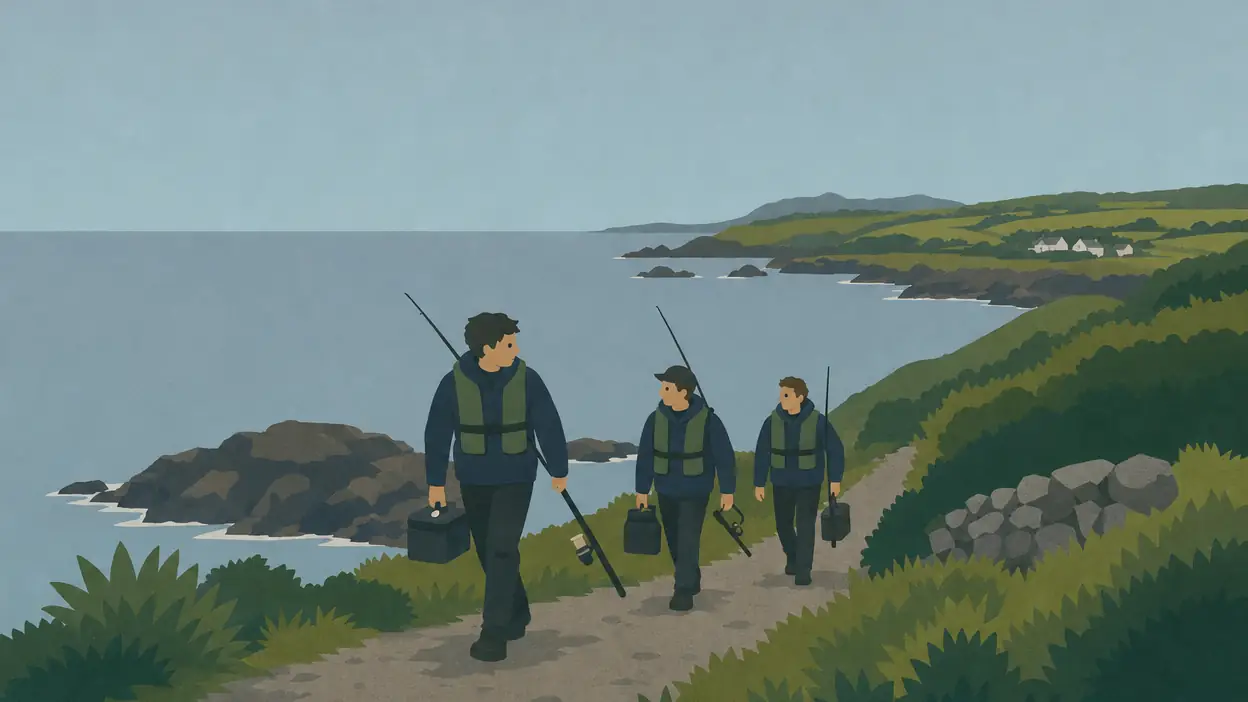
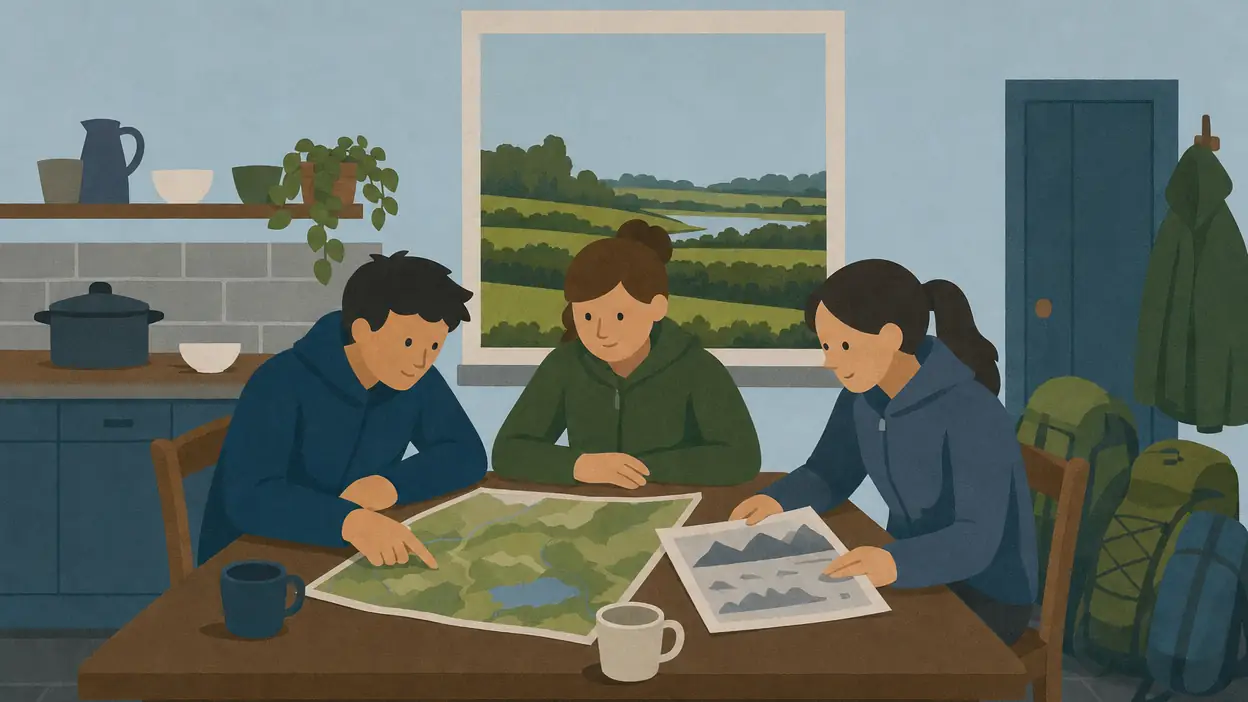
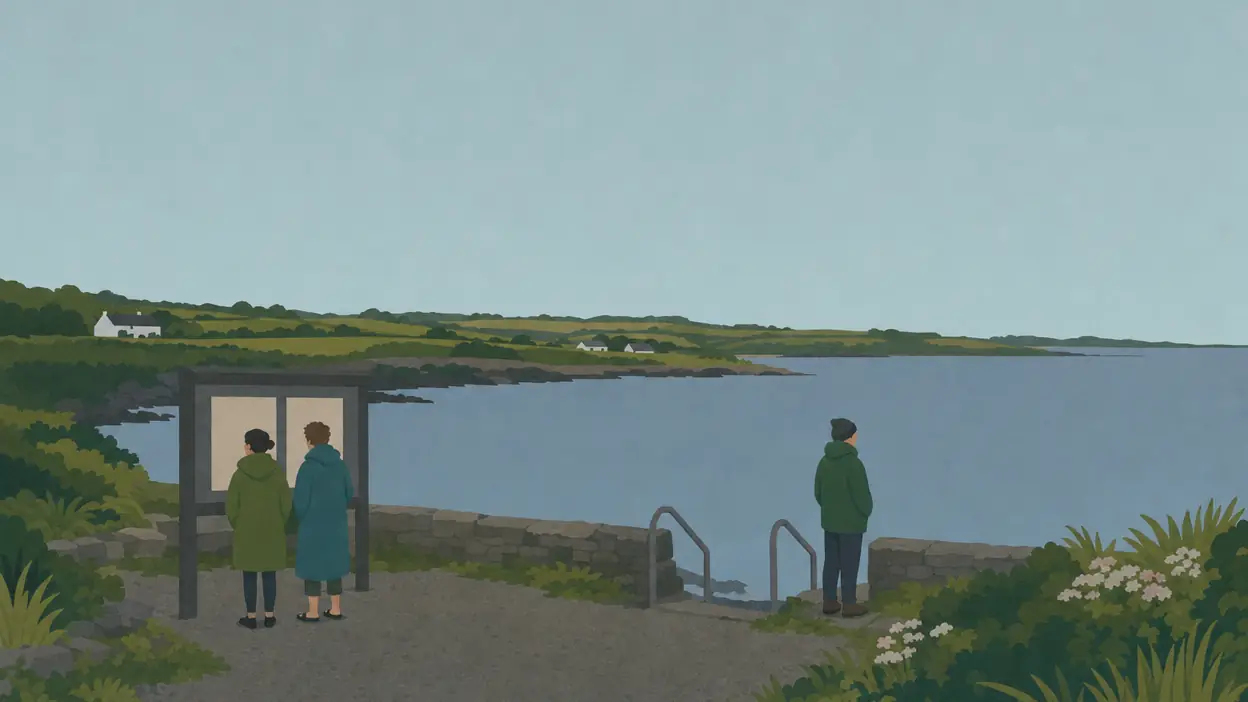
Wear suitable flotation, check weather and tides, and leave your route and return time with someone ashore.[1][2] Beginners should go with an instructor or club and avoid offshore winds.[1] Carry a waterproof way to call for help where you can reach it. In an emergency call 112 or 999, Coast Guard, or use marine radio channel 16.[3]
The scene this guide is for
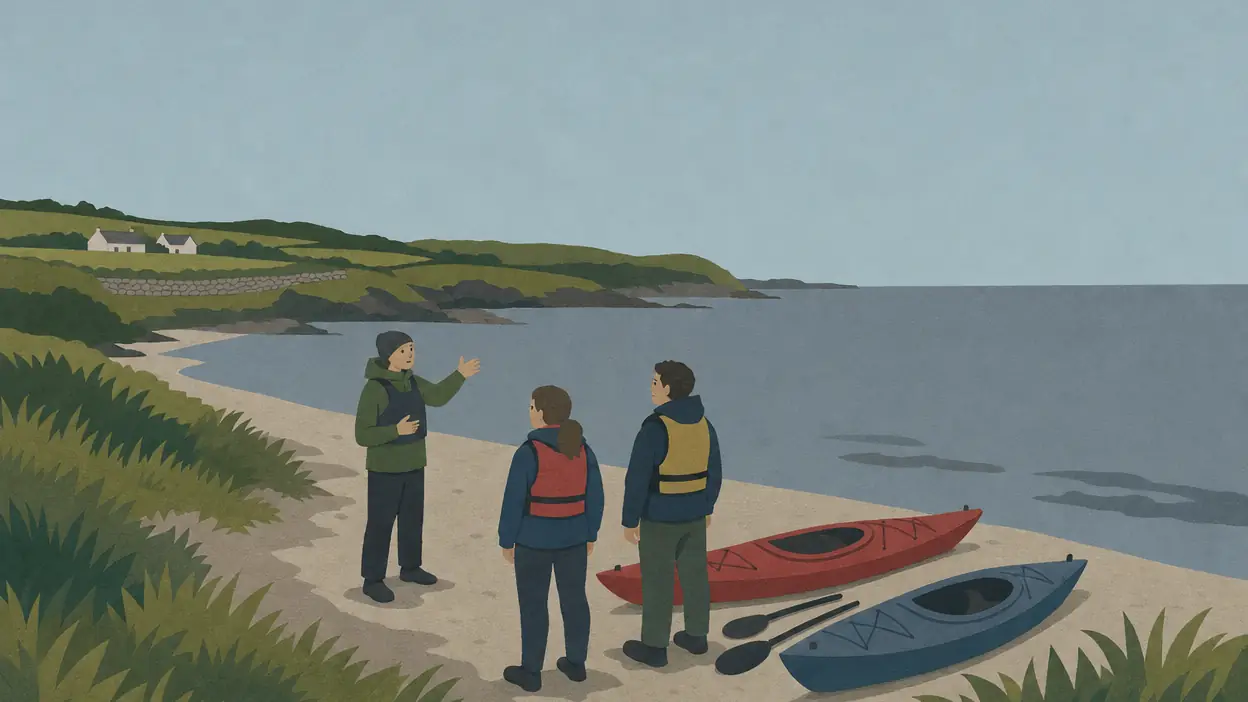
The launch beach is sheltered. Two hired kayaks are ready, the water by the sand looks smooth and the breeze is at your back. It would be an easy start. That same wind will be in your face on the return, after you have used much of your energy.
Before launching, work out the wind direction and the route back. Canoeing Ireland specifically flags offshore winds, tides and changing conditions as planning hazards.[1]
Choose the activity and the training together
Kayaking, dinghy sailing and cruising need different skills. Choose a trip suited to the group and craft, rather than taking a boat onto water simply because it floats there.
Canoeing Ireland recommends formal training for inexperienced paddlers, covering boat handling, safety, rescue and navigation.[1] Irish Sailing recommends refreshing training and checking the vessel and crew before the season.[2]
Decision rules before booking or borrowing:
- If new to the craft, start with an instructor or an appropriate club session. Never paddle alone.[1][2]
- Explain the group’s experience honestly. A strong swimmer may still be unable to recover a capsized kayak or handle a sailing boat.[1]
- Ask what weather would cancel the outing, who makes that decision and what alternatives exist.
- Confirm that flotation is fitted for each person and that somebody checks it before departure.[3][4] For paddling on moving water, inland or coastal, wear a properly fitted helmet approved for paddlesport to CE or ISO standards.[1]
- Choose a session in conditions where instruction and rescue can actually be provided, not an unsupported first independent trip.[1]
The questions about booking and cancellation are our practical prompts. An equipment handover by itself does not settle whether the trip suits you.
Offshore wind can make the launch misleading
Offshore means blowing from land towards open water. A beach sheltered by the land can look comfortable while conditions farther out make returning difficult.[1][5]
Check the direction as well as the wind strength. Read the forecast for the whole outing, including the return and possible changes.[2][6] Ask about local shelter, headlands and alternative landing places before committing to the route.
Our conservative rule for beginners: if wind could carry you away from a shore you can confidently return to, choose a different location with the instructor or cancel. Do not use the ease of paddling away as your test of the return.[1]
For sailing, agree how the crew would shorten the trip or seek shelter if the weather worsens. Different boats have different limits; this guide does not invent a single safe wind speed for all of them.[2][5]
Read the right forecast and notices
Met Éireann’s Sea Area Forecast covers named coastal areas and includes warnings, wind, visibility and an outlook.[6] Check it alongside the local forecast and tide information. For a large lake, use Met Éireann’s inland-lakes forecast rather than treating inland water as sheltered by definition.[7]
A Small Craft Warning is a reason to reconsider the outing, not wait for a gale warning.[8] Our conservative recommendation is to postpone a casual beginner outing covered by that warning. An instructor may impose stricter limits for the activity and group.[1]
Check relevant Department of Transport Marine Notices, as well as notices from the harbour or waterway authority. The Department’s code explains the need for local information and planning; Marine Notice 16 of 2025 reinforces wearing suitable flotation.[5][4]
Water Safety Ireland also asks paddlers to maintain the craft and check that hatches, drain plugs, paddles and secured equipment are ready before departure.[9] Pair that equipment check with the route check. Do not launch past a local closure because your weather app shows sunshine.
How we worked this out
Met Éireann’s Small Craft Warning threshold is Beaufort force 6, at least 22 knots, within 10 nautical miles of shore.[8] That is a warning threshold, not a universal limit for kayaking or sailing. No estimate of paddle speed, drift distance or safe return time is used.
Flotation: choose for the job and wear it
The Department uses an umbrella term covering lifejackets and buoyancy aids, but the choice depends on activity and boating conditions.[4] A buoyancy aid helps a conscious person stay afloat; a lifejacket is designed to turn an unconscious wearer face up.[10]
For paddling, follow Canoeing Ireland’s approved-equipment and fitting guidance with an instructor.[1] For sailing or a leisure boat, get competent advice about the wearer, clothing, sailing area and the type of jacket. Children need a suitable fit of their own.
Before every launch:
- Put it on and fasten it according to its instructions.
- Fit any specified crotch or thigh straps so it cannot ride up.[4]
- Check condition, service dates and any inflation indicators as the manufacturer directs.[9]
- Have someone check your fit, and show companions how the equipment works.
Wear it in a tender too. Marine Notice 16 says to wear flotation at all times, including the short trip to a larger boat.[4] These are safety recommendations; consult the notice and code for legal duties and exceptions for your craft.
Dress for a capsize, and practise getting back
Irish water can be cold even when the air is warm. Sudden immersion can cause gasping, rapid breathing and panic; the Coast Guard advises floating and regaining breathing control.[3] Flotation buys support, not immunity to cold.
Choose immersion clothing with the instructor for the activity, water and season. Keep dry spare clothing protected and accessible after landing. See Open-water swimming in Ireland: decide before you get in for cold-water shock and floating, and Snow and cold: keep warm and protect your water supply for recognising dangerous cooling.
Canoeing Ireland says paddlers need skills to right a capsized craft and get themselves or a friend back aboard in deep water.[1] Learn and practise in supervised conditions. A recovery demonstrated on dry sand does not prove you can perform it in the water.
For a sailing boat, brief the crew on a person-overboard incident, recovery equipment and who will call for help.[5] Do not leave that conversation until someone is missing from the deck.
A shore contact and a crew briefing
Irish Sailing recommends a passage plan and telling someone ashore the intended trip and return time.[2] Write the plan simply enough that somebody else can use it.
Our suggested shore card records:
| Detail | What it should resolve |
|---|---|
| Craft description and people | What rescuers would be looking for. |
| Launch, route and landing | Where the trip should be taking place. |
| Return and alarm time | When the contact should act if there is no check-in. |
| Phone and emergency contacts | How to reach the group or call 112 or 999, Coast Guard.[3] |
| Changed-plan instruction | How the contact will be told of a different landing or delay. |
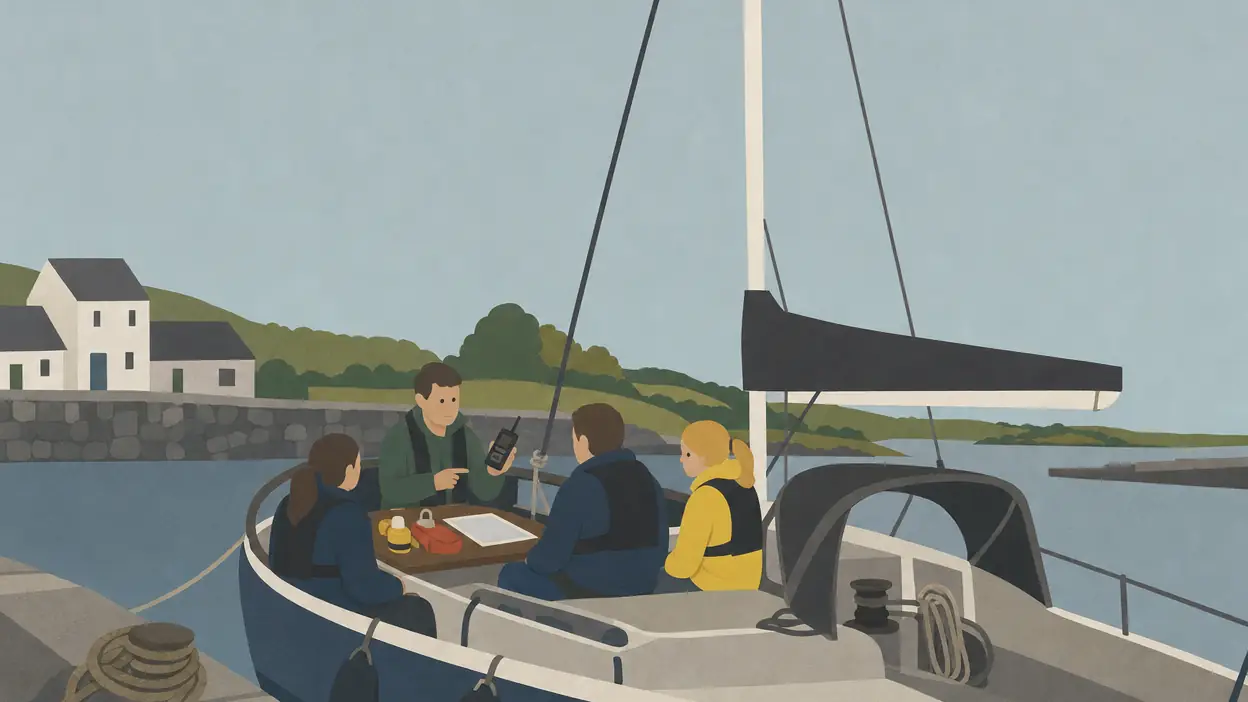
Before departure, show everyone the communication equipment, first aid kit and recovery arrangements. Confirm who is in charge and how to call for help.[2][5] Once safely back, close the plan with the contact.
Radio, phone and personal beacon do different jobs
The Coast Guard recommends marine radio for boat communication and regards a mobile phone as backup. Use channel 16 to contact the Coast Guard.[3] Training covers the call procedure and the equipment’s limitations.
In grave and imminent danger, the Department’s code gives the spoken Mayday procedure. Give the craft name, position, emergency, assistance needed and number of people involved, then listen for instructions.[5] Learn the procedure before departure and keep its instruction card by the radio.
A personal locator beacon sends a distress alert to help identify and locate a person. In Ireland it must be correctly programmed and registered with ComReg, which passes the information to the Coast Guard.[11] Confirm Irish registration suitability before buying, and follow the device’s testing and replacement instructions.
Carry the call route on your person, where reachable after separation from the craft.[3] Keep the phone protected from water. A beacon does not let you have the same conversation as a radio or phone; it is another part of the emergency plan, not a weather safeguard.
For more about different communication options, use Staying in touch when phones and power fail in Ireland.
A compact departure check
| Check | Action |
|---|---|
| People | Correct clothing and flotation, suitable experience, briefing complete. Never paddle alone; on moving water, inland or coastal, wear a properly fitted paddlesport helmet approved to CE or ISO standards.[1][2] |
| Craft | Check condition, buoyancy, steering or paddles, and relevant engine, fuel and rigging items.[1][2] |
| Emergency equipment | Accessible communication, recovery equipment, shelter and first aid.[1][5] |
| Forecast and route | Weather, tides, local notices and a shorter alternative understood.[2][5] |
| Shore contact | Plan received and return check-in agreed.[2] |
Useful kit categories are a suitable flotation device kit options, waterproof phone pouch kit options and dry emergency bag kit options. Choose them with the activity and instructor in mind. For first aid supplies use First aid kits for home, car and outdoor trips in Ireland.
If trouble develops, raise the alarm early, keep the group together as far as safely possible and follow the emergency operator’s instructions. Nobody needs to prove a bad decision was manageable by delaying the call.[3]
Sources (11), all checked 2026-10-29
All checked 2026-10-29. Irish sources.
- Canoeing Ireland, safety on the water.
- Irish Sailing, boat safety this season (11 March 2026).
- Irish Coast Guard, water safety.
- Department of Transport, Marine Notice 16 of 2025.
- Department of Transport, safe operation of recreational craft (2024).
- Met Éireann, Sea Area Forecast.
- Met Éireann, inland lakes forecast.
- Met Éireann, warning system explained.
- Water Safety Ireland, boating and paddlesport safety.
- Health and Safety Authority, lifejackets and buoyancy aids.
- ComReg, personal locator beacons.