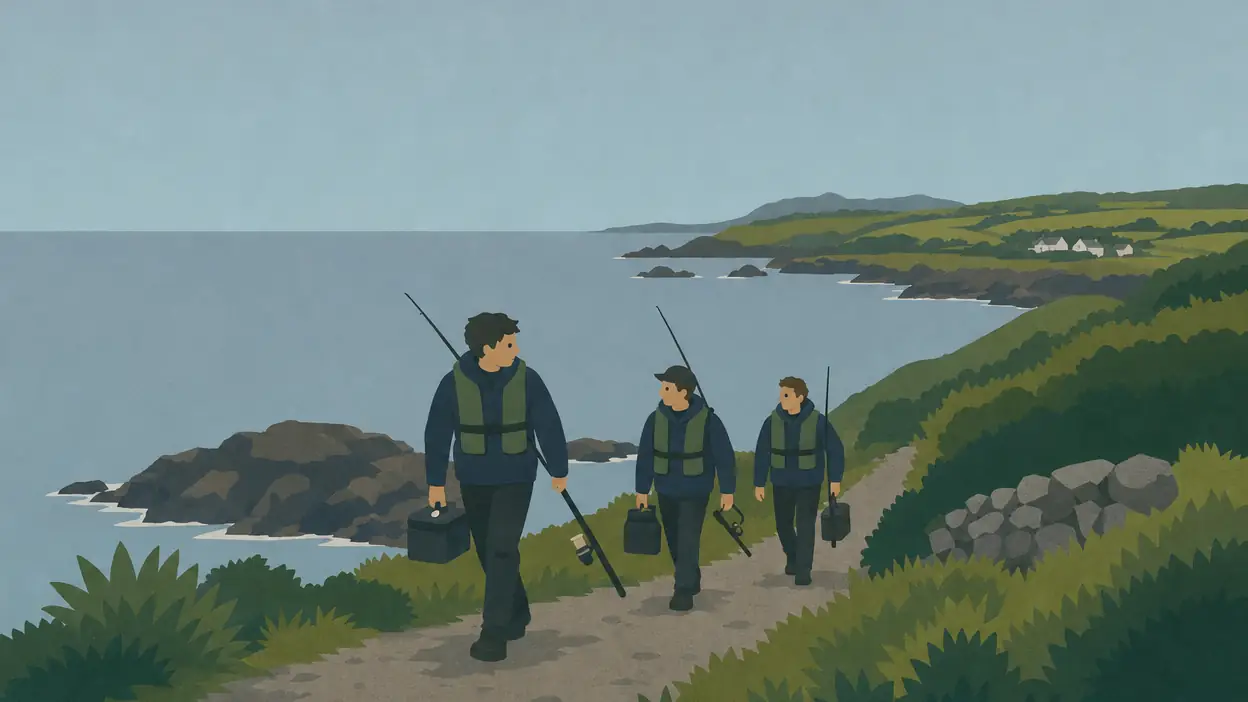
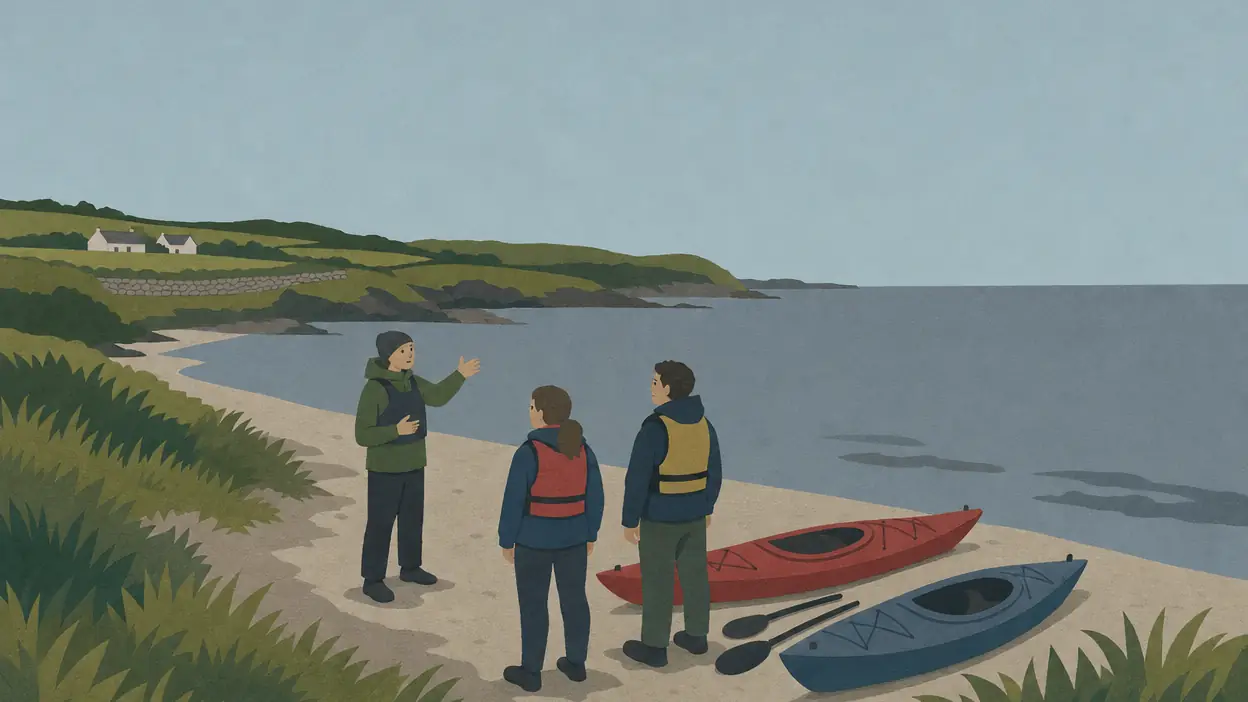
Choose a familiar place with lifeguards on duty, go with company and check the weather, tides and bathing notices before entering.[1][2] Avoid swimming for 48 hours after heavy rain.[3] Enter gradually and stay within your depth. If struggling, float and get your breathing under control.[4][5] For a coastal emergency call 112 or 999, Coast Guard.[1]
The scene this guide is for
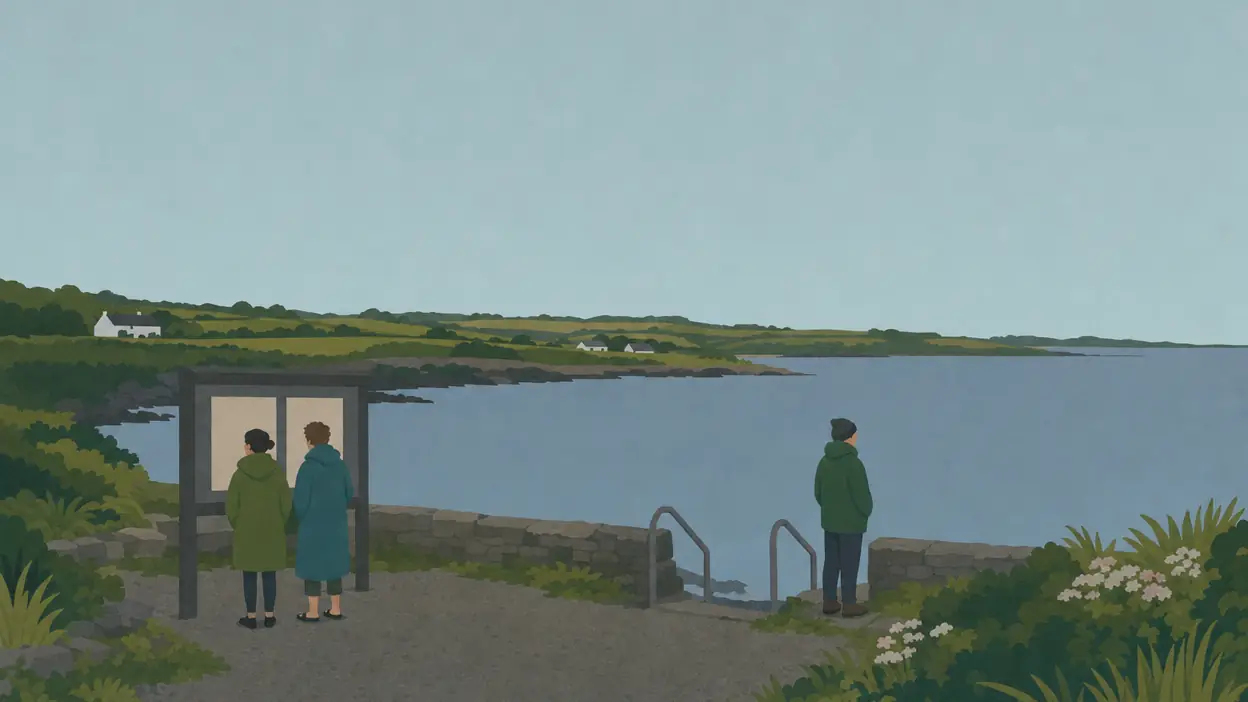
A bright October morning at the usual bathing steps. Three people are already changing. Yesterday’s rain has stopped and the water looks clear. The summer notice is still on the board, but no lifeguard is there. You need today’s conditions and notices, not reassurance from the people already in swimsuits.
Check beaches.ie before leaving home, then read the signs at the water. A fresh warning beats an old habit.[3]
Decide on shore, while the decision is easy
Before entering:
- Check Met Éireann for the location, including wind and the period you expect to be there.[6]
- Check tide times, currents, entry and exit points. Ask the lifeguard about local hazards.[1]
- Read current pollution warnings on beaches.ie and council notices. A red flag means do not swim.[3]
- Choose company and make sure somebody ashore knows your plan. Do not swim alone.[1][2]
- Choose a short route within your depth and parallel to shore, rather than swimming away from the land.[7]
- If the conditions, access or water quality are doubtful, leave the swim for another day.[1][3]
The Coast Guard warns that cold water and waves can tire even confident swimmers quickly.[2] A pool distance is not a promise about what you can manage here.
Our planning recommendation is to agree the exit before taking your clothes off. Point it out to your companion. If the steps will become harder to use with the tide or waves, choose another place or cancel.
Cold water shock happens before you feel thoroughly cold
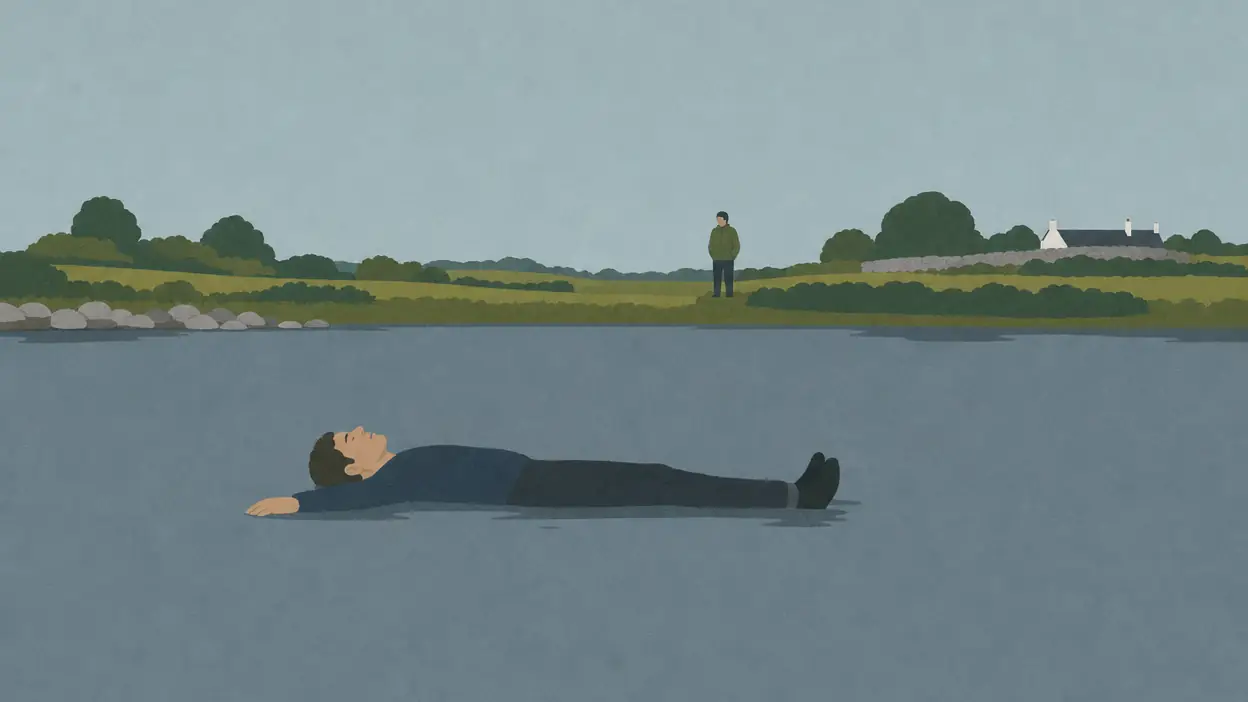
Sudden cold immersion can trigger an involuntary gasp, rapid breathing and panic. The Coast Guard says this can lead to drowning within seconds, even for strong swimmers.[1] A warm afternoon does not remove the risk in Irish waters.
Walk in gradually. Do not jump or dive into cold open water.[1] Keep the first part of the swim close to the exit, and turn back if breathing or comfort is not right. Avoid competing over who stays in longest.
Water Safety Ireland advises beginners to start in summer and build experience gradually. It specifically says never set time goals for staying in the water: your response can differ from one day to another.[4]
We give no minutes-per-degree rule. It would imply a safe exposure time that the sources do not provide. Being accustomed to a place also does not settle whether it is suitable today.
If you are struggling: Float to Live
The RNLI’s floating advice is for anyone in difficulty, whether they intended to be in the water or fell in unexpectedly.[5]
- Tilt your head back, with your ears in the water.
- Relax and work on controlling your breathing.
- Move your hands and legs gently to help you float.
- Let your legs settle if they sink. People float differently; forcing a perfect flat position is unnecessary.
- Once your breathing is controlled, call for help and decide whether you can reach safety.[5][1]
Practise floating in a supervised location before an emergency.[5] The first practice should not be after falling from a pier. If you have a suitable flotation aid on, let it support you while you regain control.[8]
A rip current: stop fighting the outward flow
A rip is a strong, narrow flow moving away from shore. The Coast Guard advises floating, staying calm and signalling for help if caught. Do not try to swim straight against it.[2]
Decision rule if you can swim, move parallel to the shore until clear of the current, then head back in. If you cannot, keep floating and call or signal for help.[1][2] Do not exhaust yourself repeatedly aiming at the same point on the beach.
Choose the lifeguarded swimming area rather than trying to diagnose every current yourself. Ask where to enter, stay within the flagged area and follow lifeguard instructions.[1][7] A photograph of a quiet-looking gap between waves cannot certify an entry point.
Rain, pollution and the 48-hour rule
The EPA’s beaches.ie advice is to avoid swimming for 48 hours after heavy rainfall. Runoff can carry pollution into rivers, lakes and the sea, and rain can overwhelm sewage systems.[3]
The waiting period is not an automatic clearance:
- Check whether a warning or prohibition still applies after the rain has passed.
- Check the date of the latest result, not just the beach’s overall classification.
- Read the noticeboard again on arrival. Follow any continuing restriction.[3]
An annual rating describes past water quality; it cannot rule out a new pollution incident. beaches.ie explains that sample analysis takes time, so information is not an instant test of the water in front of you.[3]
Do not rely on clarity, smell or other swimmers. If pollution is visible, report it to the local authority’s bathing-water section using the contact information linked from beaches.ie.[3] Choose a walk instead of moving along the same beach and guessing that the next patch is clean.
Bathing season and lifeguard season are different things
Routine bathing-water monitoring runs through the summer season, 1 June to 15 September. Some councils voluntarily test outside that period.[3] Check whether your chosen place has recent winter results.
Those dates do not mean every beach has a lifeguard every day. Water Safety Ireland publishes county listings and warns that operational cover can vary. Confirm dates and duty hours with the relevant council.[9]
For example, Fingal County Council publishes its own beach and lifeguard information.[10] Check the council responsible for your destination, including any same-day changes, rather than copying another county’s summer timetable.
A lifeguard hut, a lifebuoy or a Blue Flag from the bathing season does not establish that supervision is operating now. Look for staff on duty and follow the flags. If you cannot establish cover, you have lost an important layer of protection.[2][9]
Winter swimming: build the exit into the swim
Water Safety Ireland warns that your body can continue cooling for 20 to 30 minutes after leaving the water.[4] Have dry clothes ready before entering. The swim ends with changing and warming up, not with reaching the steps.
Set out your towel, warm layers and footwear in a sheltered place. Bring a warm drink. Keep an eye on companions while they change; do not leave someone struggling with cold hands alone in the car park.[4][1]
Stop and call for help if somebody becomes confused, has slurred speech, slow breathing or other signs of hypothermia. HSE advises calling 112 or 999 for suspected hypothermia.[11] Do not dismiss deterioration as a normal result of a good winter dip.
Choose clothing and a wetsuit with competent local advice. Neither provides a universal safe swimming time. For warmth after an outing or during bad weather, see Snow and cold: keep warm and protect your water supply.
What to bring, and what it cannot do
| Item | Useful job |
|---|---|
| Bright swim cap kit options | Helps other water users see you.[4] |
| Tow float kit options | Improves visibility; it does not replace supervision or sound decisions.[4][2] |
| Dry towel, warm layers and footwear | Lets you dry and dress promptly.[4] |
| Phone protected from water | A means of calling, kept accessible.[1] |
| Dry first aid kit ashore | Supplies for minor injuries: First aid kits for home, car and outdoor trips in Ireland.[2] |
Leave inflatable toys and airbeds at home: the Coast Guard warns they can be swept out to sea.[2] Children need close, active supervision even where lifeguards are present.[1][7]
If somebody else is in trouble
Call 112 or 999 and ask for the Coast Guard, give the beach or bathing-place name and describe where the person is. Alert the lifeguard if present.[1][2] Do not delay because you think another person must have called.
Keep watching from safety and follow the emergency operator’s instructions. Do not turn one person in difficulty into two by entering water beyond your ability. Put a water-safety or lifesaving course on your list in Skills worth learning before you need them.
Sources (11), all checked 2026-10-29
All checked 2026-10-29. Irish unless identified as an Ireland and UK service.
- Irish Coast Guard, water safety.
- Irish Coast Guard, beach safety.
- EPA beaches.ie, frequently asked questions.
- Water Safety Ireland, open-water swimming brochure.
- RNLI, Float to Live (Ireland and UK service).
- Met Éireann, warnings and advisories.
- HSE Health Protection Surveillance Centre, safety around bathing water.
- Department of Transport, Marine Notice 16 of 2025.
- Water Safety Ireland, lifeguarded waterways by county.
- Fingal County Council, lifeguards provision.
- HSE, keeping warm in winter.