Ring 01 809 2166 for suspected accidental poisoning, even if the person seems well. The National Poisons Information Centre (NPIC), at Beaumont Hospital, answers this public line 8am to 10pm every day, including Christmas Day. Outside those hours, contact your GP or hospital. Unconscious, a seizure, or struggling to breathe: ring 112 or 999.[1][3][14]
The scene this guide is for
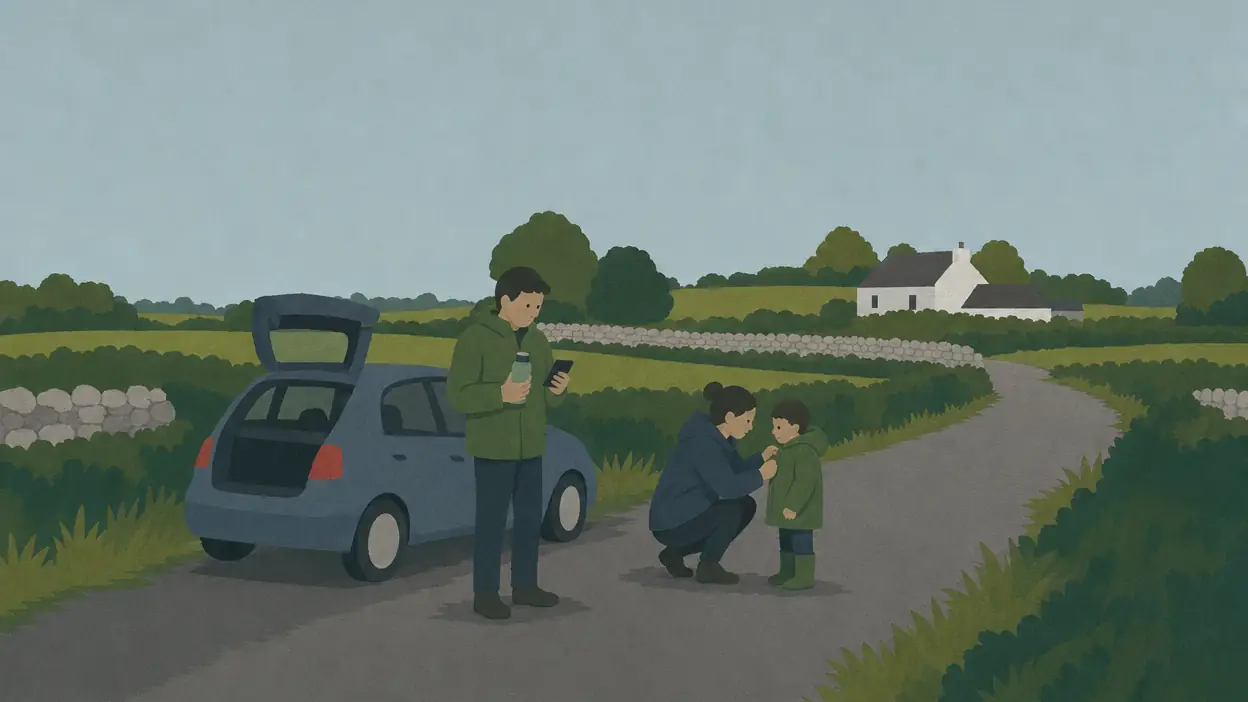
Saturday afternoon. You turn from the washing machine and find your toddler holding an open laundry tub. There is liquid on their sleeve and a broken capsule beside them. You cannot tell whether any went into their mouth.
You do not need to settle that before ringing. Take the product away, bring its container to the phone, and ring. A Specialist in Poisons Information will tell you whether medical attention is needed.[2][5]
How often this happens, and how it usually ends
- The centre answers more than 11,000 enquiries a year. About 6 in 10 involve children under 15.[13]
- Accidental poisoning is most likely at age 1 to 4, mostly at home or at a grandparent’s or childminder’s home, and most often in the afternoon, at weekends and in school holidays.[2]
- Specialist advice lets about 8 in 10 cases be managed safely at home. About 1 in 5 needs an emergency department.[13]
So ringing early is not overreacting. Most calls end with “you can watch them at home”, and the call is how you find out which group you are in.
First decide which help you need
- Anything else, with or without symptoms: ring the poison line during its hours. That covers swallowing, breathing something in, or splashes onto skin or into eyes.[4]
The centre’s contact form is for administration only. It does not give medical advice by email, so always phone.[1]
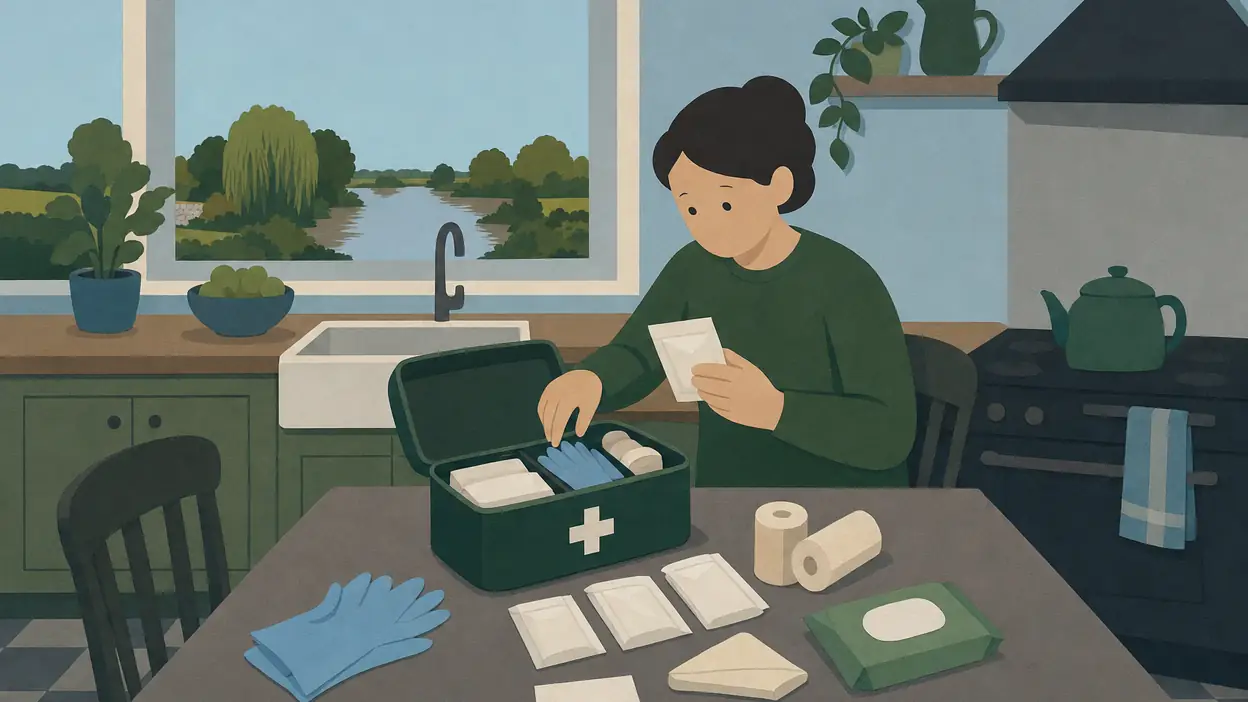
While help is being arranged
Keep yourself safe while helping.[3]
| What happened | What to do now |
|---|---|
| Swallowed | Take it away. Make a child spit out what is in their mouth, then run a finger around the mouth and flick out any pieces. Never make them vomit. Never give salt water.[2][4] |
| In an eye | Rinse with running water straight away, for at least 15 minutes. Put nothing else in the eye, not even eye drops.[3][5] |
| On skin | Take off contaminated clothes without touching the poison yourself. Rinse with running water for at least 15 minutes, draining away from the person.[3][4] |
| Breathed in | Do not go into a contaminated space. If you safely can, move them to fresh air and get medical help.[3] |
Do not give food or drink after a swallowed poison unless healthcare staff tell you to.[3] For oven or drain cleaner, give no drinks to someone who is vomiting or has a sore throat.[5] The honey advice below is for button batteries only.
If two adults are there, one rings on speaker while the other rinses.
What to have ready when you ring
The centre asks these questions. Have the answers if you can, but do not delay the call to find them.[2]
- What was taken: the exact product, medicine or plant name.
- How much: your best guess. Say if you do not know.
- When it happened, or when you found it.
- The person’s age and weight, and any medical condition.
- Symptoms you can actually see.
- The container. On hazardous household products, look for the UFI, a code printed on the label in groups of letters and numbers. It tells the centre exactly what is in the product.[5]
If the person goes to hospital, bring the container, a piece of the plant, or the whole mushroom or what is left of it.[3][4]
Medicines: the most common poison
The HSE says an overdose of medicine is the most common form of poisoning, including medicines you buy without a prescription.[4] Paracetamol and ibuprofen were the top two products in enquiries to the centre in 2024.[8] About 1 in 5 cases is a medication error.[13]
- Turn the light on before taking or giving any medicine at night.[7]
- Use the measuring spoon or syringe that came with a child’s medicine.[7]
- Do not take medicine in front of children: they copy adults.[12]
Decision rule if you think a wrong medicine or an extra dose was taken, ring. Do not use this page or the packet to work out whether it was safe. Some products are low risk, but even then the centre says to get advice if a large amount was taken or symptoms persist.[17]
Laundry capsules and cleaning products
In 2024 the centre had 3,050 enquiries about household products, and laundry liquid capsules were the most common. That is enquiries, not hospital admissions.[8] The centre began a two-year study of capsule exposures in children aged 3 and under in 2024.[8]
The centre and the Health and Safety Authority say capsules can cause severe vomiting and breathing problems if swallowed, and eye damage if the liquid gets in an eye.[15] The HSA’s 2016 summary describes EU packaging rules intended to make capsules harder for children to see and reach.[16] That is not a reason to leave them out. The advice:[15][12]
- Store them high, out of sight, ideally in a locked cupboard, in the original container with the lid closed.
- Handle them with dry hands, and do not take them out while children are near.
- Put the tub away before you do anything else.
For all cleaning products:[5][12]
- Never mix products, or use two at once. Some mixtures make a poisonous gas.
- Never pour a product into a drinks bottle. Keep the original label.
- Symptoms can be delayed, so ring even if the child seems fine.
E-cigarette liquid and nicotine
The centre lists e-cigarettes, vaping products, nicotine gum and patches among everyday living-room items that can be highly toxic, especially when swallowed by young children.[6] The HSE also lists vapes, nicotine gum and cannabis gummies as potential poisons.[4]
- Keep devices, refills and pouches out of sight and reach, and empty visitors’ bags of them.[6]
- If liquid is swallowed or splashed, use the table above and ring.[3]
- Keep the refill bottle so the centre can see exactly what it was.[2]
Do not guess a “safe” amount from how little is missing. The centre assesses the risk.
Button batteries: a separate emergency
Button batteries look like coins. They are in remote controls, key fobs, hearing aids, musical cards, light-up decorations and flameless candles.[14][6][7]
Suspected swallowing is enough to go straight to hospital. The HSE warns of burns to the throat, stomach or gut, internal bleeding and choking, and sometimes death.[4] A leaking battery in the mouth is dangerous too.[14]
Go straight to an emergency department that admits children. Follow the HSE’s current button-battery first-aid guidance and professional advice from the Poisons Information Centre or emergency services; do not delay going to hospital to look up advice or try treatment.[4][14]
Prevention: a battery compartment is only secure if it needs a screwdriver or tool to open. If it does not, keep the item out of reach. Keep spare and used batteries out of sight too.[14]
Wild mushrooms, berries and plants
There are about 30 poisonous mushroom species in Ireland. Some cause only stomach upset; others are life-threatening.[9]
- Ring straight away if someone may have eaten a wild mushroom. Symptoms can be delayed. The centre can work with mushroom experts using a sample or good photos.[9]
- Do not trust an app, a website or a book to identify a mushroom.[9]
- Three beliefs are all untrue: poisonous mushrooms taste bad; cooking makes them safe; they are safe if animals eat them.[9]
- After rain, check the lawn and remove any mushrooms.[9]
For plants: keep the plant label, teach children never to put any part of a plant in their mouth, and do not encourage “tea” or “perfume” games with garden flowers. The centre’s plant photos are for illustration, not identification.[10]
For an animal, ring your vet and see Pets and animals in an emergency in Ireland.
Make the next one easier
- Save 01 809 2166 in every phone with “8am to 10pm”, and put it on the household contact sheet.[1]
- Watch for small things that block rather than poison: coins, magnets and water beads are common in enquiries.[8]
For fumes from heaters and cookers, see Carbon monoxide and fire at home in Ireland. For any emergency call, give your location, Eircode if you know it and your callback number, then follow the call taker.[11]
Sources (17), all checked 2026-10-29
All checked 2026-10-29. All Irish. Treatment advice comes only from the HSE and NPIC; the Health and Safety Authority is cited for laundry capsule storage and packaging law.
- NPIC, contact us: public line 01 809 2166, 8am to 10pm every day.
- NPIC, public information.
- NPIC, first aid and safety.
- HSE, poisoning in children.
- NPIC, kitchen safety.
- NPIC, living room safety.
- NPIC, bedroom safety.
- NPIC, annual report 2024.
- NPIC, mushroom safety advice.
- NPIC, guide to toxic plants.
- HSE, emergency care for adults.
- NPIC, poison prevention tips.
- NPIC and Beaumont Hospital, 60 years of service, 27 August 2026.
- NPIC and HSE, Christmas safety messages: batteries and poisons.
- Health and Safety Authority and NPIC, dangers of detergent liquid capsules, 18 March 2015.
- Health and Safety Authority, liquid laundry capsule inspection campaign and EU rules, 9 May 2016.
- NPIC, low toxicity substances.
prepared.ie is independent public information, published by Gallan Software. It is not affiliated with the HSE, NPIC, Beaumont Hospital or the Health and Safety Authority. In an emergency call 112 or 999.