A full oil tank does not make ordinary oil central heating independent of electricity. The boiler needs a working electrical supply; controls and the pump circulating hot water also need power.[1][2][13] Prepare another safe way to keep warm. Have an electrician arrange any generator connection, and never bypass controls or plug a generator into a house socket.[3][4]
The scene this guide is for
The oil delivery came yesterday. You have enough fuel for weeks, the forecast is bad, and the house feels ready. Then the lights go out. The boiler outside falls silent, the radiators cool, and the kitchen timer is blank.
There is fuel in the tank but no working heating system. OFTEC’s troubleshooting guidance explicitly includes checking the electrical supply, and warns that a power cut can reset the heating programmer.[1] More oil is not the first thing to order.
What stops, and what might still work
Separate the appliance from the fuel:
| Equipment | What to plan for |
|---|---|
| Ordinary oil boiler and radiators | Loss of electricity stops normal operation. Ask about the whole system, including pumps and controls.[1][2] |
| Electric immersion heater | It also depends on power. SEAI identifies it as the electric heater for a hot-water cylinder.[2] |
| Manually lit oil stove or range | Some are different. OFTEC excludes manually lit appliances from most of its electrical troubleshooting advice. Check the exact model’s instructions.[1] |
| Any stove linked to radiators or hot water | Ask the installer about safe operation without circulation. Being able to light it does not establish that the connected system can operate safely. |
Decision rule unless the maker or installer has confirmed otherwise for your appliance, treat oil central heating as unavailable during a power cut. This is a planning rule, not a claim that every oil appliance has the same design.
Find the model name now and download the correct instructions. OFTEC specifically advises checking that a downloaded manual matches the make and model.[1] Keep a paper copy of the relevant outage and restart pages.
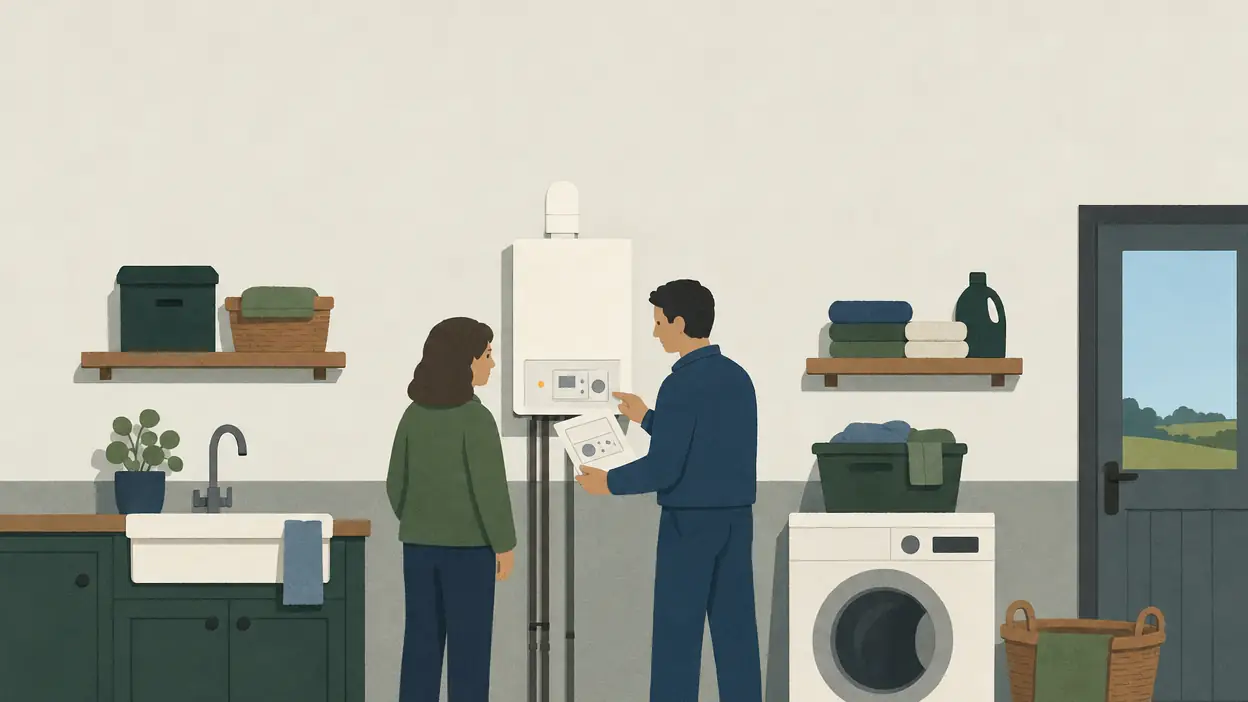
The appointment to make before winter
Ask your heating technician to walk through these questions while the system works:
- Which parts need electricity? Include the boiler, circulation pump, heating controls and hot-water controls.
- What should I switch off during an outage? Get the answer for your installation, including any connected stove.
- What is the restart procedure? Ask which checks are safe for you and which require a technician.
- What fault should stop me trying? Write down the service number beside the instructions.
- Is the tank and its pipework sound? OFTEC recommends regular servicing and maintenance of both boiler and storage tank.[1]
SEAI explains that heating and hot water can have separate schedules and controls.[2] Record both. A boiler that seems to be working after an outage may still have the wrong hot-water schedule because the clock reset.
Use OFTEC’s technician finder if you need a suitable heating technician. OFTEC works across Ireland and the UK; its shared consumer pages need their Republic of Ireland contact directions, not the pollution numbers for other jurisdictions.[1]
Warmth while the system is off
The HSE advises keeping sufficient heating fuel, an alternative if possible, torches and extra essential medicines before severe weather.[5] Make the alternative a practical household plan:
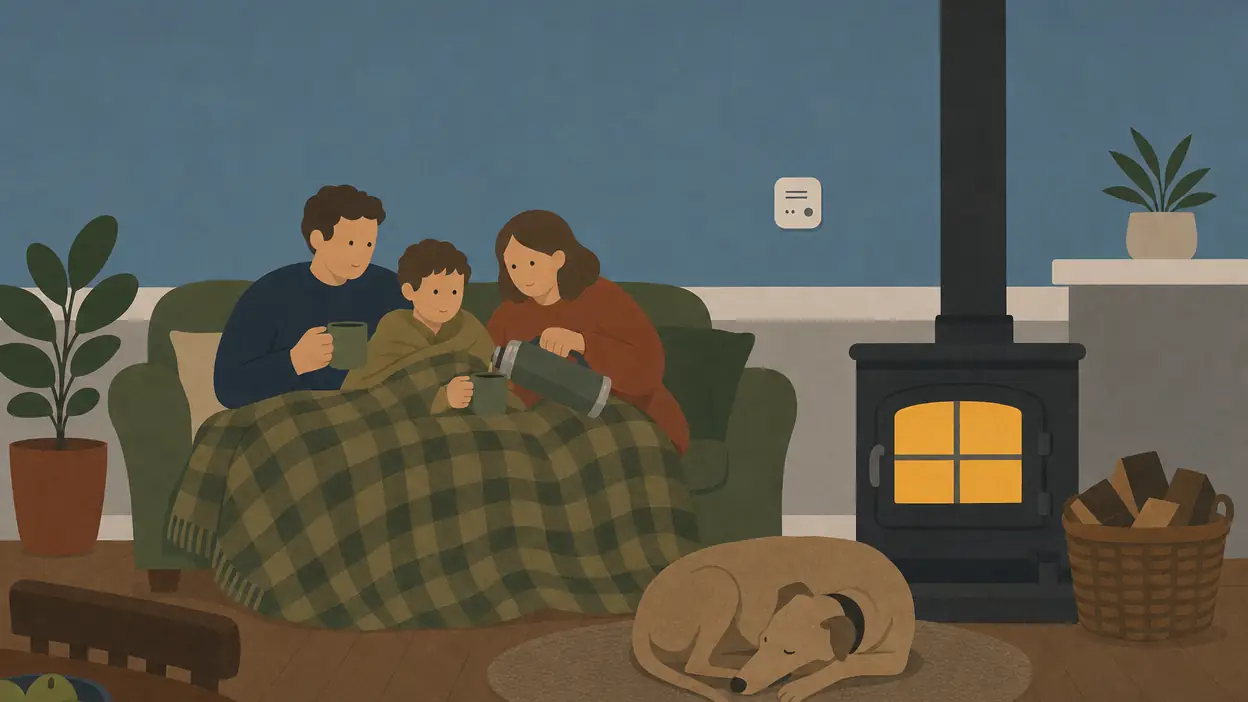
- Choose where you will spend the evening. Put warm clothing, blankets, battery lighting and necessary medicines within reach. Use Staying warm and cooking without power in Ireland.
- Check the people most affected first. Older people are at greater risk of hypothermia, and cold can worsen existing heart and lung conditions.[5]
- Agree somewhere else to stay if the home cannot remain adequately warm. Make arrangements before roads become unsafe.
- For equipment-dependent care, use Medically dependent at home in a power cut in Ireland and the person’s clinical plan.
Do not turn a cooker or oven into a room heater. The HSE warns against this and against indoor barbecues, camping stoves or generators in garages.[6] An improvised flame can turn a cold house into a poisoning emergency.
If anyone develops shivering, pale cold skin, slurred speech, slow breathing, tiredness or confusion, the HSE says call 112 or 999 for possible hypothermia.[5] Do not wait for the power-restoration estimate to improve.
Backup electricity: ask about the installation
A generator can be part of a professionally designed plan, but the connection matters as much as the machine. The HSA says a generator supplying permanent wiring needs switching that prevents the network supply and generator supply being connected together. ESB Networks must be notified of a standby installation.[3]
Ask a registered electrical contractor to agree:
- Which equipment the backup will run, including all parts needed for the heating to operate normally.
- A proper changeover switch, which selects one supply and keeps it separated from the other.
- Where the generator can operate outdoors, with exhaust kept away from occupied spaces and openings.[6]
- A demonstration and written operating sequence, including what happens when mains power returns.
Never use a cable to feed generator electricity into a socket. The HSA warns this can send electricity onto the network and endanger repair crews.[4] Never bypass a thermostat, safety device or other boiler control to make a backup work. SEAI describes the controls as part of how the boiler operates; any installation changes belong with the contractors.[2][3]
Keep a carbon monoxide alarm in every room with a fuel-burning appliance, as the HSE recommends.[6] See Power cuts in Ireland: what to do for wider backup planning and Home battery and solar backup in Ireland for questions to put to an installer. This guide gives no generic battery runtime for an oil boiler.
When electricity returns
If the boiler and wiring have stayed dry and undamaged, follow the correct appliance instructions. OFTEC’s checks include fuel, electrical supply, programmer settings and room thermostat.[1]
- Check the clock and day. A programmer can return to its factory settings after a cut.
- Restore your usual heating and hot-water times. Check each separately.
- Check fuel and any fault indication, using the manual rather than guessing from a coloured light.
- If it does not restart normally, call the technician. Do not keep pressing reset.
OFTEC allows limited burner resets only in accordance with the instructions, and warns against more than two attempts.[1] This guide does not make resetting a compulsory step. If you smell fuel, see a leak, or the unit has been flooded, stop and get it checked.
For frozen or drained water pipework, follow Frozen and burst pipes at home in Ireland. Uisce Éireann says the hot-water system must be refilled before restarting the immersion or boiler.[10]
Protect the tank from theft and weather damage
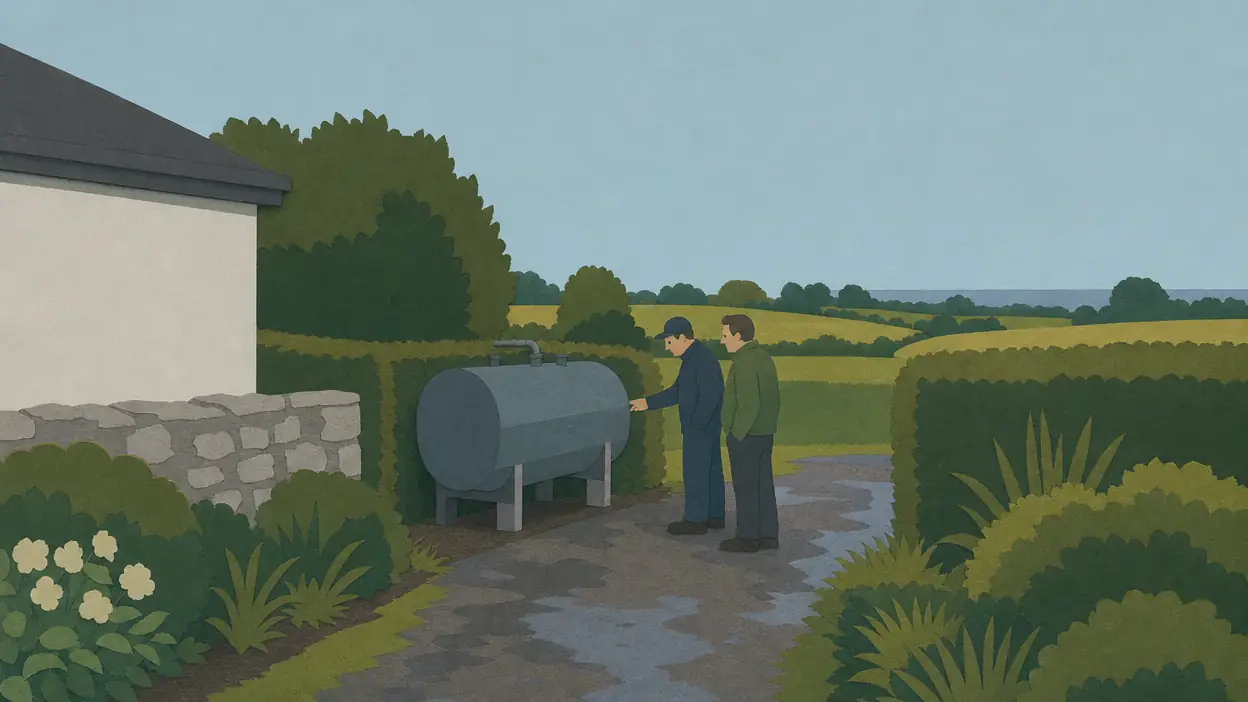
Record fuel levels so an unexpected fall is noticed. A fall could mean a leak as well as theft; investigate safely rather than ordering another delivery into a suspect tank.[1][7]
OFTEC’s theft guidance suggests screening a tank from casual view while retaining access for deliveries and maintenance, monitoring fuel levels and working with neighbours.[7] It cautions that a padlock on a plastic tank can lead determined thieves to drill it, causing a leak. Ask the supplier or technician about suitable protection instead of modifying the tank yourself.
The winter booklet advises closing fuel-supply valves when preparing for flooding, where it is safe to do so, and having fuel-based services checked professionally afterwards.[8] Know the valve location in advance. Do not enter rising water to reach it.
A leak or spill needs a separate response
OFTEC says escaped fuel needs urgent attention and must never be washed down a drain.[1] Keep people away from the affected area and contact the heating technician and your council’s environment section. Do not hose oil into the garden or use detergent to disperse it.
For reporting, the EPA directs local pollution complaints that do not involve an EPA-licensed site to the local authority. Its published National Environmental Complaints Line, 1800 365 123, routes complaints to the appropriate council and operates around the clock.[9] This is a reporting route, not a promise that a clean-up crew arrives immediately.
Tell the council if oil may have reached a drain, stream or well. The EPA advises well owners with chemical contamination to seek local-authority advice; use another drinking-water supply while safety is established.[11] See Water outages and boil water notices.
Contact your insurer promptly, ask what emergency work is covered, and retain photographs and receipts.[12] A full tank can represent a substantial loss, but preventing further pollution and protecting people take priority over trying to save the fuel yourself.
Sources (13), all checked 2026-10-29
All checked 2026-10-29. Irish except OFTEC’s shared Ireland/UK guidance, marked (UK and Ireland).
- (UK and Ireland) OFTEC, troubleshooting liquid-fuel heating.
- SEAI, heating controls.
- HSA, fire, electricity and chemicals.
- HSA, generator usage alert.
- HSE, preparing for severe weather.
- HSE, carbon monoxide poisoning.
- (UK and Ireland) OFTEC, avoiding heating-fuel theft.
- OEP, Be Winter-Ready 2024-2025, hosted by Met Éireann.
- EPA, making an environmental complaint.
- Uisce Éireann, frozen or burst pipes.
- EPA, drinking-water frequently asked questions.
- CCPC, making an insurance claim.
- (UK and Ireland) OFTEC, home guide to liquid-fuel heating.
prepared.ie is independent public information, published by Gallan Software. It is not affiliated with the Government of Ireland or any agency. In an emergency call 112 or 999.