Prepare before the crossing is cancelled. Keep food, drinking water, heating fuel and essential medicines that cover your household’s likely gap between deliveries, with a margin for further disruption.[1][2] For a medical emergency call 112 or 999 and ask for an ambulance. State the island, exact location and callback number.[3] Coast Guard aircraft support island medical transfers, but emergency services decide the response; do not build a household plan around an assumed helicopter arrival.[1][4]
The scene this guide is for
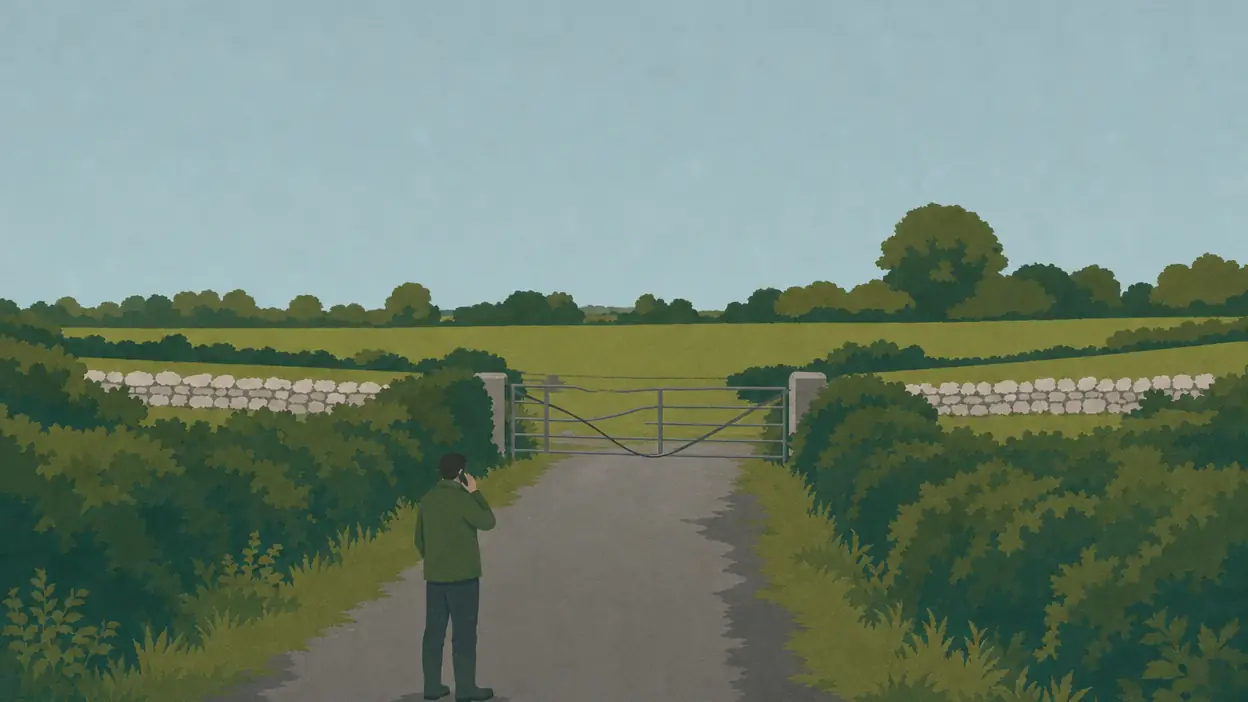
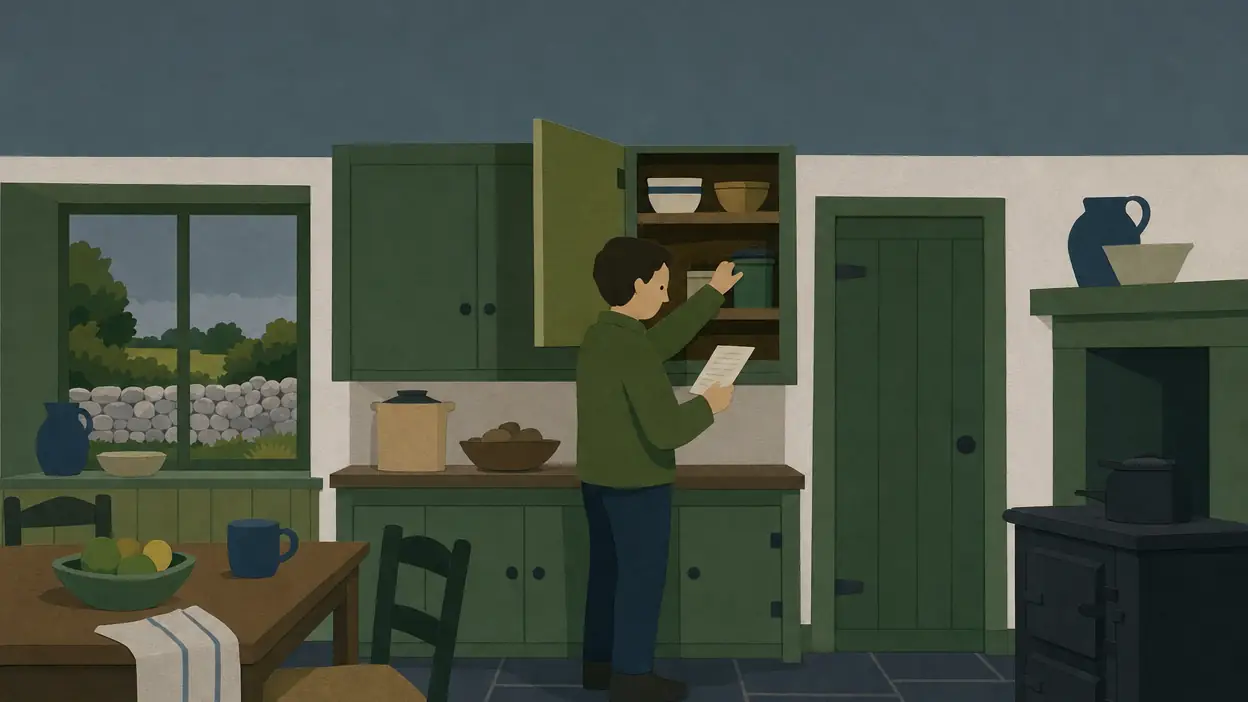
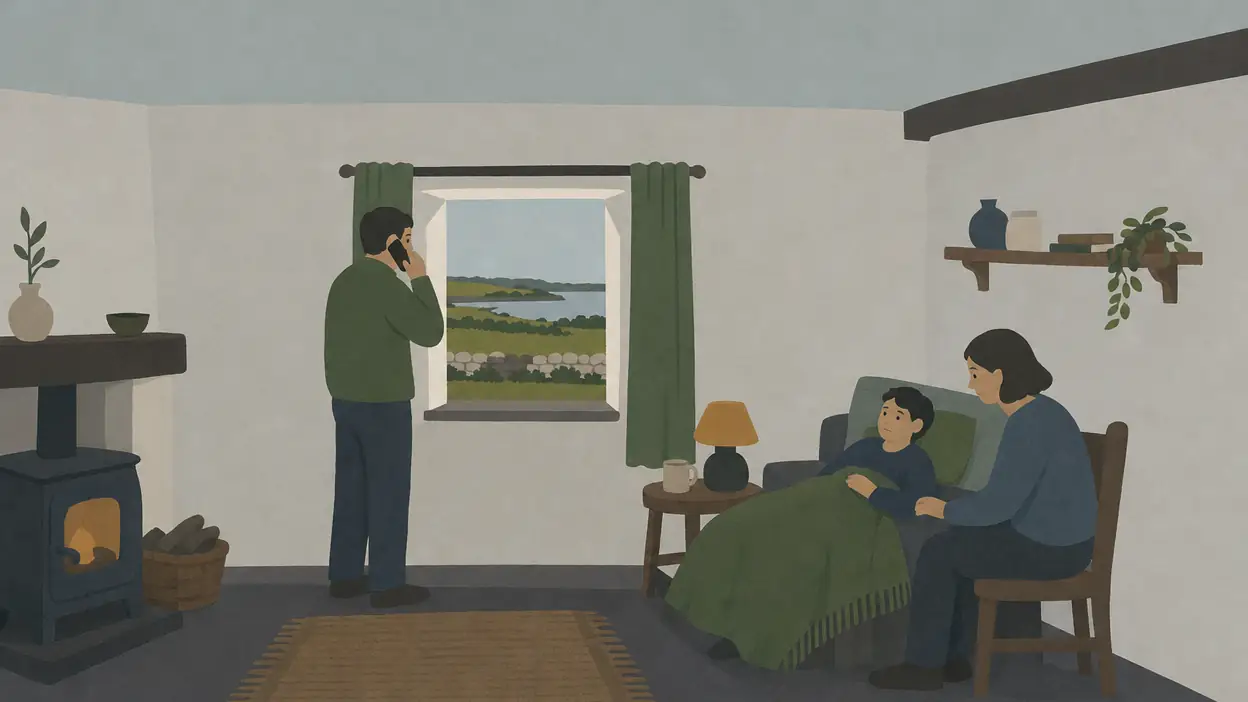
The morning ferry is cancelled. Yesterday’s delivery is still on the mainland, the forecast has worsened, and you have two evenings of your mother’s usual food left. Her prescription is waiting at the pharmacy across the water. The phone works by the window but not reliably in the bedroom.
An island plan needs to cover the interval between being told a service is cancelled and it actually resuming. The national islands policy recognises that access to transport, fresh water and healthcare creates particular challenges for offshore communities.[1]
Start with the route you really depend on
Write down your passenger route, freight arrangements and the operator’s disruption contact. If there is an air service, record that separately. Check the operator directly rather than assuming an online timetable means a service will run.
Aran Island Ferries explicitly provides for cancellation because of sea or weather conditions. The Aran Islands airline also warns about weather cancellation and winter delays.[8][9] These examples establish the possibility of disruption, not a forecast for another island or a fixed maximum wait.
Decision rules:
- A warning could affect the next delivery: check supplies now and ask the operator about arrangements.
- You need medicine or clinical care before the next reliable crossing: contact the pharmacist or care team now.[2]
- Travel would be unsafe: follow official instructions and operator decisions. Do not improvise a private crossing to preserve an appointment.[2]
- The trip is for a medical emergency: use 112 or 999, not the passenger booking process.[3]
Keep both the island-side and mainland-side contacts. A family member ashore may be able to collect supplies or speak to a pharmacy, but needs to know which operator and delivery arrangement to use.
Deeper stocks, chosen from your own delivery gap
The Government’s Storm Éowyn review recommends a household planning assumption of three days without essential services.[5] On an island, treat that as a starting point for discussion, not a promise that transport resumes on the fourth day.
How we worked this out
Recommendation 4.8.5 uses 72 hours.[5] There are 24 hours in a day: 72 ÷ 24 = 3 days. The conversion does not add an estimate for when a ferry, delivery or utility will return.
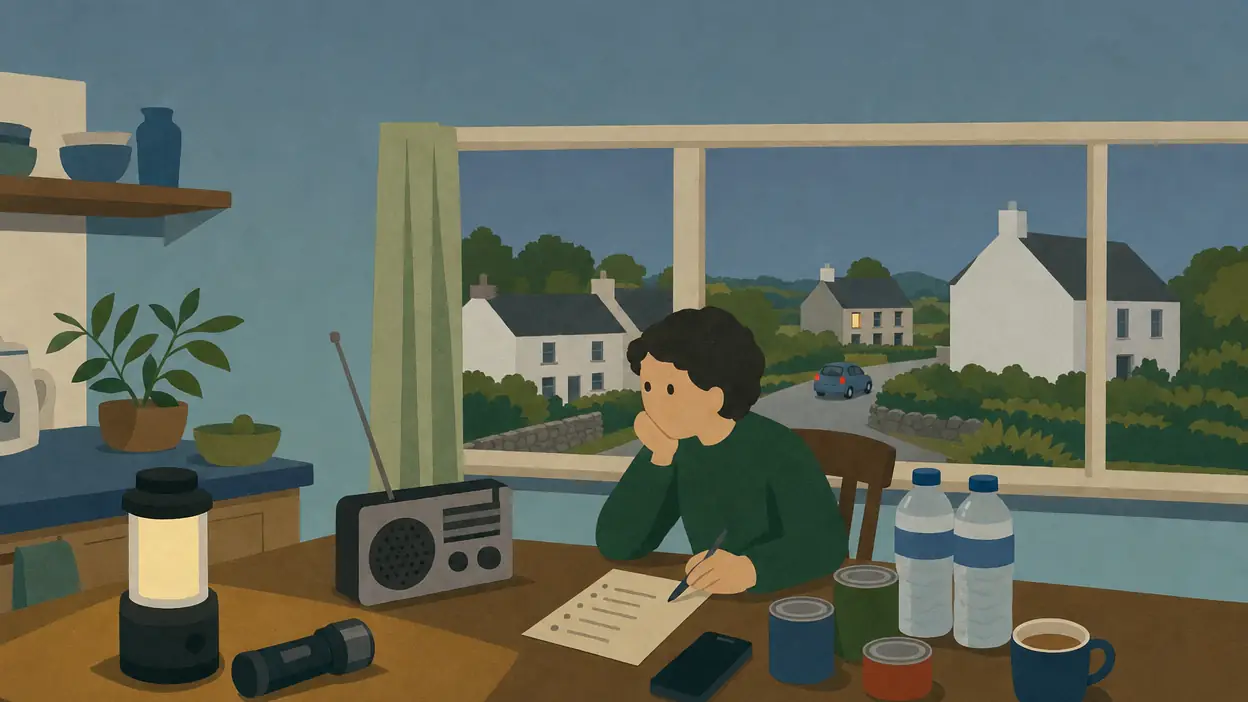
Build your list from what your household actually uses and the local experience of missed deliveries:
| Need | What to record |
|---|---|
| Food | Meals you can prepare with the cooking method available in an outage; include special diets.[2] |
| Drinking water | Stored safe water and the alternative if the local supply fails.[2] |
| Heating and cooking fuel | What the appliance safely uses, what is on hand and how it is delivered.[2] |
| Medicines | Refill date, pharmacy contact, storage instructions and the prescriber’s contingency plan.[2] |
| Baby or care supplies | The items that cannot be substituted easily and who can arrange more. |
| Pets | Food, medicines and a plan with the vet: Pets and animals in an emergency in Ireland. |
Our planning rule is to set a reorder point before your remaining supplies depend on the next scheduled delivery succeeding. Agree the margin from local experience and medical advice, rather than copying an invented national number of island days.
Rotate food and check dates when deliveries arrive. Keep meals that require little preparation as well as familiar ingredients. The HSE suggests long-lasting foods and an alternative if the normal cooking or heating supply fails.[2]
If you run a holiday rental, leave visitors the same local contacts and cancellation instructions. They may have arrived with only the food for the booked stay.
Medicines and planned care: speak before you are short
The HSE advises keeping extra essential medicine for severe weather, following storage instructions and contacting the hospital or clinic if disruption affects an appointment.[2]
- Tell the pharmacist you live on an island. Ask how to request a refill early enough for disrupted freight or passenger services.
- Discuss any medicine that needs refrigeration. Get advice for that product; a food-fridge rule does not establish medicine safety.
- Keep prescription and care details accessible. Include the pharmacy and GP numbers on paper.
- Ask the clinic about travel-dependent treatment. Do this before the weather closes the route, especially for appointments that cannot simply be postponed.
- If someone relies on powered medical equipment, agree the backup and relocation plan with the care team: Medically dependent at home in a power cut in Ireland.
Do not ration a prescribed medicine to stretch the supply without clinical advice. If your next dose is at risk, tell the pharmacist or GP exactly when it is due. A community contact can help with logistics; they cannot change a prescription.
A medical emergency: make the call first
The HSE says call 112 or 999 when someone is seriously ill or injured and their life is at risk.[3] Ask for an ambulance and say clearly that you are on an island.
Have these details ready:[3]
- Island name, Eircode and exact location. Include the building and entrance, not only the island’s main settlement.
- Your callback number. Say if you may lose signal and where you can reliably receive a return call.
- What happened and the person’s condition. Answer questions and follow instructions.
- Any change in the person’s condition or location. Call back if either changes.
The HSE says that once the location is established, dispatch can begin while questions continue.[3] Stay available to the call taker. If another person is present, they can find medicines and direct responders while you stay with the patient.
The Coast Guard’s current description says its rescue centres coordinate and task helicopters, boats and other services, and its aircraft support medical flights for island communities.[4] The islands policy describes day and night air-ambulance support.[1] Your emergency call starts assessment and coordination; it is not a public booking for a particular aircraft.
Give local access information to the responders and follow their directions. Leave aircraft access arrangements to the emergency services coordinating the response.[4] The guide makes no response-time promise and provides no helicopter operating instructions.
Make local help reachable without the internet
The islands policy highlights the role of trained community responders and the need to support islanders while professional help is travelling.[1] Ask the local development office which services and responder arrangements actually operate on your island now. A policy commitment from 2023 is not proof that a particular team is available today.
Create a paper contact sheet:
- Emergency: 112 or 999, plus your Eircode and location description.[3]
- Health: GP, out-of-hours GP, pharmacy, nurse or care-team number where applicable.
- Transport: your own ferry, freight and air operators.
- Community: local development office and two agreed neighbours.
- Utilities: the operator for your actual water supply and electricity account.
Give a copy to the person who may have to help you. Agree a check-in after prolonged loss of power or phone service, with a way to visit only when conditions are safe. Use Staying in touch when phones and power fail in Ireland and When phones and internet are down in Ireland for the wider communications plan.
Island organisations: who does what
Comhdháil Oileáin na hÉireann, the Irish Islands Federation, represents islanders’ interests. Comhar na nOileán provides administration on its behalf and publishes community-development-office information.[6][7] Its office number is 099 75096.[6] Use that route for community contacts and representation, not for emergency dispatch.
The Department of Rural and Community Development’s Our Living Islands, National Islands Policy 2023-2033 sets the policy framework for transport, services, health and community development.[1] It helps explain responsibilities, but it is not a live directory of today’s sailing, nurse availability or emergency crew.
Ask the local development office to help check the contact sheet against current island arrangements. Verify who is available outside office hours and which number is for routine enquiries.
Power, heating and the next delivery
Keep a torch by the bed, charge phones before bad weather and check the household’s actual heating dependency.[2] For supplies that need pumps or powered controls, losing electricity can remove more than lighting. Follow Power cuts in Ireland: what to do and Water outages and boil water notices.
Do not bring outdoor cooking equipment indoors because the usual fuel delivery is late. The HSE warns against indoor camping stoves and barbecues, and generators in garages or other enclosed spaces.[10]
When services resume, replenish what was used and write down the weak point: the prescription waiting ashore, the empty water container, the neighbour nobody could reach. Update the reorder point and contact sheet while the experience is fresh. The useful island plan is the one grounded in your route, household and community.
Sources (10), all checked 2026-10-29
All checked 2026-10-29. All Irish. Operator pages support service-disruption facts only; community organisations support contacts and roles.
- Department of Rural and Community Development, Our Living Islands, National Islands Policy 2023-2033.
- HSE, preparing for severe weather.
- HSE, emergency care and calling 112 or 999.
- Irish Coast Guard, organisation and operations.
- Government of Ireland, Review of Storm Éowyn, recommendation 4.8.5.
- Comhar na nOileán, administration for Comhdháil Oileáin na hÉireann.
- Comhar na nOileán, community development offices.
- Aran Island Ferries, weather cancellations.
- Aer Arann Islands, weather and delays.
- HSE, carbon monoxide poisoning.
prepared.ie is independent public information, published by Gallan Software. It is not affiliated with the Government of Ireland or any agency. In an emergency call 112 or 999.