People first, then essential animal care. Never approach or touch fallen electricity wires. Keep others away and call ESB Networks, 1800 372 999.[1] Have a plan for drinking water, milking and essential equipment before a cut, with generator connections installed by a registered electrical contractor.[1][2] Move livestock before rising water isolates them, and contact your vet or local DAFM veterinary office early if welfare is threatened.[3]
The scene this guide is for
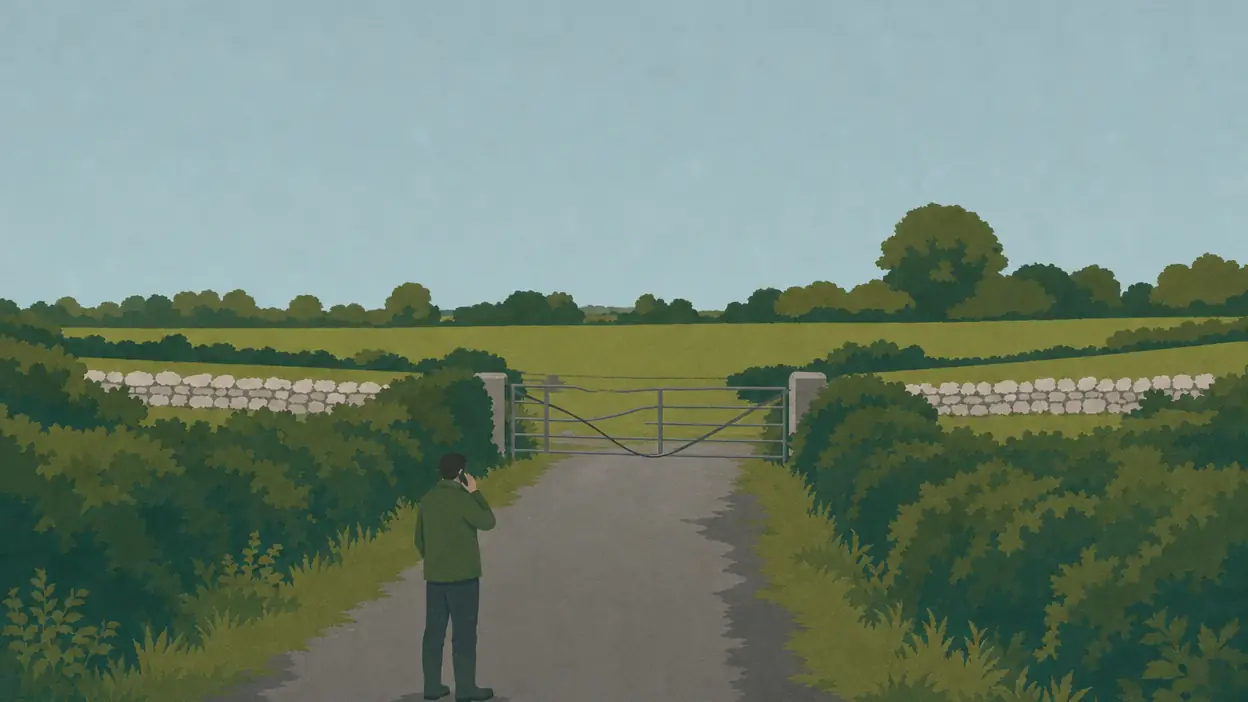
Half five in the morning. The parlour is dark, the cows are waiting and a strip of roofing is flapping over the collecting yard. A branch lies across the lane. The house has a little stored water; the stock do not.
The next useful job may be making calls from indoors. Teagasc advises staying off roofs and high places in wind, and treating fallen wires as live.[3] A milking deadline does not make the yard safe to enter.
First walk: make it a safety check
After the worst weather has passed, assess accessible areas without taking on repairs. Teagasc and the winter booklet advise telling someone where you are going, taking a charged phone, dressing for the conditions and getting help with jobs that need another person.[3][4]
Use these rules:
- Tree entangled with wires: leave both alone. Call ESB Networks before any clearance.[1]
- Damaged roof or unstable sheet: stay out of the danger area and arrange competent help. Do not climb up in wind.[3]
- Flooded route: do not assume tractor weight makes it safe. Teagasc warns that banks and road edges can be undercut, and floodwater can lift covers and slats.[3]
Give emergency services the farm Eircode and the actual access point.[3] Record a separate entrance description if the livestock yard is far from the farmhouse.
Water: work out the scale before the pump fails
Teagasc’s severe-weather guidance says milking cows must have access to drinking water at all times. Its example of a cow producing 30 litres of milk a day, on a silage-based diet, needs 75 to 90 litres of water daily.[5] That is an example for those conditions, not a universal allowance for every animal.
For 20 cows matching that example, the drinking water alone is 1,500 to 1,800 litres a day. Parlour washing and other stock are additional demands.
How we worked this out
Teagasc gives 75 to 90 litres per cow daily for a cow producing 30 litres of milk on a silage-based diet.[5] The illustration assumes 20 such cows: 20 × 75 = 1,500 litres; 20 × 90 = 1,800 litres. It excludes other animals, cleaning and losses. Use your own herd numbers and an adviser-approved requirement for your circumstances.
Write down:
- Your water source: public mains, group scheme or own well.
- What stops without power: a well pump, distribution pump or treatment equipment.
- Usable stored water and how it reaches troughs. A tank you cannot empty into drinkers does not solve the problem.
- An alternative supply and transport arrangement. Agree access, containers and help before bad weather.
- Which groups need attention first, agreed with the vet or adviser. Teagasc identifies milking cows and animals on dry or high-concentrate diets as especially vulnerable to shortages.[5]
Check troughs themselves, not just the tank gauge. Teagasc advises regular checks of shed water supplies in freezing weather.[6] If animals have already been deprived of water, get veterinary advice about restoring access: its severe-weather guidance warns of health problems from over-drinking by extremely thirsty animals.[5]
Milking: have a backup that has been demonstrated
A dairy plan needs to cover the complete milking operation. Ask the electrician and milking-machine technician what must run, and ask the processor what to do if cooling or collection is disrupted. Put their numbers beside the parlour instructions.
Before winter:
- List the essentials together: milking, water, cooling, cleaning and any other welfare-critical equipment.
- Have the contractors demonstrate the arrangement with the equipment it is meant to run.
- Teach a second competent person the procedure. Keep the operating instructions at the connection point.
- Agree an early call to the vet if milking cannot be maintained. Do not rely on a general internet claim about how many milkings may safely be missed.
If milk cannot be cooled or collected as usual, obtain the processor’s instructions before adding it to the normal collection plan. This guide gives no general safe storage time for milk under failed cooling.
Generators: no improvised connections
The HSA says a generator supplying permanent farm wiring needs a proper changeover arrangement that prevents simultaneous connection to the electricity network. ESB Networks must be notified of standby installation.[2] A registered electrical contractor should install it; ESB Networks’ farm booklet also requires a professional changeover installation.[1][9]
Never connect a generator to an ordinary socket or directly into the farm’s circuits. That can send electricity onto the network and endanger workers repairing it.[1][2]
Operating rules:
- Outdoors only. Teagasc warns against indoor or enclosed operation.[1]
- Follow the maker’s instructions and the electrician’s sequence. Do not improvise connectors when borrowing a machine.
- Keep animals and people away from moving machinery. If the generator is tractor-driven, ask the supplier to demonstrate the guards and exclusion arrangements before use.
- Plan for fuel and trained cover. The household may need the tractor elsewhere; agree priorities before a cut.
- If a fault or repeated trip occurs, stop and call the electrician. The HSA says to find the cause rather than fitting a larger protective device.[2]
For the farmhouse, use Power cuts in Ireland: what to do. Its warmth and communications needs remain part of the farm plan.
Flooding: move stock while there is still a route
Teagasc advises moving animals at risk of isolation to higher ground where feed and fodder can still reach them.[3] A dry patch surrounded by rising water is not a complete refuge.
- Identify the destination and route before the forecast worsens. Include gates, handling facilities, water and access for feed.
- Speak to neighbours about spare housing early. Teagasc specifically recommends this.[3]
- Contact the local DAFM veterinary office about movement or welfare concerns. Do not assume an emergency automatically removes animal-movement requirements.[3]
- Keep feed and chemicals protected. Teagasc warns about contamination of water supplies from agricultural chemicals.[3]
- Do not enter dangerous water to attempt a rescue. If people are at risk, call 112 or 999 and describe the situation.
Flooding can damage silage preservation. Teagasc recommends individual assessment and adviser help rather than assuming every wet bale is usable.[3] Keep suspect fodder separate pending advice. See Flooding: prepare your home and stay safe and After the storm: damage, claims and financial help.
Snow, ice and fodder
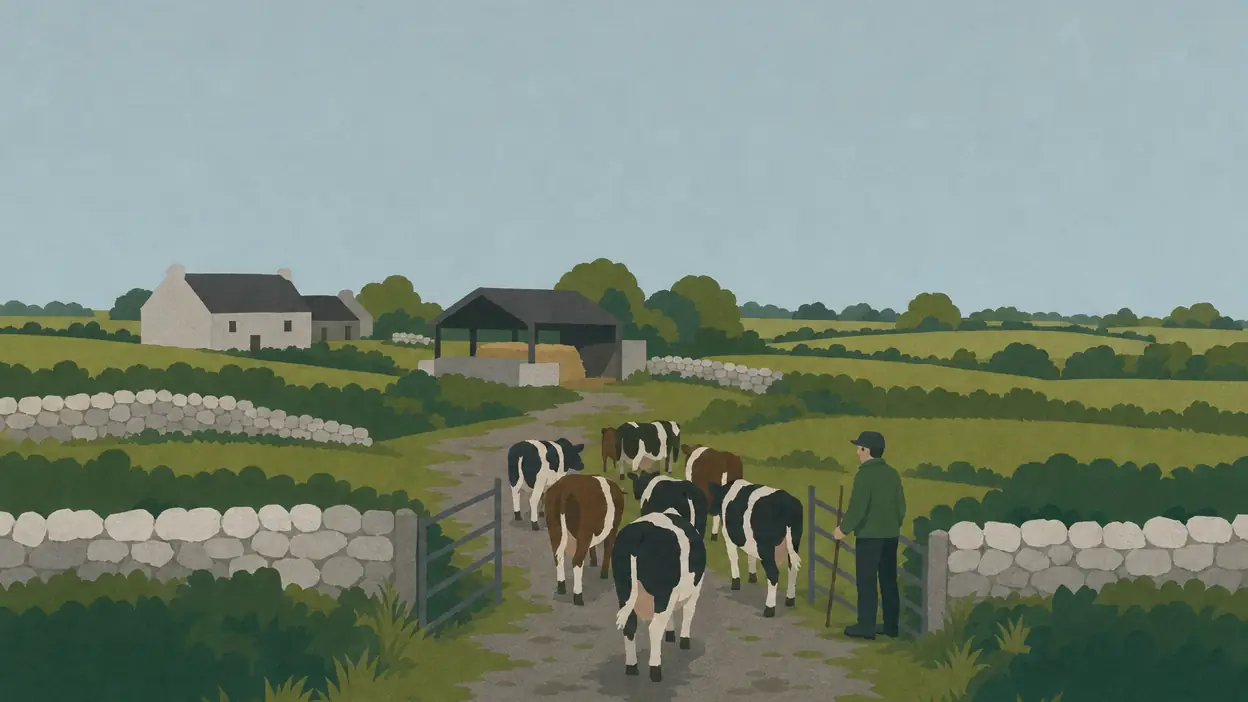
Teagasc recommends gritting high-traffic and sloping yard areas, checking water regularly and preparing access for milk collection.[6] Make sure grit and the equipment to spread it are accessible before the yard freezes.
Ask the milking-machine technician about draining equipment after use and frost protection. Teagasc discusses these measures, but the correct method depends on the installation.[6] Do not improvise heaters beside combustible materials: the HSA requires control of fire risks and suitable electrical equipment on farms.[2]
The winter booklet recommends a fodder budget and reserve, with silage analysis informing supplementary feeding.[4] Keep an actual inventory: where the feed is, which stock it serves and whether snow or flooding could block access. Arrange feed deliveries before a forecast makes the yard inaccessible.
If searching for animals in snow, wear high-visibility clothing, tell someone the route and expected return, and carry a charged phone.[4] Do not make a lone search a substitute for calling for help when conditions are dangerous.
Welfare responsibilities and the calls to make early
The Animal Health and Welfare Act requires suitable food and sufficient wholesome drinking water, appropriate to the animal’s needs. It also requires provision for welfare when animals are left unattended.[7] The practical question during a storm is which needs your current arrangements can no longer meet.
Use this escalation order:
- Immediate animal-health problem: your veterinary practice, including its out-of-hours number.
- Feed or housing shortage developing: your Teagasc adviser and neighbours before supplies run out.[3]
- Movement or serious welfare difficulty: local DAFM veterinary office.[3]
- Animal-welfare concern to report: DAFM’s published helpline 01 607 2379, also listed in the winter booklet.[4]
Put the list on paper in the farmhouse and yard office. Include the person who can take over if you are injured, exhausted or stranded away from the farm. Maintaining contact with neighbours, family and advisers is part of Teagasc’s severe-weather advice, not an optional extra after the stock are seen to.[3]
Sources (9), all checked 2026-10-29
All checked 2026-10-29. All Irish.
- Teagasc, ESB Networks advice: stay safe around fallen wires.
- HSA, fire, electricity and chemicals on farms.
- Teagasc, severe weather advice to farmers.
- OEP, Be Winter-Ready 2024-2025, including DAFM animal-welfare contact.
- Teagasc, farming community severe-weather advice.
- Teagasc, managing through the cold spell.
- Irish Statute Book, Animal Health and Welfare Act 2013, sections 13 and 14.
- HSE HPSC, flooding advice.
- ESB Networks, Farm Safely With Electricity.
prepared.ie is independent public information, published by Gallan Software. It is not affiliated with the Government of Ireland or any agency. In an emergency call 112 or 999.