If you or someone you know is about to harm themselves or someone else, ring 112 or 999, or go to the nearest emergency department.
To talk to someone now, free and at any hour:
- Samaritans: 116 123, or email jo@samaritans.ie.
- Pieta: 1800 247 247, or text HELP to 51444 (standard message rates apply). For thoughts of suicide or self-harm, and for people bereaved by suicide.
- Text About It: text HELLO to 50808 for an anonymous chat by text. It is free.
- Under 18: Childline on 1800 66 66 66, or live chat on childline.ie.
You do not need a referral for any of these. You can also ring them if you are worried about someone else.
This guide does not diagnose anything, and it is not counselling. It tells you what the HSE says is normal after a frightening event, and who to ring.
The scene this guide is for
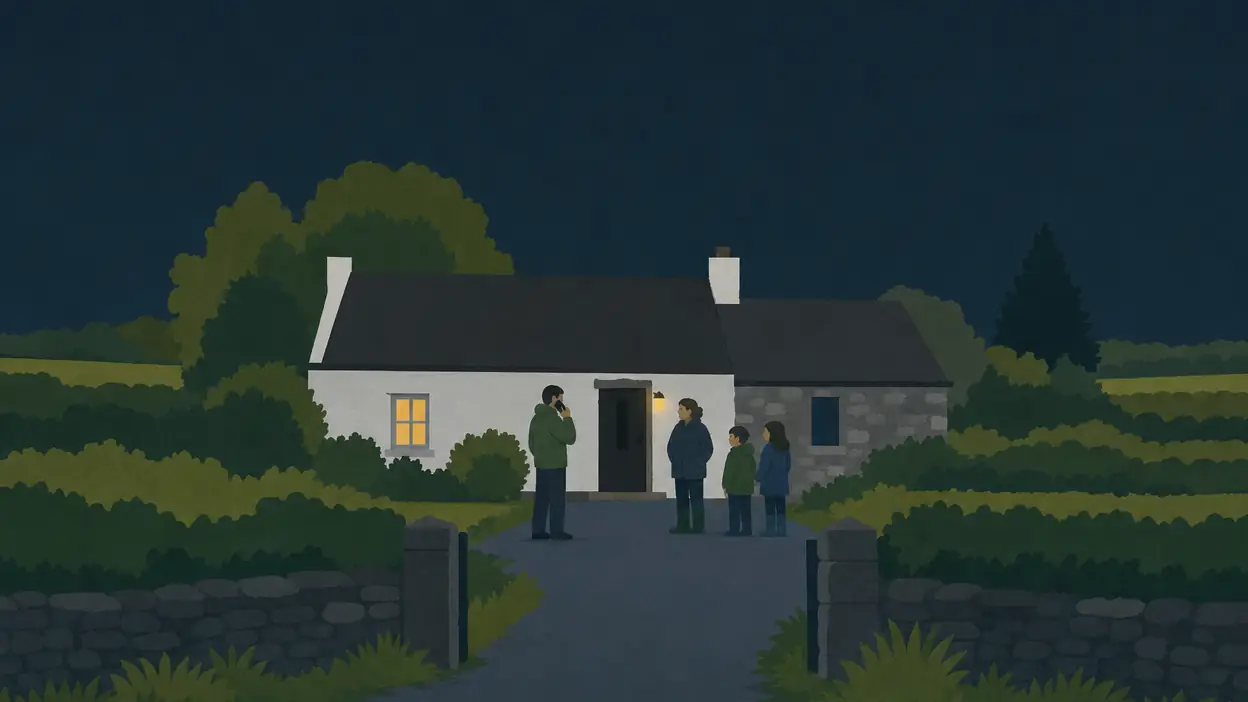
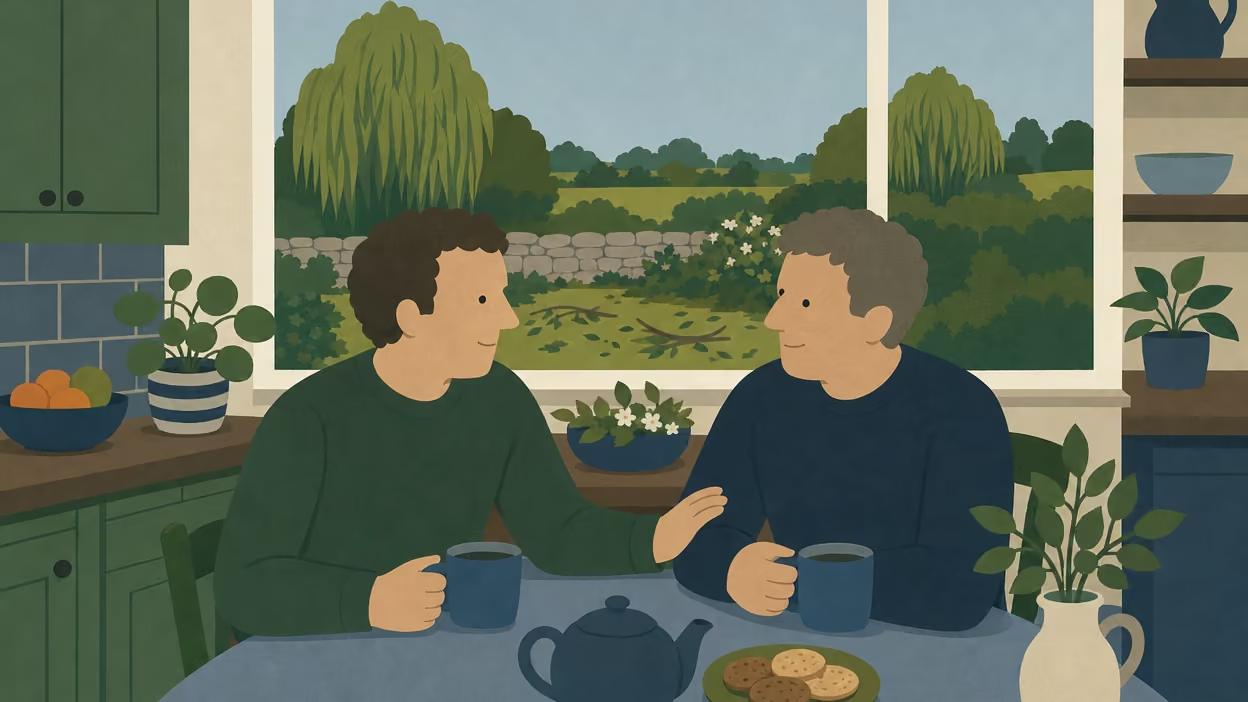
It is the morning after the storm. The water is out of the kitchen, the loss assessor has been, and everyone says you were lucky. But you have not slept properly in a week. Every gust of wind has you at the window. A friend calls round, puts the kettle on, and asks how you are really doing.
What is normal after a frightening event
The HSE says it is normal to have upsetting and confusing thoughts after a traumatic event, and that for most people these get better over a few weeks. Serious road accidents, natural disasters such as severe floods, and the sudden death or serious injury of someone close are all on the HSE’s list of events that can lead to PTSD.
It is common to feel:
- helpless, anxious or afraid
- restless and unable to sleep
- sad, angry or guilty
Some people keep reliving it in their head. Others avoid anything that reminds them of it, or feel numb. Many are jumpy and on edge, or find it hard to concentrate. None of this means something is wrong with you. It means something frightening happened.
The HSE’s advice for the first weeks is often to wait and watch. It says 2 in 3 people improve in a few weeks without treatment.
Things that help in the first weeks
These come from the HSE’s own advice on stress and sleep. None of them costs anything.
- Talk to someone you trust. Telling a friend or family member how you feel can help make things clearer.
- Focus on what you can control. After a flood, that might be one room, one phone call to the insurer, or one form. Break big jobs into small parts.
- Keep a routine. Get up and go to bed at about the same time.
- If you cannot sleep, get up. Keep the lights low, do something boring, avoid screens and do not keep checking the clock. Go back to bed when you feel sleepy.
- Go easy on alcohol. It can numb things in the short term, but the HSE says it gets in the way of recovery from trauma and can make things worse. It also harms the quality of your sleep.
- Try a breathing exercise. The HSE says a few minutes can help you manage strong feelings.
Money worries after a flood or storm can be as heavy as the event itself. The Emergency Response Payment helps with food, clothing and bedding after a flood or structural storm damage. You apply through the Community Welfare Service. For help with debts or bills, MABS has a free helpline on 0818 07 2000. See also After the storm.
When to talk to your GP
The HSE says to talk to your GP if you or your child:
- are still having problems about 4 weeks after the event
- have trouble doing everyday things because of how you feel
- are worried about any of it
You do not need to wait four weeks if it is getting worse. A GP can offer support to anyone in crisis, and you can bring someone with you. Outside surgery hours, use your GP out-of-hours service.
The HSE also runs a free information line on 1800 111 888. It can tell you what mental health supports are near you.
Children after an emergency
Children feel it too, and they may show it differently. The HSE lists signs to watch for in children after a traumatic event:
- trouble sleeping and upsetting nightmares
- losing interest in things they used to enjoy
- headaches and stomach aches
- wetting the bed
- being unusually anxious about being apart from you
- acting out what happened in their play
With a child, it can help to talk while you are doing something else, such as driving or going for a walk. If you are worried, talk to their GP. Childline is there for them any time. There is more in Keeping children and teenagers safe.
If you are worried about someone else
The HSE says the best thing you can do is listen. You could:
- ask them how they are feeling
- say what you have noticed, kindly
- give them time, and listen without interrupting, judging or offering solutions
If you are still worried, encourage them to talk to their GP, and offer to go with them. If they already use a mental health service, contact that team, even if they no longer attend.
If they are not ready to get help, keep listening and keep letting them know you are there. If you think they are in danger now, ring 112 or 999.
Cannot make a voice call? Text 112.
The emergency text service can be used by "anyone who is not able to make a voice call due to a speech or hearing impairment or other situations where a voice call might not be possible". It works "from any Irish registered mobile phone (either pre-pay or bill pay) on all the Irish Mobile networks". If you can talk, ring instead: a text is slower.
Your text needs four things:
- Which service: Ambulance, Coastguard, Fire or An Garda Síochána.
- What the problem is.
- County you are texting from.
- Where help is needed: town, road, Eircode or a landmark.
Wait for a reply: "an SMS/Text 'Delivery Report' does not mean your message has been received". If no reply comes within 3 minutes, send another message straight away. It does not work from a foreign phone, or from an Irish phone roaming abroad, including in Northern Ireland.
No registration is needed. 112.ie says: "There is no preparation or registration required to use either Emergency SMS, or RTT when contacting the ECAS." If you might need to text one day, you can choose to give the service your address, access details and a next of kin in advance at 112.ie/register. Most smartphones can also use Real-Time Text to type during a call to 112 or 999: turn on RTT in your phone’s accessibility settings.
If you cannot talk on the phone
- Text About It works entirely by text: HELLO to 50808.
- Pieta takes texts: HELP to 51444.
- Samaritans answers email at jo@samaritans.ie.
- Childline has live chat on childline.ie for under 18s.
- In an emergency, you can text 112. See the box above.
Common questions
Is it normal to feel like this weeks after a flood or storm?
Yes: the HSE says upsetting and confusing thoughts are normal after a traumatic event, and for most people they get better over a few weeks. Talk to your GP if you are still struggling about 4 weeks later, or sooner if you are worried.
Who can I talk to in the middle of the night?
Samaritans on 116 123, Pieta on 1800 247 247 and Text About It (text HELLO to 50808) are free and open any time, with no referral needed. If you are about to harm yourself, ring 112 or 999 or go to an emergency department.
Can I text instead of calling?
Yes: text HELLO to 50808 for Text About It, or HELP to 51444 for Pieta, where standard message rates apply.
How do I help a friend who is struggling after the storm?
Listen without judging or rushing to solutions, tell them what you have noticed, and encourage them to see a GP, offering to go with them.