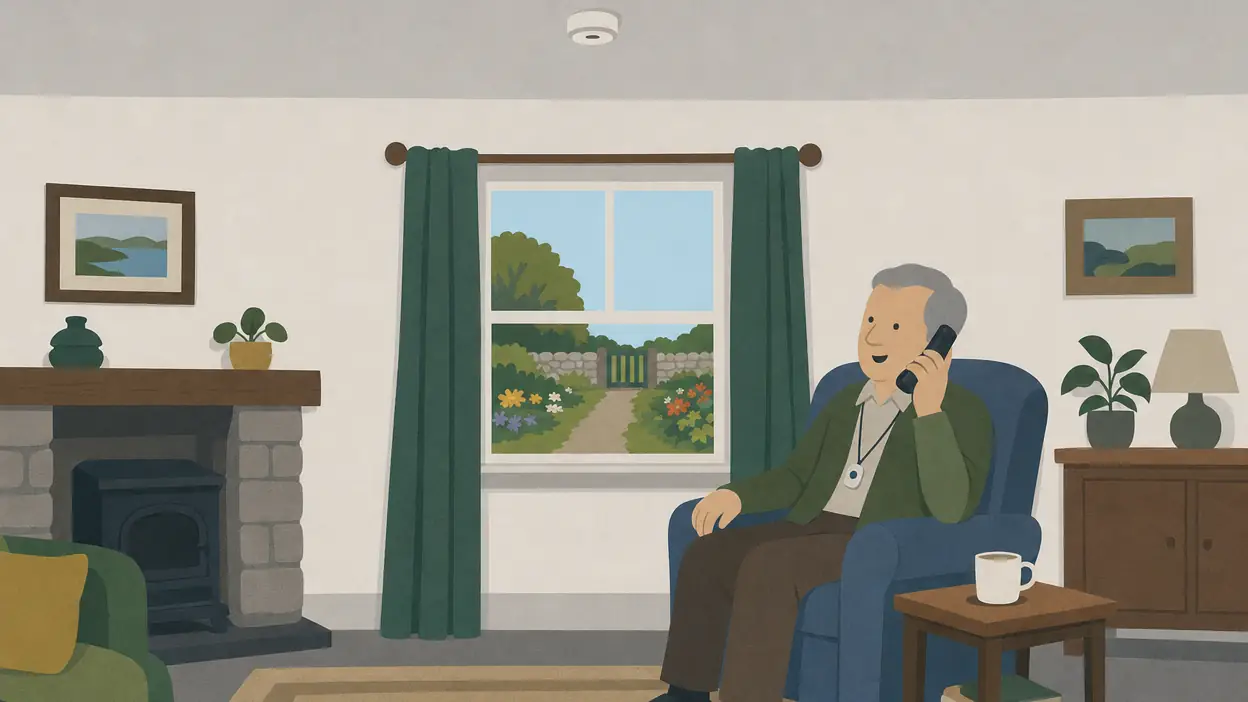
You are safer behind a closed door. That is the Garda advice for anyone who gets a caller they were not expecting.[1] It is not about being nervous. Most callers are genuine, and the few who are not count on you being polite.
This guide is for you if you live on your own, and for the family member or friend who helps you set things up. The last section is a list to keep by the phone.
The scene this guide is for
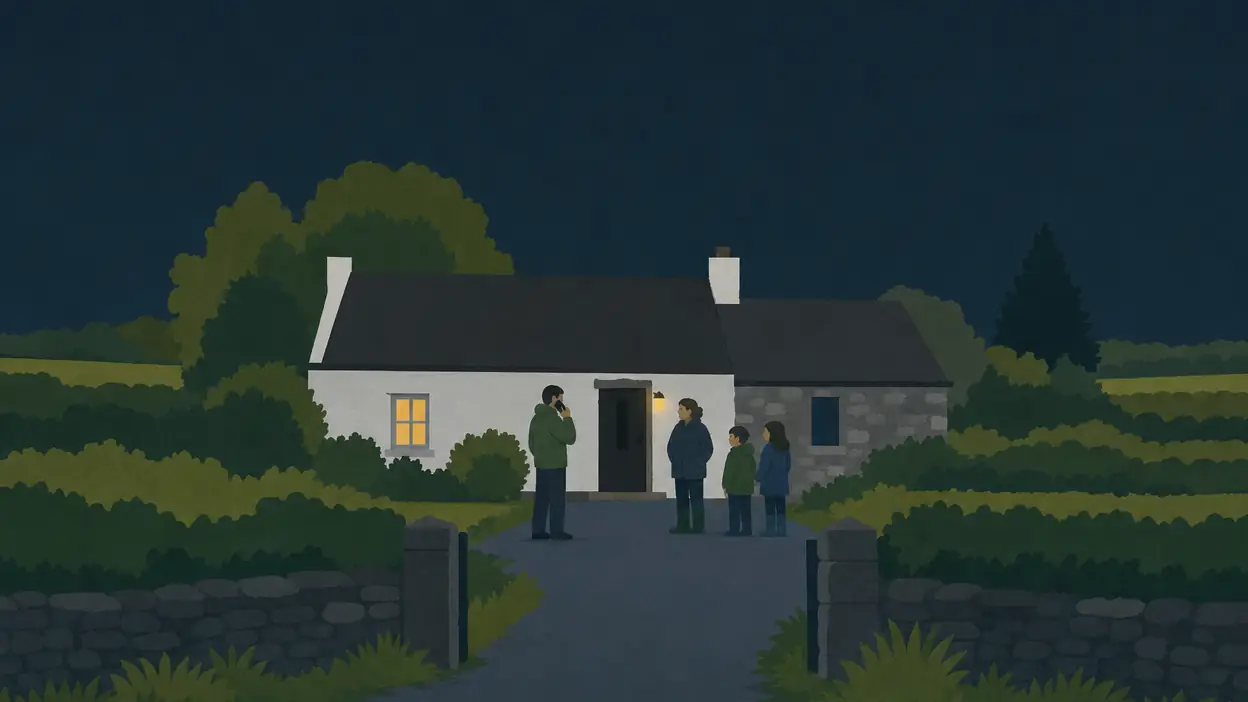
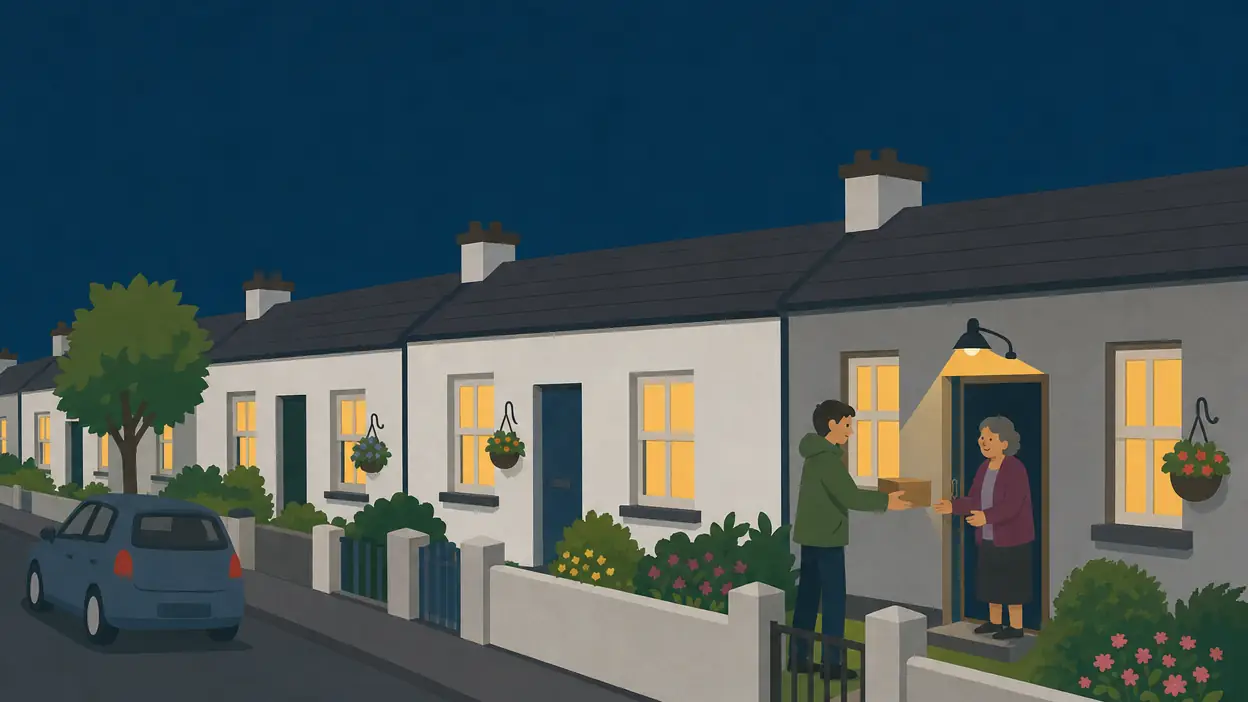
It is a dark evening in November. There is a knock at the front door. A man you do not know says he was passing and noticed slates loose on your roof. He can fix them today, cash, before the next storm.
He may be genuine. But the Gardaí list roof repairs, gutters, tree cutting and “County Council” among the reasons bogus callers give for knocking.[1] You do not have to decide on the doorstep. Say no, close the door and check.
Before you open the door
The Garda security check for callers is short:[1][2]
- Ask yourself: am I expecting anyone? If not, look out the window first. Notice what the caller is wearing and the vehicle they came in.
- Use a door viewer if you have one, so you can see who is outside before you open.
- Put the chain or door limiter on before you open the door. Talk through the gap.
- Lock the back door before you answer the front. Some callers keep you talking at the front while someone else goes in the back.
- Ask for ID. A genuine caller will not mind.
- Do not let them in if you do not know them. “If in doubt, keep them out,” as the Garda leaflet for older people puts it.[2]
You can also ask your local Garda station for a bogus caller card. You hand it through the door with the chain on. It says you do not open the door to cold callers, and a genuine caller will write their details on it.[1]
Uisce Éireann adds: switch on the outside light when it is dark, and never leave a stranger alone on the doorstep while you go to another room.[5]
How to check a worker is genuine
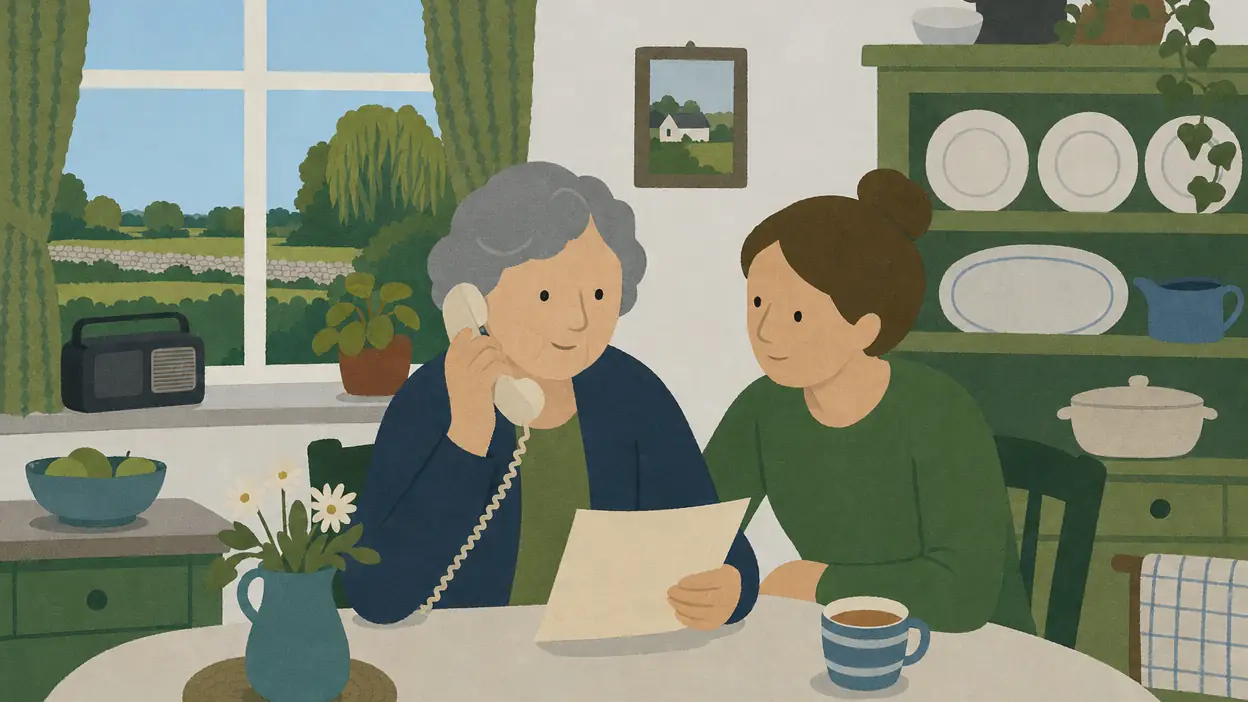
An ID card on its own proves little. The check that works is ringing the company yourself, on a number you find, not one the caller gives you. The Gardaí say to verify independently and “never use the contact details supplied to you by the caller”.[4]
| Who says they are calling | What they will and will not do | Ring to check |
|---|---|---|
| Uisce Éireann (water) | Staff and contractors always carry an ID card with a photo, name, card number and expiry date. They will never ask for money, your PPS number or bank details.[5] | 1800 278 278[5] |
| ESB Networks (electricity lines and meters) | ESB Networks never sends a text, call or email with a link asking for bank details or a one-time passcode.[6] | Customer support 1800 372 757; emergencies 1800 372 999[7] |
| The Gardaí | The Gardaí and your bank will never ask for your PIN or password, ask you to move money, or come to your house to collect your card, cheque book or cash.[4] | Your local Garda station, from the Garda station directory |
| A tradesperson you did not ask for | The Gardaí advise using recommended tradespeople and avoiding cold callers.[1] | Do not ring a number they give you. Ask a family member or neighbour who they use. |
If you are unsure, say no. Uisce Éireann’s own advice is to refuse access if you are unsure or suspicious.[5] A genuine worker can come back by appointment.
“Your roof is damaged, we can fix it now”
The Gardaí describe four common tricks by bogus traders:[1][3]
- Poor work, or none, and a big cash bill. Hammering on the roof for a short while, then a demand for cash, sometimes with an offer to drive you to the bank.
- A deposit for materials, and then they are gone.
- A later visit from “VAT or Revenue officials” asking for more money for the same job.
- Getting inside, then offering to buy furniture or paintings far below their value.
Decision rule never hire someone who calls to the door, and never pay cash for work you did not ask for. The Gardaí say never to engage anyone who insists on cash, and to get other quotes from established firms.[3]
Need a small job done? Age Action’s Care and Repair does small DIY jobs free for older people. For bigger jobs it can give you details of local tradespeople. Ring 0818 911 109. It had a waiting list in October 2026.[14]
If you did agree to work or buy something at the door, you usually have a 30-day cooling-off period to cancel, and the business must tell you how.[16]
Phone calls and texts
The same rules apply to the phone. The Gardaí say to always say “NO” to unexpected callers or texters who want private information. A caller who knows your name may still be a criminal.[4]
- Hang up and ring back on a number you know, such as the one on your bill or the back of your bank card.[4][15]
- Never dial a code a caller gives you. In October 2026, FraudSMART warned about callers posing as your bank who ask you to key in a code starting *21*. It sends your calls to the criminal.[15] If you already have, ring your bank and your mobile provider straight away.[15]
- Never move money to a “safe account”. Your bank will never ask you to.[4]
There is more on texts that pretend to be from ESB Networks after a storm in Scams around emergencies and at the door.
A personal alarm, free to start
The Seniors Alert Scheme gives a monitored personal alarm to people aged 65 and over who have limited means. You wear it as a pendant or on your wrist. When you press it, it rings a helpline that is open 24 hours a day, every day. The operator talks to you through the base unit and decides whether to send a local responder or the emergency services.[8]
What it costs, from Citizens Information:[8]
- The equipment and installation are free.
- Monitoring is free for the first year. After that you pay an annual fee to the provider, which Citizens Information puts at about €70 a year. Your local group will tell you the cost first.
- If there is no landline, you may also pay for a mobile SIM.
To qualify you must be 65 or over and have limited means. You must also do one of these:[8][9]
- live alone, or be alone for long periods of the day
- live with another person over 65 who has limited means
- care for someone else in your household
How to apply: you do not apply to Pobal yourself. You contact a community or voluntary group registered for the scheme in your area, and they apply for you. A family member or neighbour can contact the group for you.[8] Find your local group on the Pobal Seniors Alert page, or ring Pobal on 01 511 7222, Monday to Friday, 10am to 12.30pm and 2pm to 4pm.[9]
Try the scheme before you buy an alarm in a shop.
Your community: Text Alert and Community Alert
Text Alert sends text messages about suspicious activity in your area. A Garda checks a report, then sends an alert to a community contact, who passes it to everyone in the local group.[10]
Community Alert is for rural areas, with a particular focus on older people. It is run by local groups with the Gardaí and Muintir na Tíre. Neighbourhood Watch does the same job in towns and cities.[10]
To join, or to start a group, ask your local Garda station. For Community Alert you can also ring Muintir na Tíre on 062 51163.[10]
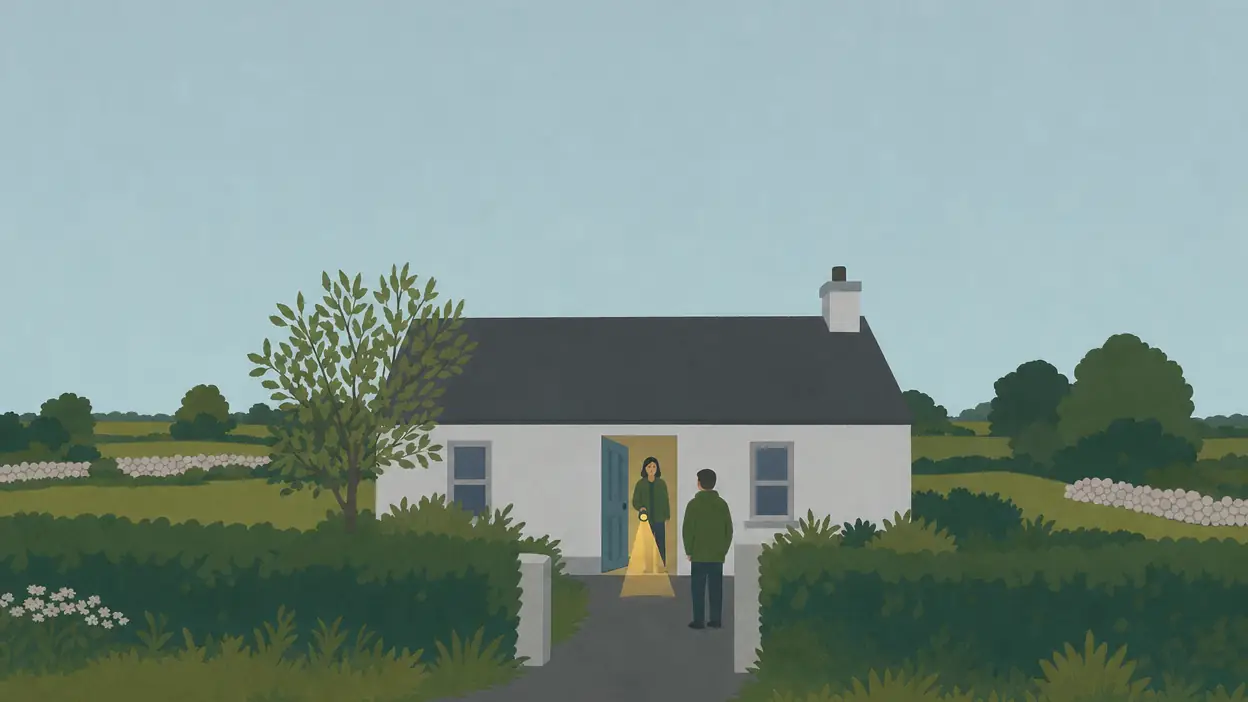
These schemes are also a way to know your neighbours. If you would welcome someone checking on you after a storm, see Check on a neighbour.
Around the house
A few things from the Garda home security advice cost nothing:[11][12]
- Lock doors and windows, day and night. One in five burglaries involves an unlocked door or window.[12]
- Keep keys away from the letterbox and windows.
- Do not keep large amounts of cash at home. Use the bank, credit union or post office.[2]
- Make sure your house number can be seen, so the ambulance or Gardaí can find you quickly.[2]
- Keep a torch by the bed for a power cut or a noise at night. A head torch leaves your hands free (kit options: Head torch).
There is more in Home security in the dark months.
Ring 112 or 999 when
- You think someone is trying to get in, or someone at the door is frightening you. The Gardaí say to ring 999 or 112 if you feel you are being targeted.[1]
- Someone is seriously ill or injured and their life is at risk. That includes you, after a fall. Give the address and Eircode if you know it.[17]
- You see bogus callers working in a vulnerable neighbour’s house. Ring the Gardaí straight away.[1]
- Call 112Call 999
Cannot make a voice call? Text 112.
The emergency text service can be used by "anyone who is not able to make a voice call due to a speech or hearing impairment or other situations where a voice call might not be possible". It works "from any Irish registered mobile phone (either pre-pay or bill pay) on all the Irish Mobile networks". If you can talk, ring instead: a text is slower.
Your text needs four things:
- Which service: Ambulance, Coastguard, Fire or An Garda Síochána.
- What the problem is.
- County you are texting from.
- Where help is needed: town, road, Eircode or a landmark.
Wait for a reply: "an SMS/Text 'Delivery Report' does not mean your message has been received". If no reply comes within 3 minutes, send another message straight away. It does not work from a foreign phone, or from an Irish phone roaming abroad, including in Northern Ireland.
No registration is needed. 112.ie says: "There is no preparation or registration required to use either Emergency SMS, or RTT when contacting the ECAS." If you might need to text one day, you can choose to give the service your address, access details and a next of kin in advance at 112.ie/register. Most smartphones can also use Real-Time Text to type during a call to 112 or 999: turn on RTT in your phone’s accessibility settings.
Source: 112.ie, emergency text service, sending a text to 112, SMS questions and answers, emergency SMS terms and conditions and Real-Time Text pages, checked 1 November 2026.
If you have been tricked
Do not be embarrassed. The Gardaí say never to be ashamed to contact them, and to do it straight away.[1]
- Report it to your local Garda station, even if they got nothing. Your report may stop it happening to someone else.[4]
- Write down what happened while you remember: what they looked like, what they wore, their accent and any van or car.[1]
- Keep any paper they gave you.[1]
Keep this by the phone
For a worry that is not an emergency, ring ALONE or your local Garda station. ALONE’s support line is open 8am to 8pm, seven days a week.[13]
- Emergency: 112 or 999, or text 112 if you cannot speak.
- Local Garda station: write the number here.
- ESB Networks emergencies: 1800 372 999.[7]
- Uisce Éireann: 1800 278 278.[5]
- ALONE: 0818 222 024.[13]
- Age Action Care and Repair: 0818 911 109.[14]
- A family member and a neighbour: names and numbers.
- My rule: I do not open the door to people I am not expecting. I ring the company myself.
For the Government’s advice, see Advice for vulnerable people from Be Emergency Ready (gov.ie).
Common questions
How do I know if an Uisce Éireann worker at my door is genuine?
Ask to see their ID card, which has a photo, name, card number and expiry date, and ring Uisce Éireann on 1800 278 278 to check before you let them in.[5] Uisce Éireann staff will never ask for money, your PPS number or bank details.[5]
Is the Seniors Alert Scheme free?
The alarm equipment and installation are free and monitoring is free for the first year, after which you pay an annual fee of about €70.[8] It is for people aged 65 and over with limited means, through a local group registered with Pobal.[8]
What should I do if someone calls to my door offering to fix my roof?
Do not agree to anything at the door, do not pay cash, and get quotes from established firms you choose yourself.[3] If you feel you are being targeted, ring the Gardaí on 999 or 112.[1]
Will the Gardaí or my bank ever call to collect my card or cash?
No. The Gardaí say neither they nor your bank will ever ask for your PIN, ask you to transfer money, or come to your home to collect your card, cheque book or cash.[4]
Data sources (17), all checked 2026-11-01
All checked 2026-11-01. All Irish. ALONE, Age Action and FraudSMART (run by Banking & Payments Federation Ireland) are not public bodies; the safety rules come from An Garda Síochána, Uisce Éireann, ESB Networks, Citizens Information, Pobal and the CCPC and the HSE.
- An Garda Síochána, Crimecall crime prevention message: bogus callers and traders, 27 January 2025.
- An Garda Síochána, Security for the older person (information sheet PS1).
- An Garda Síochána, Bogus traders and callers (information sheet PS3).
- An Garda Síochána, Fraud.
- Uisce Éireann, Check caller ID.
- ESB Networks, Fraudulent phishing attempts, 24 February 2025.
- ESB Networks, Contact us.
- Citizens Information, Seniors Alert Scheme.
- Pobal, Seniors Alert Scheme.
- An Garda Síochána, Community crime prevention programmes: Text Alert, Neighbourhood Watch and Community Alert.
- An Garda Síochána, Securing your home.
- An Garda Síochána, Lock Up Light Up campaign.
- ALONE, National Support and Referral Line.
- Age Action, Care and Repair.
- FraudSMART, Fraud alert: do not dial *21* phone codes at the request of an unexpected caller, 30 October 2026.
- Competition and Consumer Protection Commission, Buying online, over the phone, or on your doorstep.
- HSE, Emergency care for adults: when to call 112 or 999.
prepared.ie is independent public information, published by Gallan Software. It is not affiliated with An Garda Síochána, Uisce Éireann, ESB Networks, Pobal, ALONE or Age Action. In an emergency call 112 or 999.