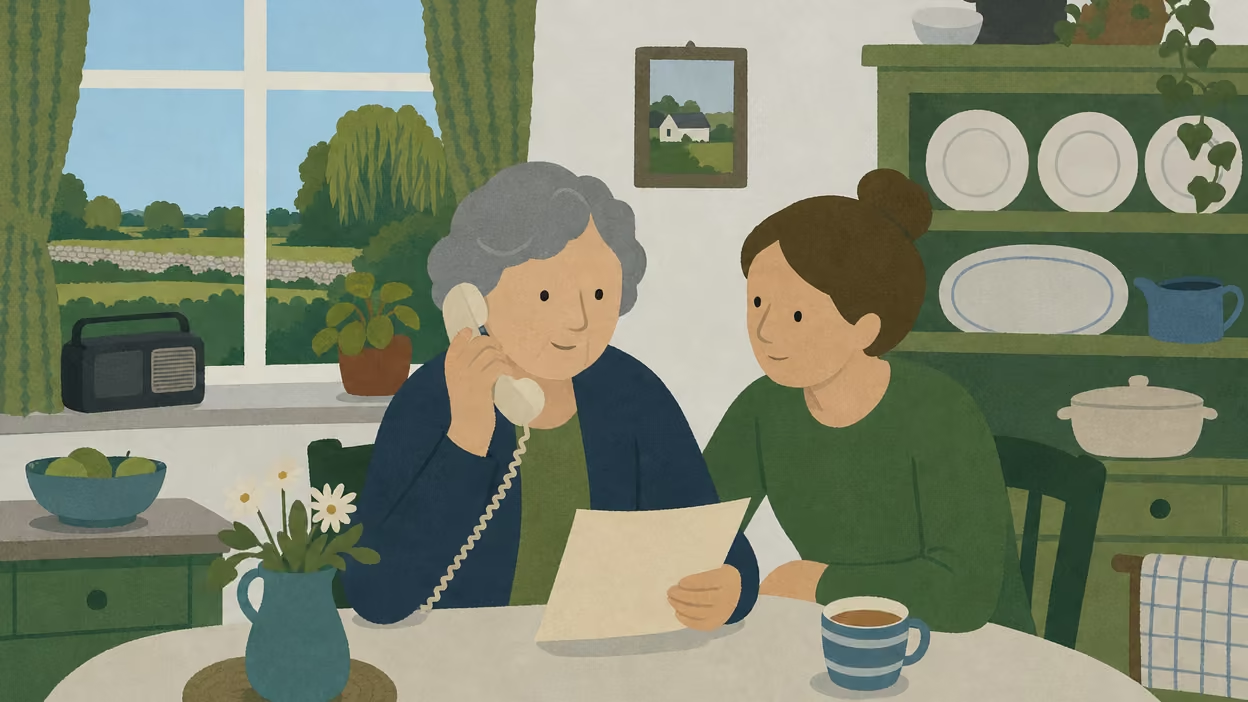
Scammers use the same news you do. ESB Networks warns that fake texts, calls and emails in its name “may circulate randomly from time to time”, and an outage gives them a story. After storm damage, cold callers offer quick repairs for cash. The checks below are the same every time, and none of them costs anything.
The scene this guide is for
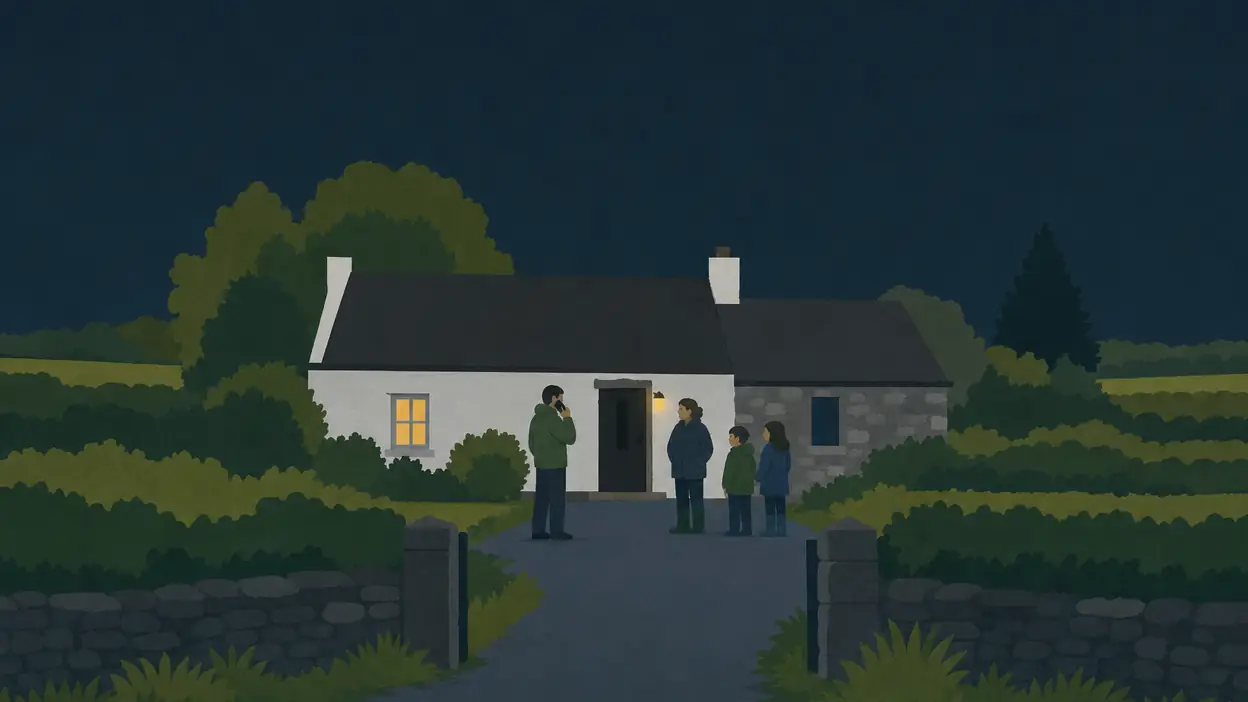
The power came back last night after two days. This morning a text arrives that reads something like “ESB Networks: you are owed compensation for the outage. Confirm your bank details here.” There is a link. An hour later a van pulls up and a man says the storm has lifted your ridge tiles. He can do it today if you pay cash up front.
Both may be scams. ESB Networks says it “will never send you text messages, calls or emails with a link to a log in page to a website which asks you to share personal details such as bank details, one-time passcodes or personal information”. The Gardaí list roof repairs, tree cutting and gutter work among the reasons bogus callers give for knocking.
The one check that works
Hang up, then ring back on a number you found yourself. Use the number on your bill, on the back of your bank card, or on the organisation’s own website. The Gardaí say to verify independently and “never use the contact details supplied to you by the caller or texter”. FraudSMART gives the same advice.
A caller who knows your name, address or account details may still be a criminal. The Gardaí say not to trust someone because they have some personal information about you.
Texts and calls that pretend to be ESB Networks
ESB Networks does send texts. Since January 2025 it can text you about a planned outage, and it always sends a postcard at least two days before one. What it does not do is ask you for money or details:
- No link to a log-in page asking for bank details, one-time passcodes or personal information. Not by text, call or email.
- Scam messages can look real, with “realistic-looking logos, official-sounding text and familiar branding”, and links to copies of real web pages.
- A caller may offer a “special offer or rebate” in return for your bank details. That is a scam too.
To check anything about your supply, ring ESB Networks yourself: 1800 372 757 for customer support, or 1800 372 999 for emergencies and fallen lines.
Calls from “your bank”
The Gardaí say that neither they nor your bank will ever ask for your PIN or password, or ask you to transfer money. Nor will they come to your home to collect your card, cheque book or cash.
A current trick, October 2026: a caller says they are from your bank and asks you to key in a code starting *21* followed by a number. That turns on call forwarding, so when your real bank rings to check, the criminal answers. FraudSMART says never to enter a *21* code or change your phone settings at the request of an unexpected caller.
If you have already dialled a code like that, ring your bank and your mobile provider straight away, and report it to the Gardaí.
At the door after a storm
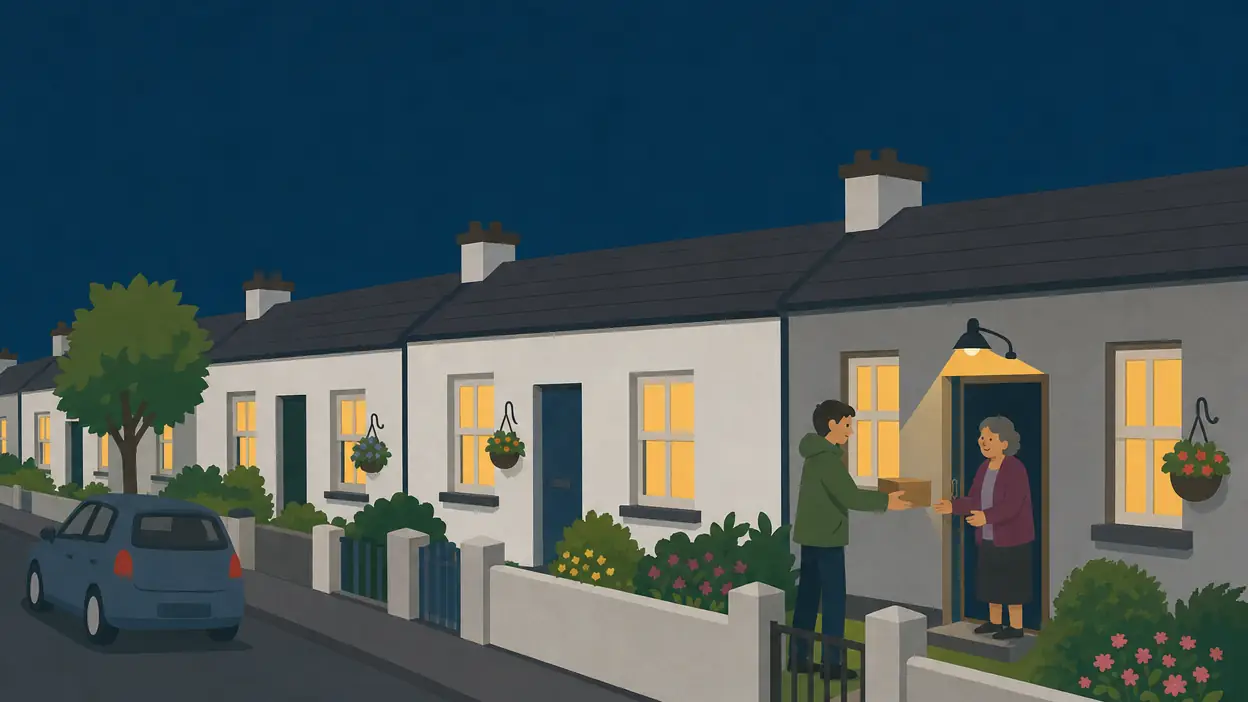
The Gardaí describe the pattern: a caller says repairs are needed, does a little or nothing on the roof, then demands cash, sometimes offering to drive you to the bank. Others take a deposit for materials and never come back. A later visit from “VAT or Revenue officials” may ask for more.
Decision rule do not hire anyone who calls to the door, and do not pay cash for work you did not ask for.
- Keep the door closed or the chain on. You do not have to talk on the doorstep.
- Ask for an itemised written quote with a contact phone number, a known address and a VAT number, and check them yourself. Be careful if the paperwork shows only a mobile number or an incomplete address.
- Get quotes from other established firms before you agree anything.
- Pay in a way that can be traced, never cash, even with a firm you trust.
- Ask your local Garda station for a bogus caller card to hand through the door.
Uisce Éireann staff will never ask for money, your PPS number or bank details at the door. Ring 1800 278 278 to check anyone who says they work for it.
If you agreed to work or bought something on your doorstep, you usually have 30 days to cancel, and the business must tell you how. Age Action’s Care and Repair can give older people details of local tradespeople, and does small jobs free: 0818 911 109.
For keeping a home safe in the dark months, see Home security in the dark months. For older people living on their own, see Safety for older people living alone.
Real help does not ask for a fee
After flooding or storm damage, the Emergency Response Payment (formerly the Humanitarian Assistance Scheme) can help with food, clothing, bedding, essential household items and some structural repairs. You apply through the Community Welfare Service, on the Department of Social Protection’s own forms, which you can get from your local Intreo centre. Quotes and invoices you send with a claim must be from registered providers. Applications for the first stage, food, clothing and bedding, close 7 days after the event; after that you may be able to get an Additional Needs Payment.
Be wary of anyone who offers to “get you the payment” for a fee or asks for your bank details on the doorstep. There is more on claims and help in After the storm.
Collections for people affected
After a disaster, people want to help, and so do scammers. Charities in Ireland must be registered. Search the Register of Charities by name before you give. If you cannot find an organisation there using its correct details, the Charities Regulator says it is not currently registered, and under the Charities Act 2009 it cannot call itself one of Ireland’s charities.
If you think you have been scammed
- Ring your bank straight away, on the number on your card, if you gave bank or card details or sent money. The Gardaí say to report it to your bank immediately to limit the loss.
- Report it to your local Garda station, even if nothing was taken. The Gardaí say attempted fraud should be reported too, because your information may stop it happening to someone else.
- If you dialled a code a caller gave you, ring your mobile provider to check call forwarding is off.
- Write down what happened: names, numbers, what was said, and any vehicle.
If a scam has left you short of money or in debt, MABS gives free money and debt advice: 0818 07 2000.
Do not be embarrassed. Scams are designed to catch careful people, and the Gardaí say never to be ashamed to contact them.
Ring 112 or 999 when
- Someone at your door is threatening you, or will not leave.
- You think someone is trying to get into your home, or is in a vulnerable neighbour’s home taking money. The Gardaí say to ring 999 or 112 if you feel you are being targeted.
- Call 112Call 999
Cannot make a voice call? Text 112.
The emergency text service can be used by "anyone who is not able to make a voice call due to a speech or hearing impairment or other situations where a voice call might not be possible". It works "from any Irish registered mobile phone (either pre-pay or bill pay) on all the Irish Mobile networks". If you can talk, ring instead: a text is slower.
Your text needs four things:
- Which service: Ambulance, Coastguard, Fire or An Garda Síochána.
- What the problem is.
- County you are texting from.
- Where help is needed: town, road, Eircode or a landmark.
Wait for a reply: "an SMS/Text 'Delivery Report' does not mean your message has been received". If no reply comes within 3 minutes, send another message straight away. It does not work from a foreign phone, or from an Irish phone roaming abroad, including in Northern Ireland.
No registration is needed. 112.ie says: "There is no preparation or registration required to use either Emergency SMS, or RTT when contacting the ECAS." If you might need to text one day, you can choose to give the service your address, access details and a next of kin in advance at 112.ie/register. Most smartphones can also use Real-Time Text to type during a call to 112 or 999: turn on RTT in your phone’s accessibility settings.
Stay ahead of new scams
Scams change quickly, and the examples in this guide are dated. FraudSMART, run by Banking & Payments Federation Ireland with the banks, posts alerts as new financial scams appear, and you can sign up for them by email. Tell an older relative or neighbour about any scam you hear of. The Gardaí ask people to warn elderly or vulnerable neighbours.
Common questions
Does ESB Networks text people about compensation after a storm?
ESB Networks says it will never send a text, call or email with a link to a log-in page asking for bank details, one-time passcodes or personal information. Ring ESB Networks yourself on 1800 372 757 if you are unsure.
What is the *21* phone scam?
A caller posing as your bank asks you to dial *21* and a number, which forwards your calls to the criminal. FraudSMART says never to enter a *21* code at the request of an unexpected caller.
Can I cancel a repair job I agreed to at my door?
For most goods and services bought on your doorstep you have a 30-day cooling-off period to cancel, and the business must tell you how.
How do I check a collection for people affected is genuine?
Search for the organisation on the Charities Regulator’s Register of Charities, because charities in Ireland are required to be registered.