Agree the check before it is needed: how you will make contact, what help is welcome and whom to call if there is no reply. ESB Networks asks households to plan for older neighbours and people with medical needs during extended cuts.[1] Ring 112 or 999 for immediate danger or life-threatening illness. For an older person needing ongoing support, ALONE: 0818 222 024, 8am to 8pm every day.[4][5]
The scene this guide is for
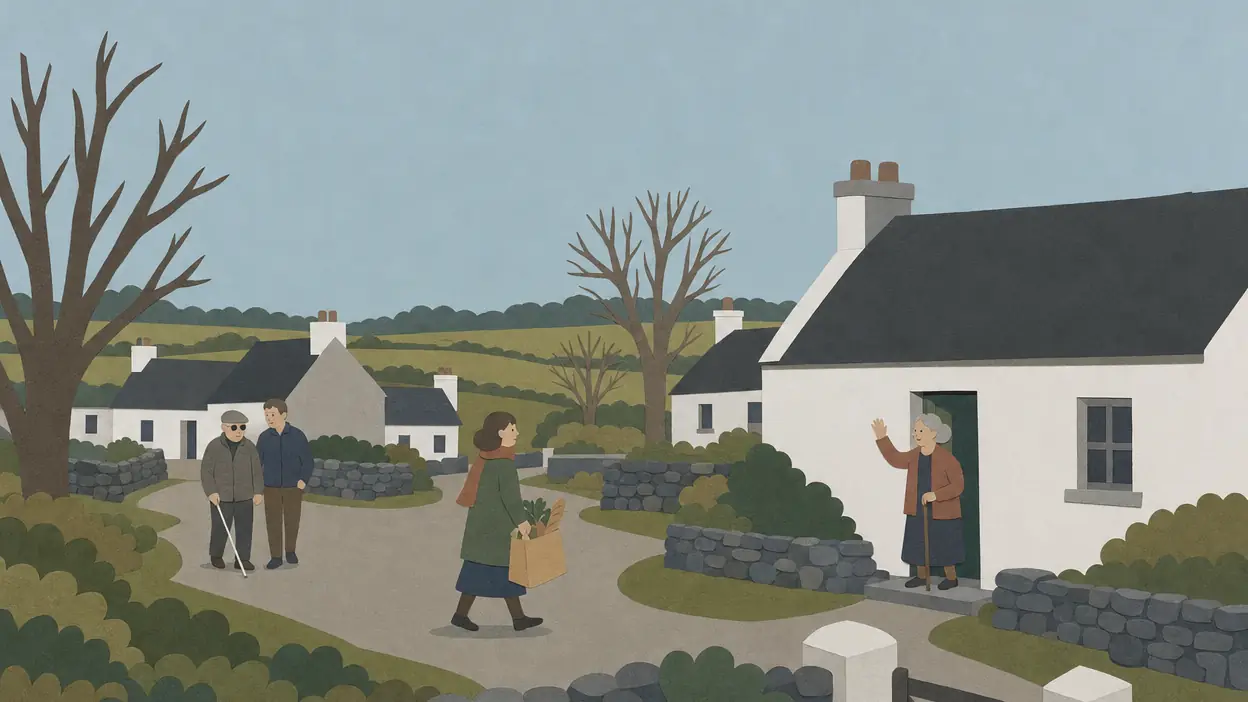
The storm has passed. Your lights are back, but the houses across the road are still dark. Usually your neighbour opens the curtains before breakfast; today they are closed. You have their number, but the call will not connect.
That is a reason to make an agreed check, or seek advice if you are concerned. It is not proof that something has happened. After Storm Éowyn, Gardaí warned that people without electricity and communications might be unable to hear safety messages or contact others.[2]
Who might welcome a check
Start with the person, not a label. ESB Networks specifically identifies older people and people with medical needs. The HSE says older adults face greater risks from cold and asks relatives and neighbours to check on them, especially before bad weather.[1][6]
Offer a plan to someone who:
- Lives alone or has few nearby contacts.
- Uses powered medical equipment, or needs regular care visits.
- Has difficulty walking, seeing, hearing or using a phone, especially when familiar routines are disrupted.
- Has a new baby or young children and might welcome practical help.
- Usually manages well but is temporarily unwell, recovering from treatment or without transport.
This is an invitation list, not a medical risk score. Ask what would help. A new parent may need groceries collected; a neighbour using equipment may need a call to their supplier; another person may simply want to know when the next check will be.
ALONE also makes clear that an older person does not have to live alone to use its services.[5] See Who needs an extra plan for storms and outages?.
Agree it on an ordinary day
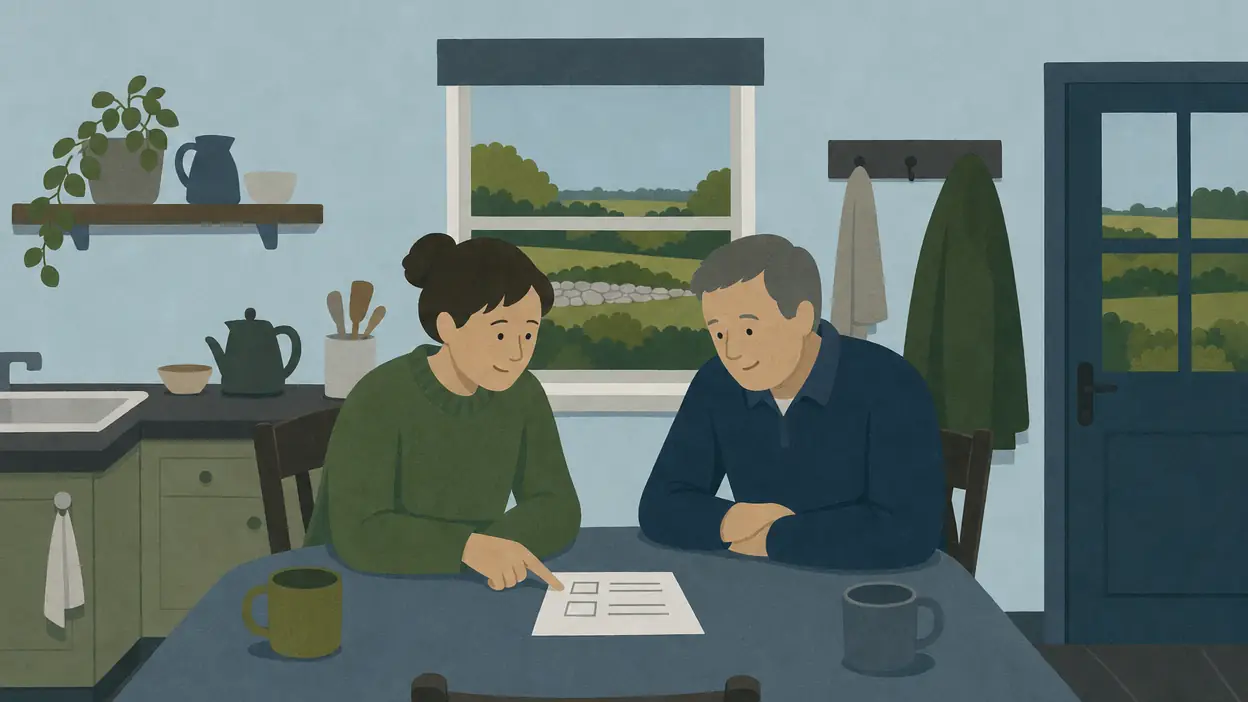
Try something specific: “If the power goes, would you like me to ring? If the phones are down, shall I knock when it is safe? Who would you want me to contact if I cannot reach you?”
The following is a practical way to carry out ESB Networks’ request to decide in advance what happens during a long cut.[1]
- Choose a contact method: call, text or a knock. Make sure it suits the person’s hearing and phone use.
- Agree the trigger and time: for example, after a warning has passed and the route is safe. Pick the arrangement together; there is no universal check-in interval.
- Name a backup person for when either of you is away.
- Agree a no-reply plan: another call, an authorised family contact, then the Gardaí or emergency services according to the concern.
- Ask what information may be shared, with whom and for what purpose.
Write down the minimum needed: names, numbers, address or Eircode, the agreed check and the backup contact. Give the neighbour a copy. Keep it somewhere usable during an outage, not solely inside a messaging app.
Before you go to the door
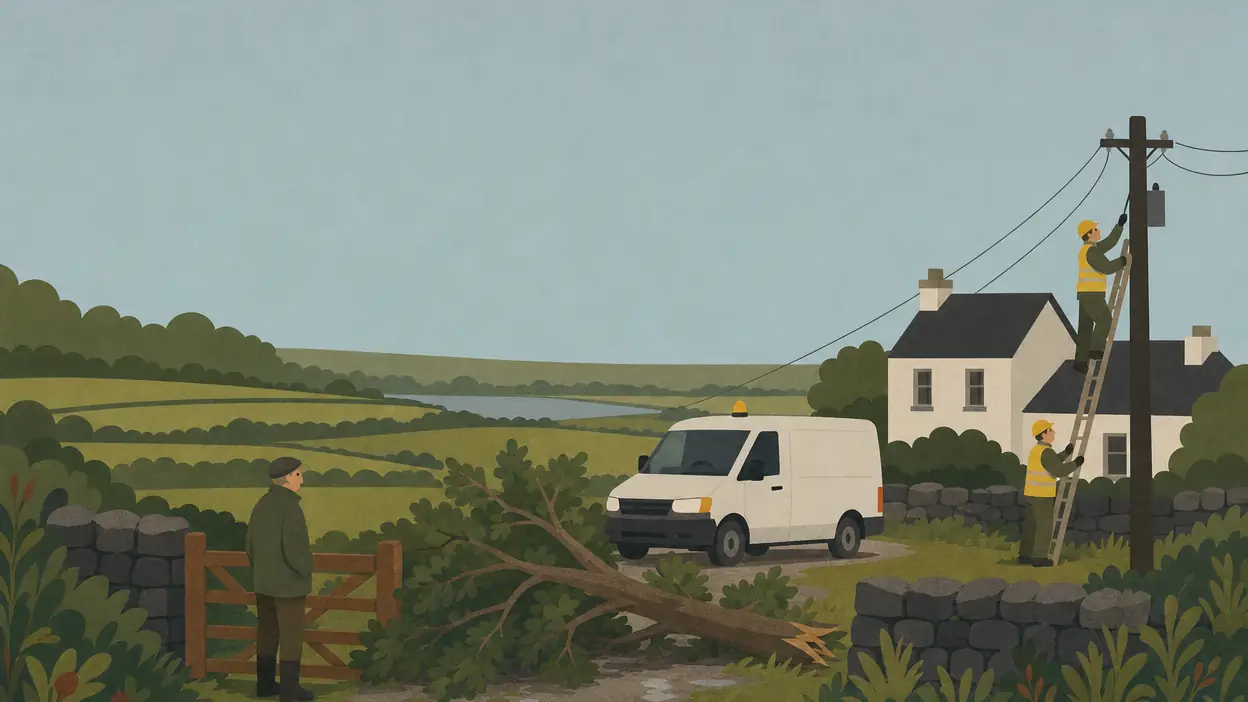
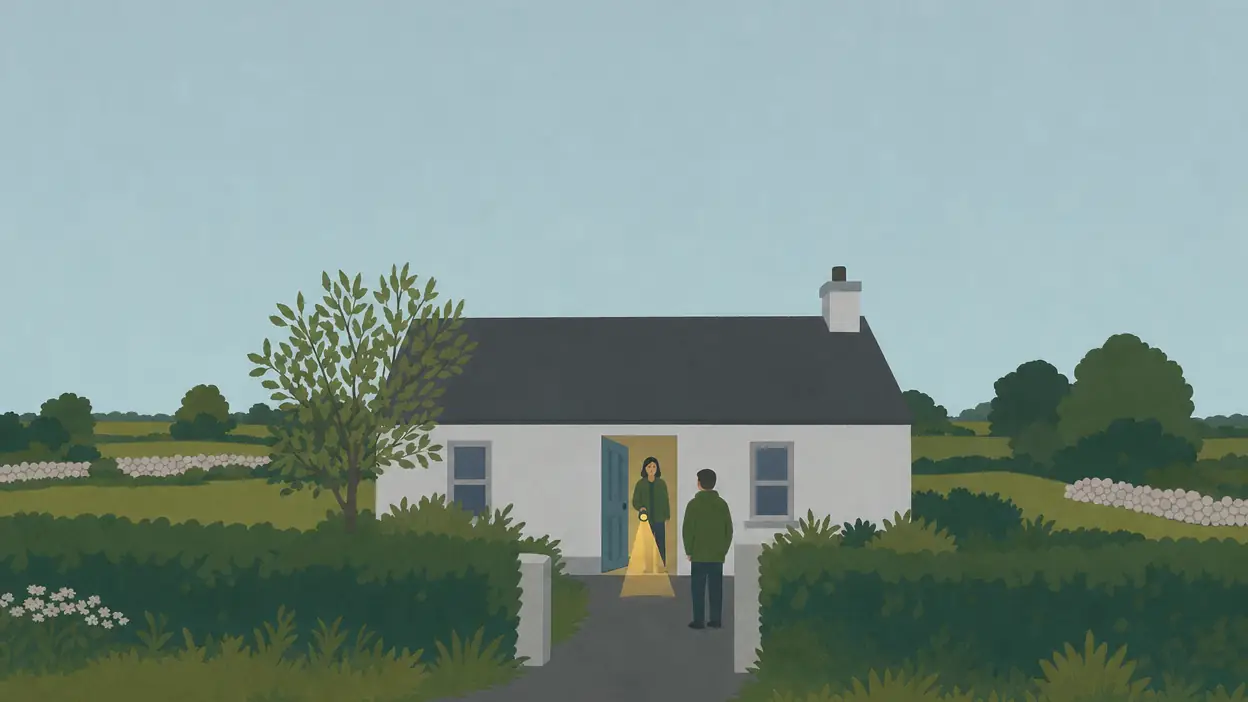
Your own route must be safe. Gardaí warn against approaching fallen or low-hanging wires, and note that weakened trees can still fall after a storm. Report dangerous electricity wires to ESB Networks, 1800 372 999.[2]
- Check the warning and local instructions. Do not make a visit that authorities are telling people to avoid.
- Use the agreed phone contact first, if it works.
- Carry a torch if lighting is out.[1]
- Tell the backup contact if you cannot check safely. Do not silently leave them expecting a visit has happened.
A welfare concern can be passed to the Gardaí or another appropriate service. Gardaí specifically ask people to make contact about isolated or vulnerable neighbours they have not heard from, and not to assume someone else has done it.[2]
At the door: ask about ordinary needs
Introduce yourself and explain why you have come. Ask whether they want company or practical help. An agreed check does not need to become an inspection of somebody’s home.
Use these prompts, based on the HSE’s severe-weather preparation advice and ESB Networks’ outage checklist:[1][3]
| Ask | A useful next action |
|---|---|
| “Are you warm enough?” | Ask what is missing and help arrange support. Cold can worsen existing illness.[3] |
| “Have you enough food and drinking water?” | Offer to collect what they actually need, if travel is safe.[3] |
| “Have you your medicines and care contacts?” | Help contact the pharmacy, GP or care team. Follow medicine storage instructions.[3] |
| “Can you see safely after dark?” | Put a working torch within easy reach, with permission.[1] |
| “Is your equipment working as expected?” | Use their care plan and supplier contact, rather than changing settings.[1] |
| “Can we agree the next check?” | Make the next contact clear to both of you. |
If equipment depends on electricity, use Medically dependent at home in a power cut in Ireland. Registration with the electricity supplier and an agreed response plan belong with the person and their care team, not an improvised neighbour diagnosis.[1]
Notice illness, then get the right help
You are looking for a reason to seek help, not trying to identify a condition yourself. The HSE says cold weather can worsen heart and lung illness and increase the risk of falls and hypothermia.[3]
- Ring 112 or 999 if someone is seriously ill or injured and their life is at risk. Ask for an ambulance.[4]
- Ring 112 or 999 for signs of hypothermia: shivering, pale cold skin, blue lips, slurred speech, slow breathing, tiredness or confusion.[3]
- Suspected carbon monoxide poisoning is an emergency. Get everyone outside and ring 112 or 999. The HSE lists headache, dizziness, nausea, tiredness, confusion and breathlessness among possible symptoms.[7]
- For a health concern without immediate danger, help the person contact their GP or out-of-hours GP service.[3]
For an ambulance call, give the address, Eircode if known and callback number. Follow the call taker’s instructions and report changes. If safe, arrange for somebody to direct the crew to the right door.[4]
If there is no answer
Follow what you agreed, while responding to the actual evidence. A missed call might mean a flat phone; hearing someone calling for help is a different situation.
- Immediate danger, serious-injury risk or a crime in progress: ring 112 or 999.[8]
- Concern without evidence of immediate danger: contact the agreed family member or backup neighbour.
- Still worried or nobody can establish contact: contact the local Garda station and explain the welfare concern. Say when the person was last heard from, the missed arrangement and the known communication problems.[2]
Do not wait an invented number of hours. Equally, this guide does not authorise forced entry. Describe the facts and let the appropriate service advise on the next step.
ALONE and the wider community
ALONE provides support coordination, telephone contact, visiting and links to local services for older people. Its National Support and Referral Line is 0818 222 024, open 8am to 8pm, seven days a week.[5]
Get the person’s consent before referring them. ALONE asks that, where possible, you complete the referral with the person present. It can help with ongoing isolation and practical difficulties, but an immediate emergency belongs on 112 or 999.[5][4]
For disruption affecting an area, check your council’s current information about community help. Gardaí supported local coordination groups and emergency response hubs after Storm Éowyn; that historical response does not guarantee the same facilities at every future incident.[2]
Privacy makes the arrangement easier to accept
Keep health details, key arrangements and periods away from home out of public group chats. Share only what is needed with the people the neighbour has agreed may help. A small contact arrangement is easier to maintain than a street-wide file of private information.
If they decline an ordinary check, respect that choice and leave a contact number if welcome. Consent for an ALONE referral is explicit; emergency decisions depend on the danger you actually observe.[5][8]
After each check, say what you will do next and when. A short, reliable arrangement gives both people something to depend on during a difficult day.
Sources (8), all checked 2026-10-29
All checked 2026-10-29. All Irish. ALONE is an older-person support organisation; clinical and emergency rules use official public bodies.
- ESB Networks, outages safety advice.
- An Garda Síochána, supporting communities after Storm Éowyn, 29 January 2025.
- HSE, preparing for severe weather.
- HSE, emergency care for adults.
- ALONE, referral information and support-line hours.
- HSE, winter advice for older people.
- HSE, carbon monoxide poisoning.
- An Garda Síochána, emergency and other reports.
prepared.ie is independent public information, published by Gallan Software. It is not affiliated with ALONE, the HSE or An Garda Síochána. In an emergency call 112 or 999.