Most days out end with nothing worse than tired legs. A plan you agree in the car takes two minutes, and it means a lost child knows what to do and you know who to ring. You do not have to wait 24 hours to report someone missing.[1]
If a child is in danger now, ring 112 or 999. Nothing on this page replaces that call.
Help for children and teenagers, free and any time:
- Childline: 1800 66 66 66, or live chat on childline.ie, free and any time. It is for young people up to 18.[13][14]
- Gardaí: 112 or 999 in an emergency, or your local Garda station.[7]
- Hotline.ie takes anonymous reports of child sexual abuse material, grooming and intimate images shared without consent.[10]
This guide is for parents, guardians and carers. There is a short section for teenagers near the end.
The scene this guide is for
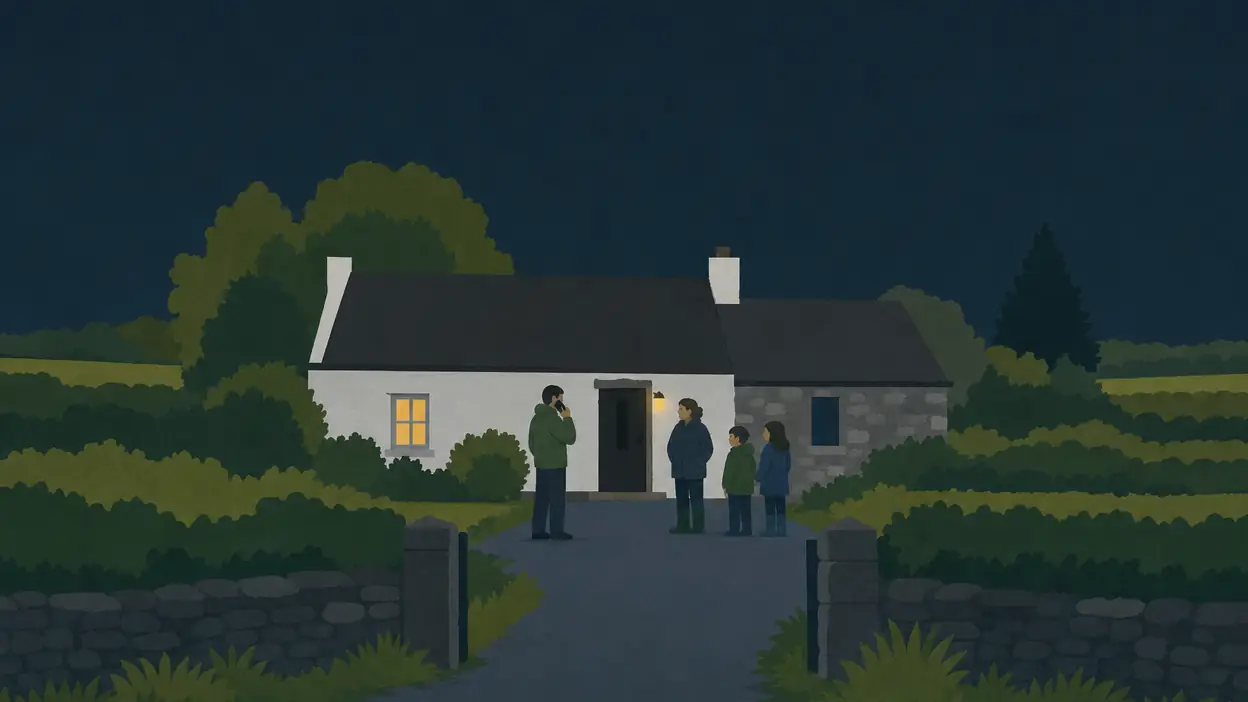
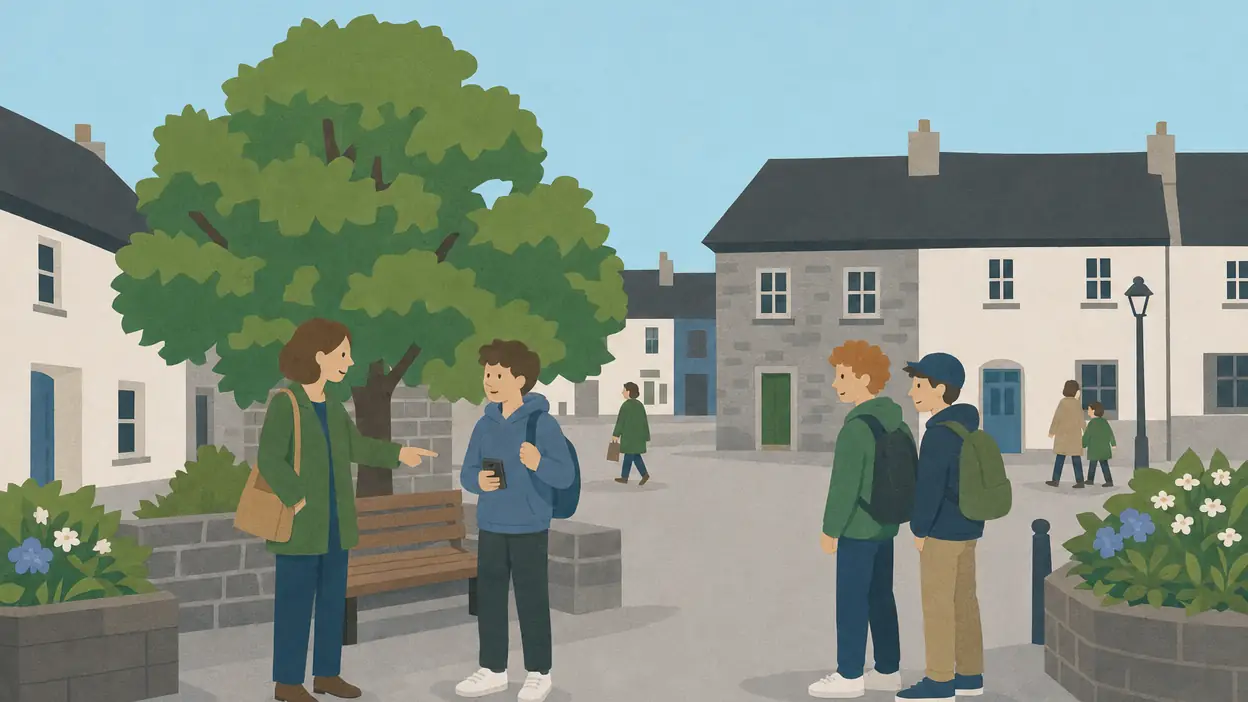
It is a busy Saturday in town. Your 13-year-old wants to go round the shops with two friends while you get the messages. Before they go, you point at a bench by the clock and say: “If we lose each other, that bench, and ring me.” It takes ten seconds, and everyone knows the plan.
A lost-child plan, before you go out
A child who gets lost usually does what they were told to do. So tell them before you go, at their level:
- Pick a meeting point you can both see when you arrive: a bench, an information desk, a lifeguard hut.
- Put your phone number on the child. Write it on a card in a zipped pocket, or on a waterproof band. A pen on the wrist works for a day.
- Tell them who to go to. At the beach, Water Safety Ireland says to tell your child to go to the lifeguard hut if they get lost.[5] Elsewhere, many families tell children to go to a member of staff at a till or desk, or to a parent with children.
- Take a photo of them that morning, so you can show the Gardaí what they are wearing.
Why the photo? The Gardaí ask for the person’s name, age, height, build, hair colour, where they were last seen, what they were wearing, and a recent photograph if you have one.[2] A photo from that morning answers half of it.
Strangers: a calmer way to talk about it
Children are far more likely to be hurt on the roads than by a stranger.[6] Advice published by Tusla’s Parenting 24 Seven says scare tactics are “not as effective as positive safety messages”, and can make a nervous child afraid of everyday things.[6] So keep the message practical:[6]
- Never go anywhere, or take anything, from someone you do not know.
- We will only send someone you know to collect you.
- Never go anywhere different without asking us first.
The Stay Safe programme, taught in Irish primary schools, uses the same idea: say no, and tell someone.[6] Ask the school when it covers it, and talk it through at home that week.
If a child is missing
Ring 112 or 999 in an emergency, or go to any Garda station. You do not have to wait 24 hours to report a person missing.[1] For a lost child that means now, not after you have searched for an hour.
Give the Gardaí as much as you can:[2]
- name, age and gender
- height, build and hair colour
- where and when you last saw them
- what they were wearing
- a recent photo, if you have one
At a festival, beach or shopping centre, tell staff or a lifeguard at the same time.
Cannot make a voice call? Text 112.
The emergency text service can be used by "anyone who is not able to make a voice call due to a speech or hearing impairment or other situations where a voice call might not be possible". It works "from any Irish registered mobile phone (either pre-pay or bill pay) on all the Irish Mobile networks". If you can talk, ring instead: a text is slower.
Your text needs four things:
- Which service: Ambulance, Coastguard, Fire or An Garda Síochána.
- What the problem is.
- County you are texting from.
- Where help is needed: town, road, Eircode or a landmark.
Wait for a reply: "an SMS/Text 'Delivery Report' does not mean your message has been received". If no reply comes within 3 minutes, send another message straight away. It does not work from a foreign phone, or from an Irish phone roaming abroad, including in Northern Ireland.
No registration is needed. 112.ie says: "There is no preparation or registration required to use either Emergency SMS, or RTT when contacting the ECAS." If you might need to text one day, you can choose to give the service your address, access details and a next of kin in advance at 112.ie/register. Most smartphones can also use Real-Time Text to type during a call to 112 or 999: turn on RTT in your phone’s accessibility settings.
Source: 112.ie, emergency text service, sending a text to 112, SMS questions and answers, emergency SMS terms and conditions and Real-Time Text pages, checked 1 November 2026.
Child Rescue Ireland alerts
A Child Rescue Ireland (CRI) alert is a public appeal on radio, television, online and on road signs. The Garda policy says a CRI alert “will only be launched when all the following criteria exist”:[4]
- “The child is under the age of eighteen (18) years”
- “There is a reasonable belief that the child has been abducted”
- “There is a reasonable belief that there is an immediate and serious risk to the health or welfare of a child”
- “There is sufficient information available to enable the public to assist An Garda Síochána in locating the child”
Where an alert is not issued, the Gardaí may still put out a press release with the child’s details if they believe it will help.[3]
A teenager who is not home and not answering
Ring their friends and the parents of their friends first. If you cannot reach them and you are worried about their safety, report it. Citizens Information says you can report a person missing “if you cannot contact them and you are concerned about their safety or wellbeing”.[3] You do not need to be sure something is wrong.
Phones and online life
The Garda advice to parents is simple: talk to your child about the risks, and encourage them to tell you if they have problems with anyone online.[19] Tusla’s tips add one rule worth repeating often: tell a parent if an online “friend” they do not know in real life wants to meet them.[15]
Some house rules many families find useful:[15][19]
- Agree the rules together and write them down where everyone can see them.
- Know which apps and games they use. Webwise publishes explainers on the popular ones for parents.[16]
- Use the parental controls in the phone, the console and the app. The Gardaí name filtering, blocking and parental controls as options.[19]
- Personal details stay private: name, address, school and photos of family are not shared without asking you first.[15]
What the platforms must do. Coimisiún na Meán, the Irish media regulator, enforces an Online Safety Code for video-sharing platforms. It requires them to protect children from video content that may harm their development and from adult content such as pornography and gross violence. Platforms must offer measures like age assurance, parental controls and a way to report harmful content.[11] If a platform ignores your report, you can tell Coimisiún na Meán. It cannot remove content straight away, but it checks that platforms follow the rules and that their reporting tools work.[12]
What we do not recommend. This guide does not recommend a location-sharing app or a monitoring app. Whether to use one is a family decision, and it works best when the child knows it is on.
CyberSafeKids surveyed more than 7,000 pupils aged 8 to 15 in the 2025 to 2026 school year. One 12-year-old told it: “There is a lot of weird adults on this game.”[17] The safest child online is one who tells you when something feels wrong. So when they do tell you, thank them first, before any talk about rules.
If a stranger contacts your child online
Hotline.ie lists grooming as a form of online child sexual exploitation.[10] The warning signs the Gardaí give for sextortion are a good guide to what to watch for:[8]
- Something does not add up: the profile does not match the person in the chat.
- They move too fast: strong feelings straight away, and a push to a private app or video call.
- They make excuses: the camera “is not working”, but they send a photo they say is them.
- They say they need help: money for an emergency.
If someone is threatening to share an image of your child, the Garda advice is:[8]
- “Don’t panic, help and support is available.”
- “Don’t pay.”
- Save the evidence: take screenshots, save messages and images, and collect the links.
- Report it to any Garda station and through Hotline.ie, which can ask for the content to be removed.
- Block the person.
Do not delete the chat before you have saved it. In the words of the Gardaí: “There is no shame or embarrassment to be associated with sextortion.”[8]
If an image of your child is shared
It happens in school group chats as well as by strangers. Webwise’s advice to parents starts with your child: reassure and support them first, then get the facts.[9]
- If your child is under 18 and a nude image has been shared, it is illegal. Report it to the Gardaí.[9] Keep evidence of where it was shared and who shared it.[9]
- Report it to the platform. Webwise says services must remove intimate images of under 18s “as soon as possible”.[9]
- Report it to Hotline.ie as well. You can report securely, confidentially and anonymously.[10]
- Talk to the school. A guidance counsellor can help your child through it.[9]
The law, often called Coco’s Law, makes it an offence to share an intimate image of anyone without consent, even if they first agreed to the photo being taken.[9] Where there is intent to cause harm, the penalty can be up to 7 years in prison and an unlimited fine.[9]
If you are worried about abuse
The Garda National Child Protection Unit gives these first steps for parents:[7]
- Make your child safe. If they are in urgent danger, ring 999 or 112.
- Listen and stay calm. Tell them they are safe and have done nothing wrong.
- Do not question them over and over. Trained staff will do that later.
- Get medical help if they are hurt.
- Report it to the Gardaí or to Tusla. You do not need proof: “reasonable grounds for concern are sufficient.”[7]
- Write down what your child said and when.
- Do not confront the person you suspect. It may put you or your child at risk.
Tusla, CARI and Barnardos offer support to families afterwards.[7]
Halloween and the dark evenings
The Garda advice for Halloween:[18]
- Children should always be with an adult when trick or treating.
- Stay in lit areas, or make sure road users can see you.
- Throwing fireworks in the street is a criminal offence. Bonfires can collapse or explode without warning.
On dark evenings after school, a light and something reflective help drivers see a child walking home. A head torch leaves their hands free (kit options: Head torch). It does not make anyone safe on its own. See also Walking and cycling in the dark.
For you, if you are a teenager
This bit is for you, not your parents.
- If something online feels wrong, you can stop. Block, screenshot, and tell someone. You are not in trouble.
- If someone threatens to share a picture of you, do not pay and do not send more. The Gardaí will help, in confidence.[8] Hotline.ie can ask for it to be taken down.[10]
- If a friend is in a bad way on a night out, ring 112 or 999 if you think they have alcohol poisoning, have passed out or are not breathing properly.[20] Stay with them, even if they seem to be breathing normally. Alcohol levels can keep rising for up to 40 minutes after the last drink.[20] Lie them on their side so they do not choke.[20] If you are not sure, ring anyway and describe what you see: the emergency services can tell you what to do.[20]
- If you need to talk, Childline is free on 1800 66 66 66, or by live chat on childline.ie, any time, up to age 18.[13]
Common questions
How long do I have to wait before reporting a missing child?
You do not have to wait: the Gardaí say you do not have to wait 24 hours to report a person missing.[1] Ring 112 or 999 in an emergency, or contact any Garda station with a description and a recent photo.[2]
What is a Child Rescue Ireland alert?
It is a public appeal on radio, television, online and road signs, used only when a child under 18 is reasonably believed to have been abducted and to be at immediate and serious risk.[4] There must also be enough information for the public to help find the child.[4]
What should I do if someone is blackmailing my child with an image?
The Garda advice is do not panic, do not pay, save the evidence and block the person.[8] Report it to any Garda station and through Hotline.ie, which can request removal of the content.[8]
Is Childline only for phone calls?
No. Childline is free on 1800 66 66 66 and by live chat on childline.ie, at any time, for young people up to 18.[13][14]
Data sources (20), all checked 2026-11-01
All checked 2026-11-01. All Irish. Childline is run by the ISPCC; CyberSafeKids and Barnardos are not public bodies. Hotline.ie is designated a trusted flagger by Coimisiún na Meán.
- An Garda Síochána, Support services for missing persons.
- An Garda Síochána, How do you report a missing person?.
- Citizens Information, Reporting a missing person.
- An Garda Síochána, Child Rescue Ireland (CRI) Alert policy document.
- Water Safety Ireland, Advice for parents at beaches, rivers and lakes.
- Tusla, Parenting 24 Seven: How to teach my child about stranger danger.
- An Garda Síochána, Garda National Child Protection Unit: parents, immediate steps if you are worried about abuse.
- An Garda Síochána, Sextortion: advice if you are a victim.
- Webwise, What to do if images or video of my child are shared online.
- Hotline.ie, Irish national centre combatting illegal content online.
- Coimisiún na Meán, Online Safety Code.
- Coimisiún na Meán, Something I saw or experienced online.
- Childline (ISPCC).
- HSE, Mental health organisations for children and young people.
- Tusla, Parenting 24 Seven: Tips for your child on the internet.
- Webwise, Parents.
- CyberSafeKids, 2026 report: The Year Little Changed.
- An Garda Síochána, Keeping people safe this Halloween, and the Garda Halloween safety message for children.
- An Garda Síochána, Online child exploitation.
- HSE, Alcohol poisoning.
prepared.ie is independent public information, published by Gallan Software. It is not affiliated with An Garda Síochána, Tusla, the HSE, Coimisiún na Meán, Childline, Webwise, CyberSafeKids or Hotline.ie. In an emergency call 112 or 999.