How many days should you plan for?
The Irish booklet and checklist say to keep food that will not spoil quickly, rotate it and account for everyone’s dietary needs. Neither sets a number of days or a number of tins per person. [1] [2]
UK comparison: the government’s Be Ready guidance recommends three days of food that needs neither cooking nor refrigeration. Use that as a starting point for your own plan, then discuss any additional needs with those who support your household. It is a planning benchmark, not a promise that every disruption ends then. [3]
Ireland’s Be Emergency Ready booklet gives no fixed number of days for food; UK guidance offers a three-day comparison, not an Irish requirement. Include safe water, baby feeding needs, special diets and pet food. [1] [2] [3]
Build it through normal shopping
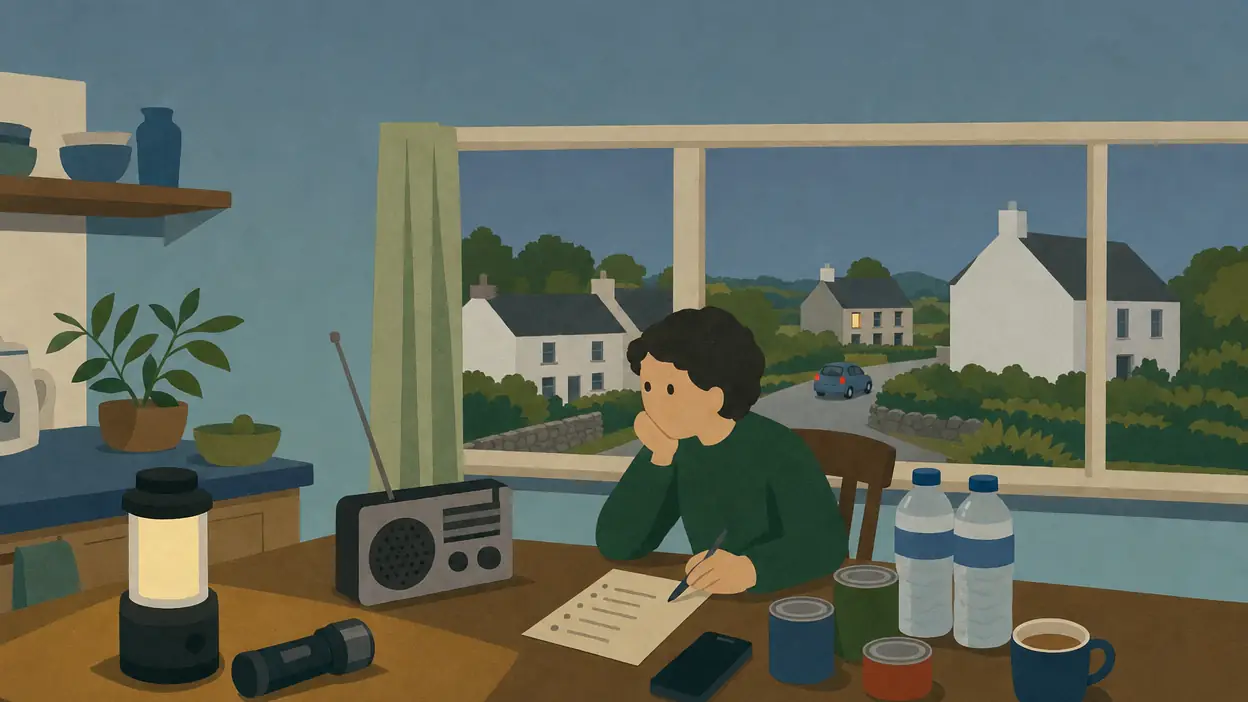
Start by checking the cupboard. Write down what your household would actually eat, then fill gaps gradually during ordinary shopping, as your budget allows. The Irish booklet encourages building supplies over time; UK guidance also recommends checking what you already own and adding missing items on regular shopping trips. There is no need to panic buy or buy everything at once. [1] [3]
Our practical way to use that advice: sketch breakfast, lunch and dinner for your chosen period, include snacks you normally eat, and check which meals still work without heat. Use your household’s usual portions rather than a universal tin count. [1] [2]
Choose food you can eat without cooking
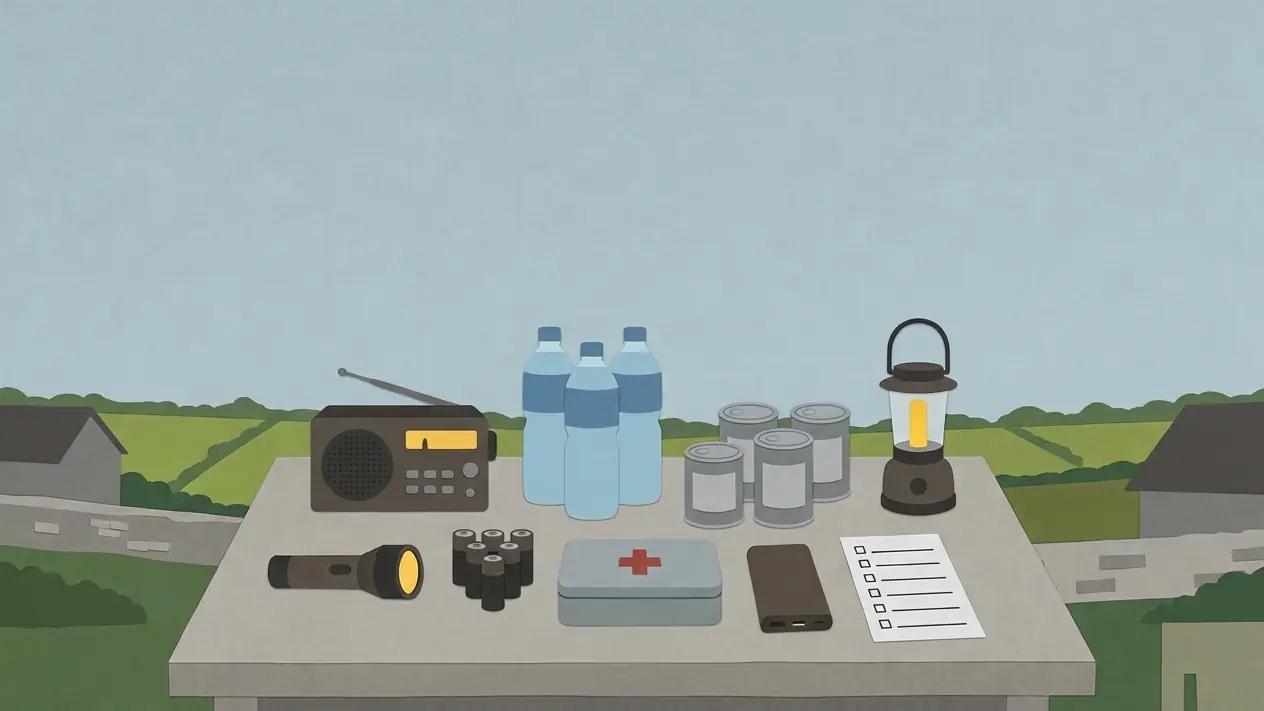
Make ready-to-eat food the foundation. The UK comparison lists tinned meat, fish and vegetables, dried fruit and nuts; HSE advice includes tinned food and long-life UHT milk. Choose foods suitable for your household and read preparation, allergen and storage instructions on each pack. [3] [4] [9] [12]
| What to keep | What to check |
|---|---|
| Tinned fish, meat or vegetables labelled ready to eat | Choose varieties you enjoy cold; keep a manual tin opener beside them. [3] [15] |
| Long-life UHT milk | Follow storage instructions after opening; choose a pack size you can finish if there is no safe refrigeration. [4] [12] |
| Dried fruit and nuts, where suitable | Check allergies and each person’s dietary needs before including them. [2] [3] [9] |
| Dried food prepared by adding hot water | Only count it as a kettle meal if the label says that is sufficient; some foods need further cooking. [4] [12] |
HSE suggests a flask of hot water as a backup for rehydrating dried foods. Our planning rule is to count kettle meals separately from no-cook meals: if your kettle, hob or oven needs electricity, plan how you would eat when it is unavailable. [4]
Read Staying warm and cooking without power before choosing an alternative cooking method. Never use camping stoves or barbecues indoors or inside a tent: they can cause carbon monoxide poisoning. [5]
Allow water for drinking and food preparation
Use the drinking-water quantities and household calculations in Water outages and boil water notices, and allow separately for preparing food. During a Boil Water Notice, Uisce Éireann requires boiled and cooled water for drinks and foods eaten uncooked, such as washed fruit or salads. Its guidance also covers pets and baby feeds. [2] [6]
Plan for everyone who eats with you
Babies: if you use formula, the Irish checklist recommends an extra supply of ready-to-feed formula. It needs no added water, but feeding equipment still needs cleaning and sterilising. Follow the pack’s instructions after opening, including refrigeration and disposal requirements. [2] [6] [7] [8]
Powdered formula is not sterile. Follow the HSE preparation instructions exactly, including the water temperature and powder amounts; bottled water still needs boiling. Ask your public health nurse or GP about feeding options if safe preparation is not possible, or your baby needs a special formula. [7] [8]
Allergies and special diets: choose food that fits the person’s existing diet and check ingredients and “may contain” warnings when buying it. A general emergency shopping list cannot decide what is suitable for someone with an allergy or prescribed diet. [2] [9] [10]
Medical nutrition and swallowing difficulties: keep following the plan agreed with your healthcare team. HSE describes tailored diets, supplements and tube feeding as individual treatments, and recommends supplements only on professional advice. Our practical planning step is to ask your dietitian or nurse what supplies to hold and what to do if water, refrigeration or powered feeding equipment becomes unavailable; record that answer with your contacts. [10] [1]
Older people: check that they have food and someone to help with shopping or meals. As a practical check, ask whether they can open and prepare what is in the cupboard. HSE recommends checking on older people before bad weather and identifies the GP or public health nurse as a contact for Meals on Wheels. [11] [10]
Pets: include their dietary needs in the food and water plan, as the Irish checklist says, and use Pets and animals in an emergency for the wider animal plan. [2]
Store it and use it in rotation
Keep cupboard food in a cool, dry place where its label permits, and follow any instructions to refrigerate after opening. Use a first in, first out routine: put new shopping behind older stock, while bringing anything with an earlier date to the front. Replace what you use as part of normal shopping. This is a practical way to follow the Irish checklist’s rotation advice. [2] [12]
A use by date is a safety deadline: do not eat food after it. A best before date concerns quality. Both depend on correct storage, and opening a pack can change how it must be stored and how soon it must be used. [12]
Keep a manual tin opener with the food and check that the person who will use it can operate it. The tin-opener reminder also appears in UK council emergency guidance. [15]
During a power cut: protect chilled and frozen food
Keep fridge and freezer doors shut as much as possible. Note when the electricity went off and open Power-cut mode for the food timer. These are the same figures used by that timer, with safefood’s fridge guidance and FSAI’s distinction between full and half-full freezers. [13] [14]
| Unopened appliance | Approximate holding time |
|---|---|
| Fridge | 4 hours. [13] |
| Full freezer | 48 hours. [14] |
| Half-full freezer | 24 hours. [14] |
These are guides, not food-safety verdicts. The appliance, food temperature and condition matter. Never taste food to test safety, and smell alone cannot establish that it is safe. If you cannot establish that perishable food stayed safe, discard it. [13] [14]
The Irish checklist says to use fresh and refrigerated food first, but only while it remains safe; that advice does not override the food-safety checks above. [2] [13]
Checklist to print or copy
Booklet material used: gradual preparation, food rotation, household dietary needs, ready-to-feed formula and using safe fresh food first, rewritten from Be Emergency Ready. [1] [2]
Common questions
How many days of emergency food should I keep in Ireland?
The Irish Be Emergency Ready booklet and checklist do not set a fixed number of days for food. UK guidance recommends three days, which is a comparison for planning rather than an Irish requirement. [1] [2] [3]
What food can I keep if I cannot cook?
Choose familiar food labelled ready to eat that keeps without refrigeration, such as suitable tinned fish, meat or vegetables. Check allergens and storage instructions, especially after opening. [3] [9] [12]
How long will my fridge and freezer keep food during a power cut?
With the doors shut, the guides are about 4 hours for a fridge, 48 hours for a full freezer and 24 hours for a half-full freezer. These timings do not guarantee that individual foods are safe. [13] [14]
Should I keep ready-to-feed baby formula?
If you use formula, Ireland’s emergency checklist recommends an extra supply of ready-to-feed formula. It needs no added water, but feeding equipment must still be sterilised and opened packs stored as instructed. [2] [6] [7]
Sources (15), all checked 2026-10-31
All checked 2026-10-31. Irish sources unless labelled as UK comparisons.
- Office of Emergency Planning, Be Emergency Ready booklet.
- Office of Emergency Planning, Your checklist.
- UK comparison: Government, Be Ready emergency supplies (the former Prepare page redirects here).
- HSE, Preparing for severe weather.
- HSE, Carbon monoxide poisoning.
- Uisce Éireann, Boil Water Notice.
- HSE, Types of formula milk.
- HSE, Preparing baby formula.
- HSE, Living with food allergy.
- HSE, Malnutrition treatment.
- HSE, Winter and older people.
- safefood, Use by and best before dates.
- safefood, Food safety in emergencies.
- Food Safety Authority of Ireland, Storage: power cuts.
- UK comparison: Nottinghamshire County Council, Preparing for an emergency (tin opener).