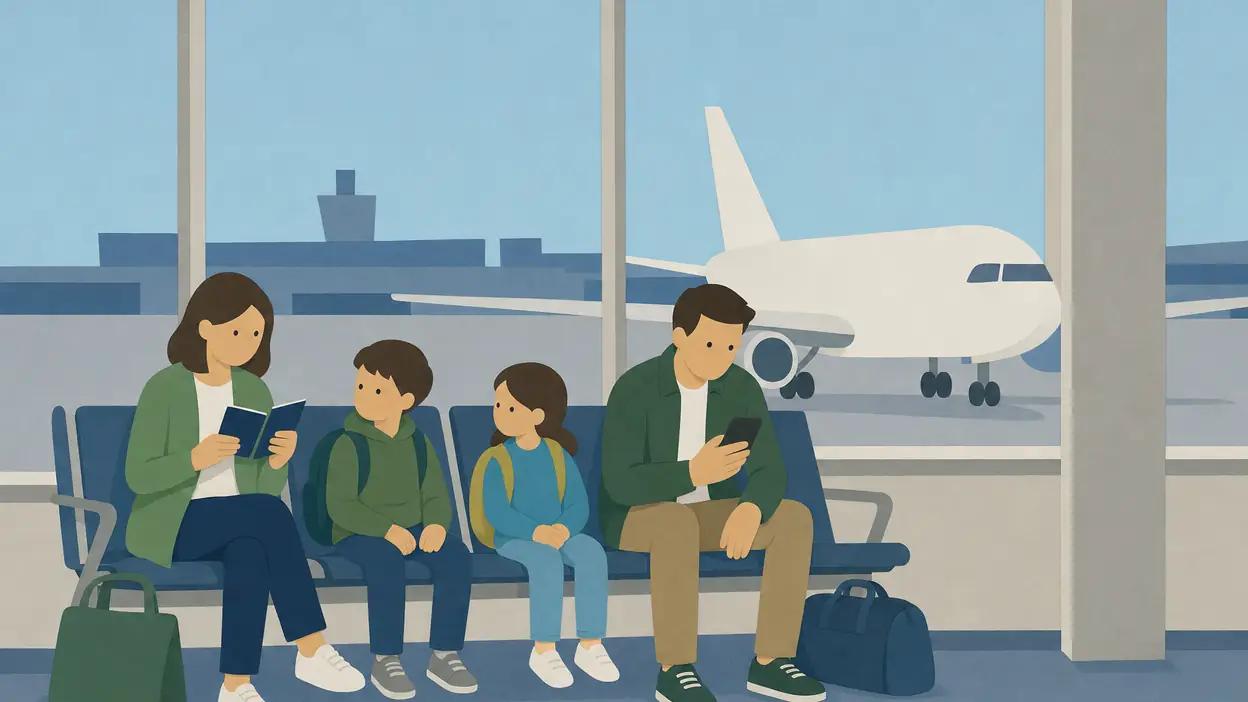
Most trips go to plan. When one does not, the people who can help are, in order: the local emergency services, your travel insurer, and the Irish Embassy or the Department of Foreign Affairs (DFA) in Dublin. Each does a different job, and the Embassy cannot do the insurer’s job for you.[1][2]
The scene this guide is for
Your daughter has come off a hired scooter on a Greek island, and the hire firm is holding her passport. Who do you ring first? Will the EHIC cover the clinic? Can the Embassy get the passport back? Each question has an answer, and most are easier to settle before you leave home.
Before you go: the free steps first
None of these cost anything.[3][4][5][6]
| Step | Why |
|---|---|
| Read the DFA travel advice for every country on the trip | Security rating, local laws, health notes and emergency numbers. |
| Check the security rating | The four levels run from Normal Precautions to Do Not Travel.[7] Insurance generally does not cover you if you travel against DFA advice.[8] |
| Register with Citizens Registration | The Department can then reach you in a disaster, unrest or a family emergency. It covers trips outside the Common Travel Area (Ireland, Great Britain, the Isle of Man and the Channel Islands). |
| Get or renew an EHIC for each person | It is free, and everyone in the group needs their own card.[9] |
| Copy your documents | Email yourself a scan of your passport and key documents, and leave copies with someone at home. |
| Share your plans | Leave your itinerary with family or friends. |
The EHIC and travel insurance do different jobs
The European Health Insurance Card gives you public healthcare in the EU, the EEA and Switzerland, free or at the price locals pay. It does not cover private care or the cost of flying you home, and Andorra and Monaco do not accept it. Travelling within 10 days with no card? The HSE can send a digital temporary certificate.[9] Some private hospitals refuse the EHIC. In Greece, the DFA warns, private ambulances may take you to private clinics that charge significant fees.[5][10]
Travel insurance pays for what the EHIC and the Department cannot: medical evacuation, an unexpected longer stay, lost or stolen belongings, cancellation, and personal liability.[5][8] The DFA passes on Insurance Ireland’s advice: medical cover of at least €1 million.[5] Before you buy:[5][8]
- check whether a credit card already includes travel insurance;
- declare any pre-existing medical condition, or a claim for it may be refused;
- check it covers what you plan to do, such as skiing, diving or riding a scooter;
- save the insurer’s 24-hour assistance number on paper and in your phone.
Most policies will not cover incidents involving drink or drugs.[5]
112 and other emergency numbers
112 is free from any phone everywhere in the EU, and in many countries the operator can answer in English. It also works in some countries outside the EU, such as Switzerland and South Africa.[11][12] Elsewhere the number can differ: in the United States it is 911.[13] Save the local numbers from the DFA page for your destination before you land.
If you cannot make a voice call, the Irish Text 112 service will not help you abroad. 112.ie says: “please do not send an SMS/Text to 112 from your Irish phone when roaming abroad, including when travelling in Northern Ireland.”[14] EU rules require countries to give disabled people access to 112 as effective as a voice call, but the route (text, app or real-time text) differs by country,[11] so check before you go.
Who to ring, and what the Embassy can do
- Your insurer’s assistance line for medical bills, a hospital transfer or getting home.[5]
- The nearest Irish Embassy or Consulate, or the DFA Consular Assistance Unit on +353 1 408 2527 during office hours. Out of hours in an emergency, ring +353 1 408 2000.[2]
Where Ireland has no Embassy, outside the EU, you can ask the embassy of any other EU country for help.[15]
| The Embassy can | The Embassy cannot |
|---|---|
| Issue an emergency travel document | Pay medical or legal bills, even for a short time |
| Contact your family or friends for you | Give legal or medical advice |
| Give lists of English-speaking lawyers, doctors and interpreters | Ask for your release from custody, or better treatment there |
| Help you deal with the local police | Deal with your insurer for you |
| Visit you if you are detained | Get involved in a commercial dispute, such as a hire firm keeping your passport[16] |
The Embassy can only advance you cash if the money has first been lodged with the Department in Dublin or Cork, or at a Garda station.[1] Your case is confidential, even from your family, unless you agree.[2]
A lost or stolen passport
Report it to the local police and get a copy of the report. Your insurer needs it, and the DFA “will not provide you with a new travel document without a police report”. The Embassy can then issue an emergency travel document to get you home. This can take time.[6]
A passport card is valid for travel across the EU, the EEA and Switzerland, and is useful ID, so the passport book can stay locked away.[17][4] Do not hand your passport over as security when you hire a vehicle.[10][16]
Natural disasters and unrest
In a heatwave, storm, earthquake, flood or wildfire, the DFA says to follow the local authorities’ instructions, watch local news and weather, and stay in touch with your tour operator. Once you can, tell the Department, your family and friends that you are safe: ring +353 1 408 2000.[3] Avoid protests and demonstrations.[4] If the rating for where you are rises to Do Not Travel, the DFA advises leaving by commercial means while you still can. It cannot guarantee consular help to people who stay.[7] Heat is covered in our heatwave guide, and wider crises in our conflict and wider crises guide.
Travelling with medicines
Bring enough for the whole trip and extra for delays, with copies of your prescription, and keep vital medicines in your hand luggage.[5][18] Not all over-the-counter medicines sold in Ireland are legal in other countries. If you are unsure, ask the embassy of the country you are visiting.[5] For prescribed controlled drugs, such as strong opioid painkillers and some sedatives,[19] the Department of Health advises Irish residents to carry them “in the original packaging, with the patient’s name clearly labelled”, with “a copy of their prescription and/or a letter from their doctor and/or dispensing pharmacist outlining their condition and stating that the medicines in question are for their own personal use”.[20] It also says to check with the authorities of the country you are going to, so they will let the medicines in.
Packing, prescriptions and buying medicines there are in A first aid kit for travel.
Scooters, quads and hire cars
In Greece, the DFA says, motorcycles, scooters, mopeds and quad bikes “are associated with many serious accidents”, and riding one without a licence and insurance is against the law. Helmets are compulsory for riders and passengers.[10] In Thailand it strongly recommends not renting a scooter or motorcycle, and warns that a rider without a helmet may not be covered by insurance.[16]
For a car, the CCPC says to know exactly who your contract is with, photograph the car before you drive off, and get any damage agreed and signed for when you return it.[21] Bring your full Irish licence. Outside the EU and EEA you may also need an International Driving Permit from the NDLS (€15, valid for a year).[22]
Keeping in touch with home
Inside the EU, “roam like at home” means calls, texts and data cost the same as in Ireland.[23] Outside the EU, check your provider’s charges. Agree a time to check in with home, especially if you travel alone, and carry home numbers on paper too.[18] A power bank kit options: Phone bank keeps the phone alive.
The DFA also has advice for LGBTIQ+ travellers, including written next-of-kin consent where a partnership may not be recognised,[24] for women travelling alone,[25] and on mental health abroad, with Irish helplines.[18]
Common questions
Does the Irish Embassy pay hospital bills abroad?
No. The DFA says it cannot pay your medical or legal bills, even temporarily, which is why travel insurance with medical cover matters.[1]
Is the EHIC enough on its own?
No. It covers public healthcare in the EU, EEA and Switzerland, but not private care or the cost of flying you home.[9]
What number do I ring in an emergency abroad?
Ring 112 anywhere in the EU, free from any phone. Outside the EU check the DFA advice page for the country, because the number may be different, such as 911 in the United States.[11][13]
Should I register with the DFA for a short holiday?
Yes, if you are going outside the Common Travel Area. The DFA encourages registration “regardless of how short your trip may be”, so it can contact you in a crisis.[4]
Data sources (25), all checked 2026-11-01
Footnotes
-
Department of Foreign Affairs, How we can help you. What consular staff can and cannot do, including cash advances. Checked 1 November 2026. ↩ ↩2 ↩3
-
Department of Foreign Affairs, Consular assistance charter. Office-hours and out-of-hours numbers, confidentiality. Checked 1 November 2026. ↩ ↩2 ↩3
-
Department of Foreign Affairs, Natural disasters and climate. What to do in extreme heat, hurricanes, earthquakes, floods and forest fires; tell the Department you are safe on +353 1 408 2000. Checked 1 November 2026. ↩ ↩2
-
Department of Foreign Affairs, Citizens registration and Safety and security. Who registration is for, the Common Travel Area exclusion, protests, sharing your itinerary, not handing over a passport as security. Checked 1 November 2026. ↩ ↩2 ↩3 ↩4
-
Department of Foreign Affairs, Travel insurance and health. What a policy should cover, the €1 million medical cover advice from Insurance Ireland, EHIC limits, medication. Checked 1 November 2026. ↩ ↩2 ↩3 ↩4 ↩5 ↩6 ↩7 ↩8 ↩9
-
Department of Foreign Affairs, Lost or stolen passport. Police report, emergency travel document, copies of documents. Checked 1 November 2026. ↩ ↩2
-
Department of Foreign Affairs, Security ratings. The four levels and what Do Not Travel means for people already there. Checked 1 November 2026. ↩ ↩2
-
Competition and Consumer Protection Commission, Travel insurance. Cover, exclusions, pre-existing conditions, travel against DFA advice. Checked 1 November 2026. ↩ ↩2 ↩3
-
Citizens Information, The European Health Insurance Card, and HSE, European Health Insurance Card (EHIC). Where it works, what it covers, digital temporary certificate, no fee. Checked 1 November 2026. ↩ ↩2 ↩3
-
Department of Foreign Affairs, Travel advice: Greece. Updated 30 July 2026. Emergency numbers, private ambulances and clinics, scooter, moped and quad bike rules and helmet fines. Checked 1 November 2026. ↩ ↩2 ↩3
-
European Commission, 112, the EU’s emergency phone number. Free across the EU, languages, use outside the EU, access for people with disabilities. Checked 1 November 2026. ↩ ↩2 ↩3 ↩4
-
HSE, How to prepare for an emergency. 112 works in all EU countries from any phone, free of charge. Checked 1 November 2026. ↩
-
Department of Foreign Affairs, Travel advice: United States of America. Updated 12 August 2026. Emergency number 911. Checked 1 November 2026. ↩ ↩2
-
112.ie, Emergency SMS terms and conditions. Do not text 112 from an Irish phone when roaming abroad (quoted). Checked 1 November 2026. ↩
-
Department of Foreign Affairs, EU Consular Protection Directive. Help from another EU country’s embassy where Ireland has none. Checked 1 November 2026. ↩
-
Department of Foreign Affairs, Travel advice: Thailand. Updated 27 October 2026. Scooter and motorcycle hire, passports withheld, helmets and insurance. Checked 1 November 2026. ↩ ↩2 ↩3
-
Department of Foreign Affairs, Backpacking, volunteering and adventure tourism. The passport card across the EU, EEA and Switzerland. Checked 1 November 2026. ↩
-
Department of Foreign Affairs, Mental health and travel. Medication in hand luggage, arranging contact with home, Irish helplines. Checked 1 November 2026. ↩ ↩2 ↩3
-
Citizens Information, Cross-border prescriptions. Page edited 5 January 2024. What an Irish prescription needs to be used in the EU, EEA and UK. Checked 1 November 2026. ↩
-
Department of Health, Travelling into Ireland from Schengen countries with prescribed narcotics and/or psychotropic substances. Last updated 1 April 2023. Advice for Irish residents travelling out (quoted). Checked 1 November 2026. ↩
-
Competition and Consumer Protection Commission, Ten questions to ask when renting a car abroad. Checked 1 November 2026. ↩
-
Citizens Information, International Driving Permit. Page edited 15 June 2026. Checked 1 November 2026. ↩
-
European Union, Your Europe, Roaming: what you pay to use your smartphone in another EU country. Checked 1 November 2026. ↩
-
Department of Foreign Affairs, LGBTIQ+ travellers. Checked 1 November 2026. ↩
-
Department of Foreign Affairs, Female travellers. Checked 1 November 2026. ↩
prepared.ie is independent public information. It is not affiliated with the Department of Foreign Affairs or any agency. In an emergency abroad, ring the local emergency number: 112 in the EU.