The short answer
Lights, wipers, screen wash and tyres need regular attention, whatever powers the car. Use the manual for your model’s checks and servicing.
Start here
- Before winter journeys, check fuel or charge. Garda advice is at least half a tank for petrol or diesel, or at least 50% charge for an electric car.
- Find the vehicle manual. Use it for warning lights, fluids and service intervals.
The scene this guide is for
You are at home in Ireland, with a winter journey ahead and bad weather forecast. Use the checks below before loading the car.
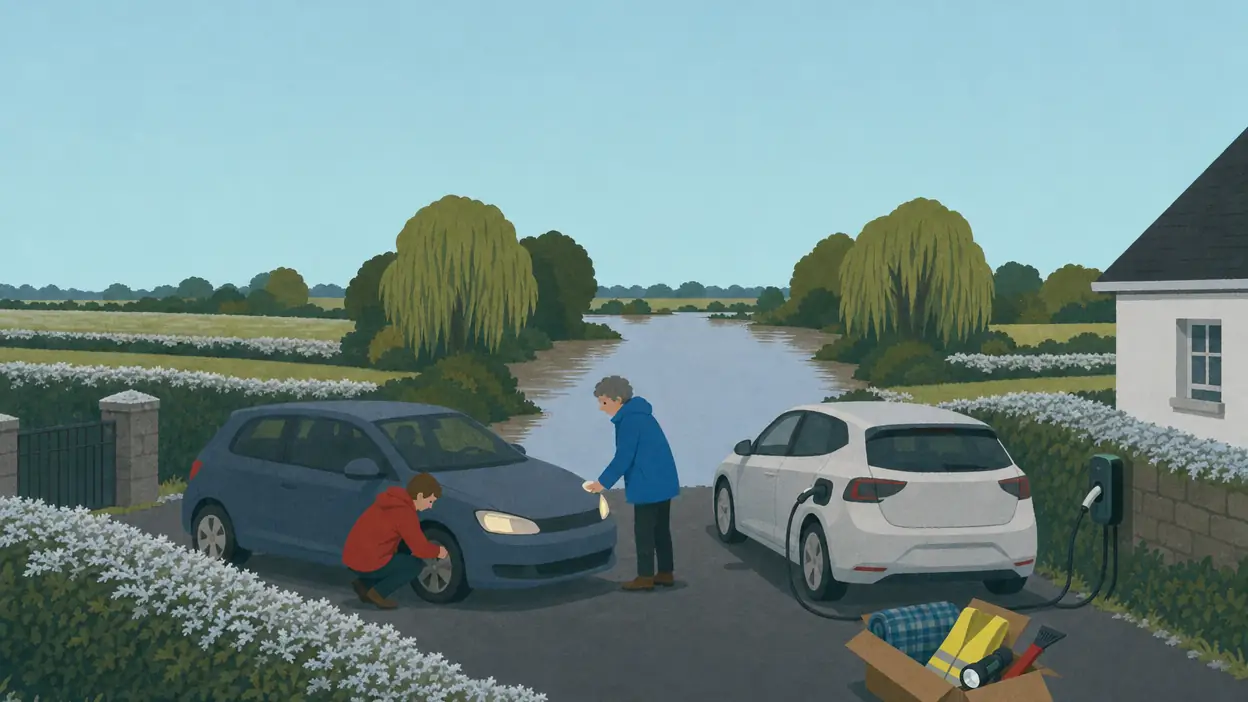
Weekly checks and winter kit
- Lights: check headlights, parking lights, indicators, brake lights and reversing lights.
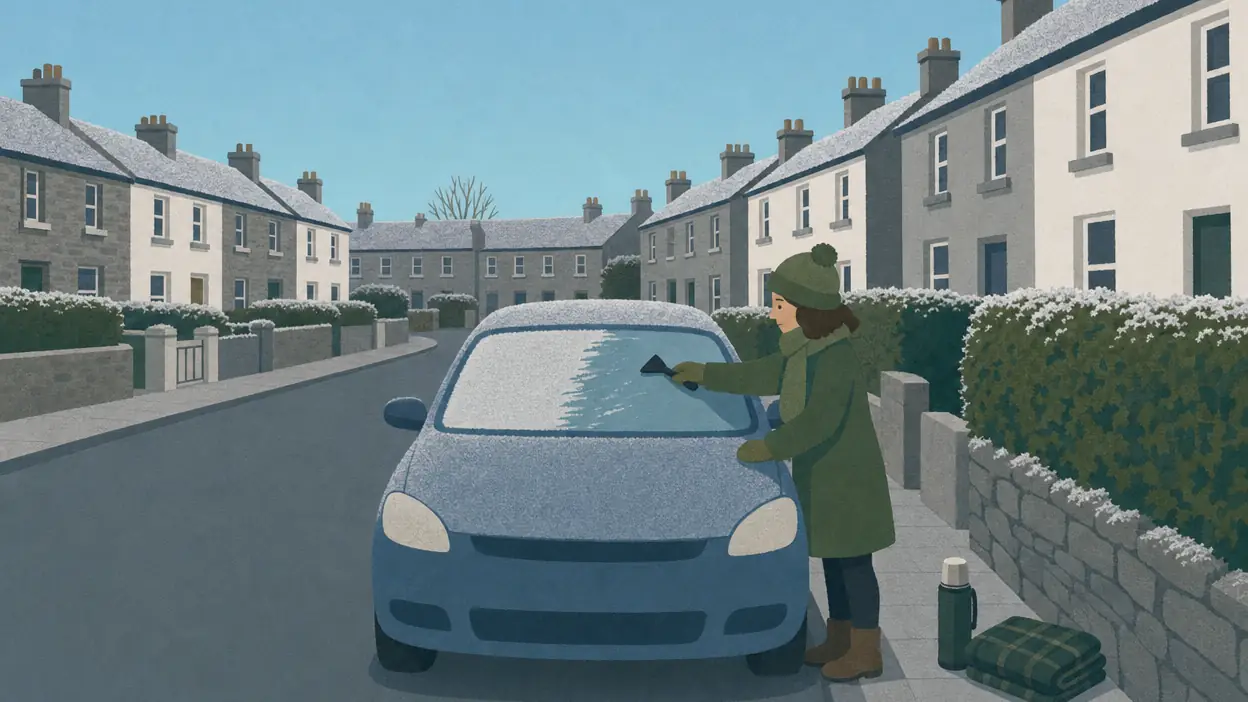
- Wipers: replace worn blades. Check that the screen wash works and use the correct washer additive. Water alone freezes more readily and does not clean oily grime well. Never put engine antifreeze in the washer bottle.
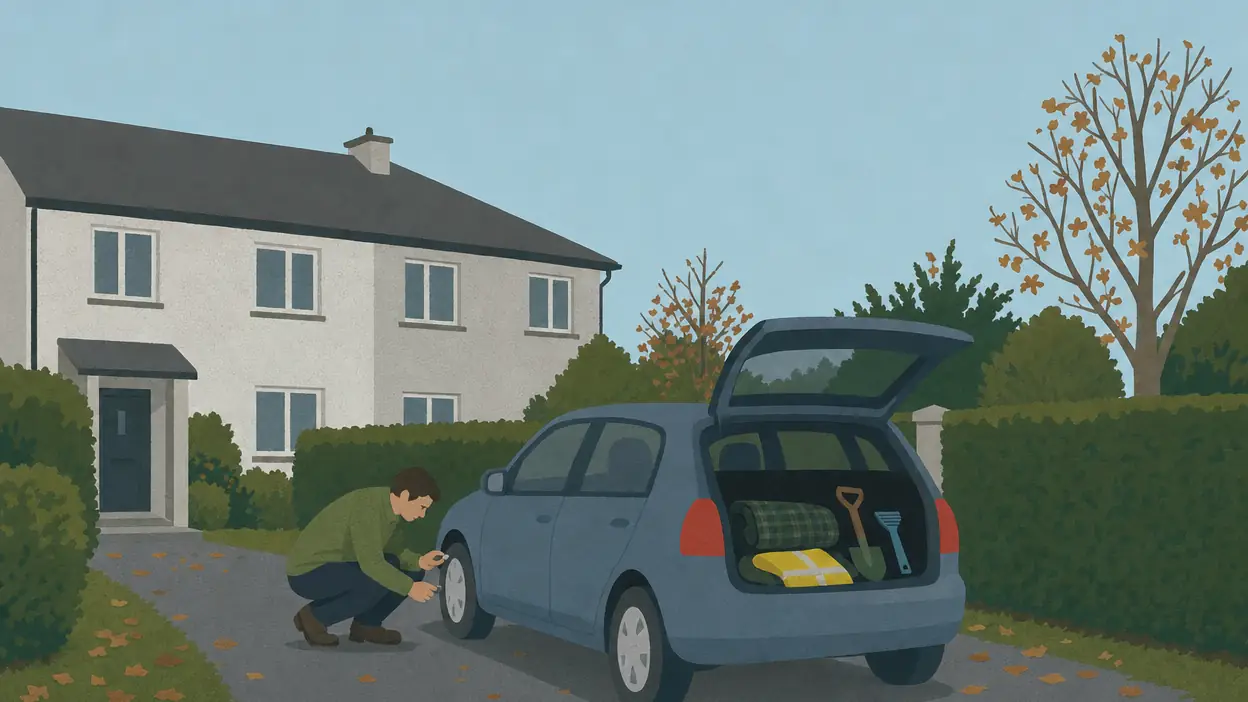
- Tyres: check pressure, tread and damage. The legal minimum tread is 1.6 mm; RSA advice is to change tyres at 3 mm. See checking tyres before winter for the full routine.
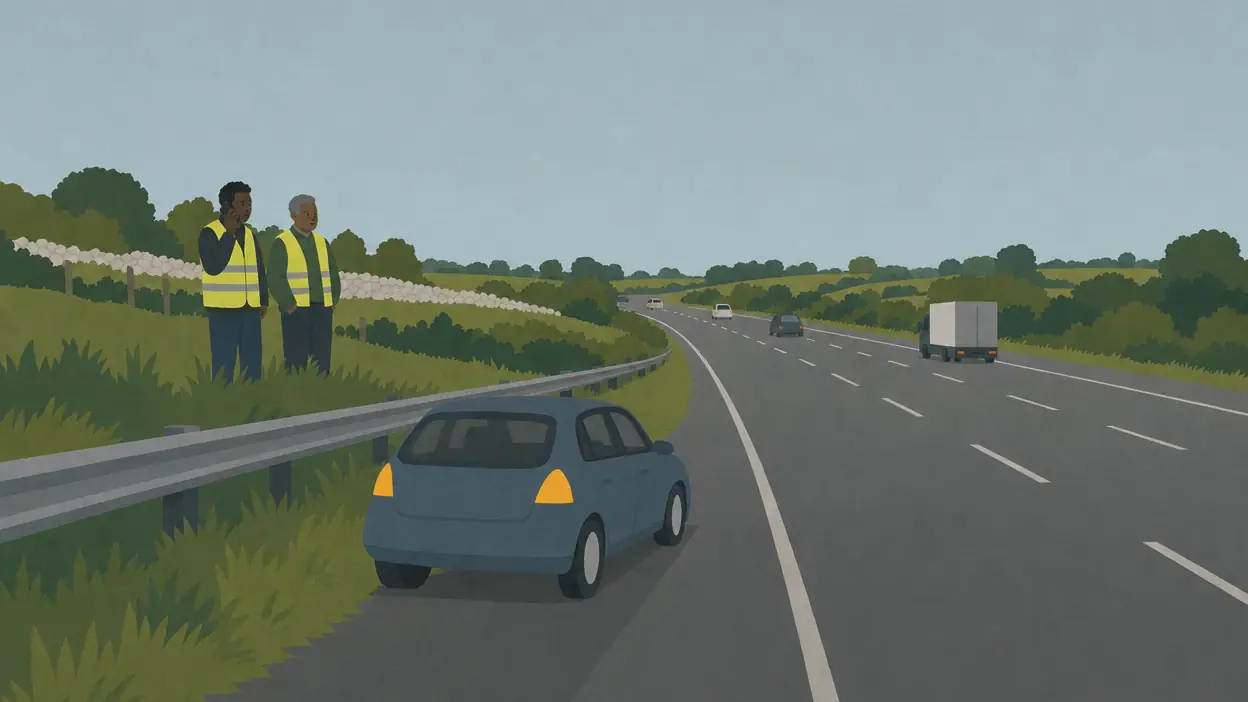
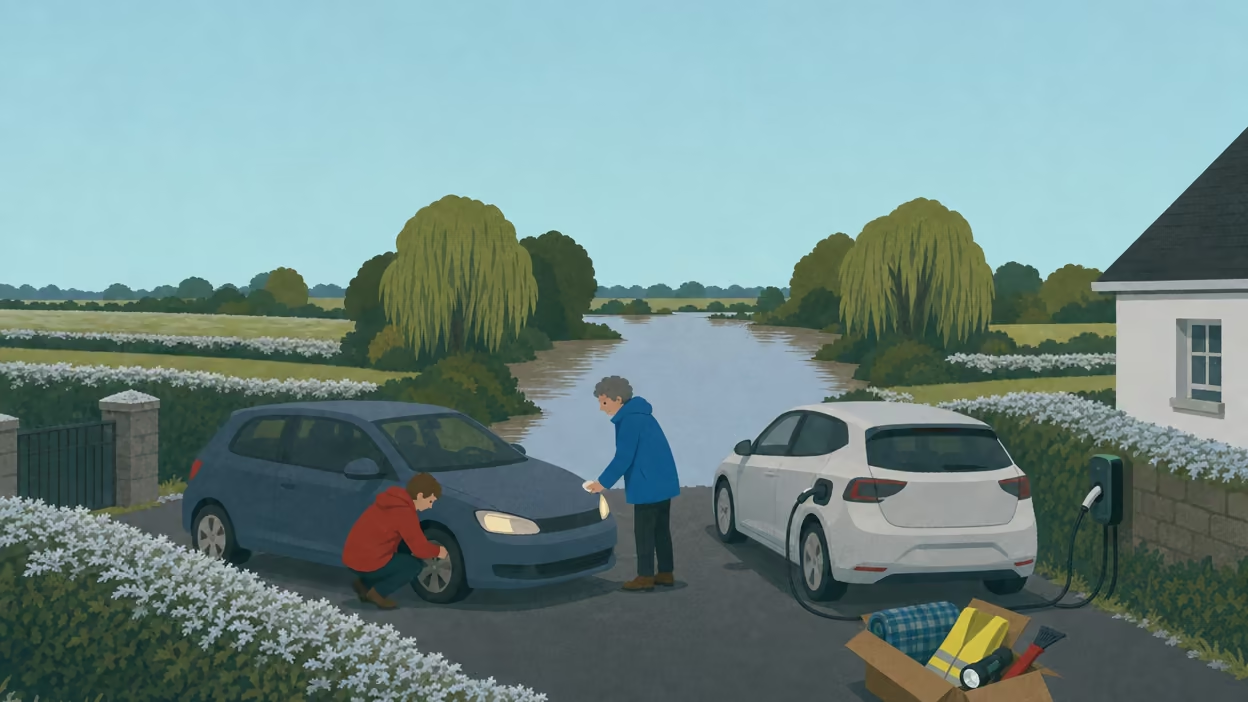
- Kit: check for warm blankets, high-visibility jackets, a torch and spare batteries, de-icer and an ice scraper. See being stranded in a car for the full kit and breakdown advice.
Dashboard warning lights: use your manual
Check your manual for warning lights that mean stop as soon as it is safe, and follow its instructions. Do not ignore a check-engine or service-engine warning; contact a garage.
Brake fluid also needs attention. Check the level through the reservoir without opening its cap, which can let dirt in. If the level is at or below minimum, contact the garage immediately.
Petrol and diesel: fuel, oil, coolant and the battery
Check engine oil at least every fortnight and before a long journey, using the oil your manufacturer specifies. Follow the manual’s method and service intervals.
Check coolant with a cold engine. Follow the maker’s coolant and antifreeze specification and concentration. Never open a hot engine’s coolant cap, and keep engine antifreeze out of the screen wash.
Difficult starting can be a sign of a weak battery, especially in cold weather. AA Ireland says batteries generally need replacing every five years. Ask the garage to check a battery that struggles to start the car.
Electric cars: charge, cold weather and tyre wear
A charger needs electricity: charging stops if a power cut removes its supply.
Cold weather reduces range. ZEVI advice is to use preconditioning, warming the battery before driving. Use your model’s manual for how to do this.
Check tyre wear, pressure and damage on an electric car too.
Keep your compatible charging cable in the car. ESB’s standard chargers are untethered, meaning they do not have a cable attached for you to use.
For using a compatible car to power appliances, see your EV as a backup battery.
An EV can still have a flat 12-volt battery
Most electric cars have a small 12-volt battery for accessories as well as the large battery used for driving. Using accessories while the car is off can flatten the small battery even when the driving battery has charge left.
Jump-starting is model-specific. Check the exact model and year manual, or call your breakdown provider. Do not assume an EV can jump-start another car: Nissan’s ARIYA guidance, for example, prohibits this and says not to charge its driving battery while jump-starting its 12-volt battery. Use your own model’s instructions.
For recovery, tell the breakdown provider that the car is electric and give its model. Follow the manufacturer’s recovery instructions. UK Department for Transport guidance recommends a flatbed, trailer or dolly wheels, which lift wheels off the road. Do not arrange ordinary wheels-on-road towing without the correct instructions.
Servicing and the NCT
Follow your manufacturer’s service schedule. The NCT is not a substitute for regular servicing.
For ordinary private cars, the first NCT is at four years, then every two years until the ten-year anniversary, then annually. Historic vehicles have exceptions. Check your car’s actual due date with NCTS rather than working it out from a general rule.
Common questions
Can an electric car have a flat battery when it still has charge?
Yes, its small 12-volt accessory battery can go flat while the large driving battery still has charge. Check the manual or contact your breakdown provider for help with your model.
Does the NCT replace servicing?
No, follow the manufacturer’s service schedule as well.
What should I check each week?
Check lights, wipers, screen wash and tyres, and follow the manual for your model.