A solar storm is a disturbance caused by activity on the Sun. It can disturb Earth’s magnetic field, affect satellites and radio signals, and drive electrical currents through long power lines. Severe space weather is a recognised Irish risk: the 2023 assessment lists it as Low Probability High Impact.
EMP means electromagnetic pulse: a sudden burst of electromagnetic energy. A nuclear explosion high above the ground can produce effects over a wide area. A solar storm is not the same as the full pulse from a nuclear explosion.
The short answer
Prepare for disrupted services. Power, radio and satellite services can be affected by severe space weather. That does not mean every phone is destroyed. Ordinary household preparation is useful: water, food, medicines, warmth, light, a radio and written contacts.
Start here
For official updates and practical steps, use handling a power cut and national service disruption. Keep a radio, charged power banks and contact details on paper. The Office of Emergency Planning also recommends a road map in case GPS is unavailable.
Read keeping in touch for keeping in touch and preparing for wider crises for wider disruption. These cover the household needs in the official checklist without needing a separate set of solar-storm supplies.
The scene this guide is for
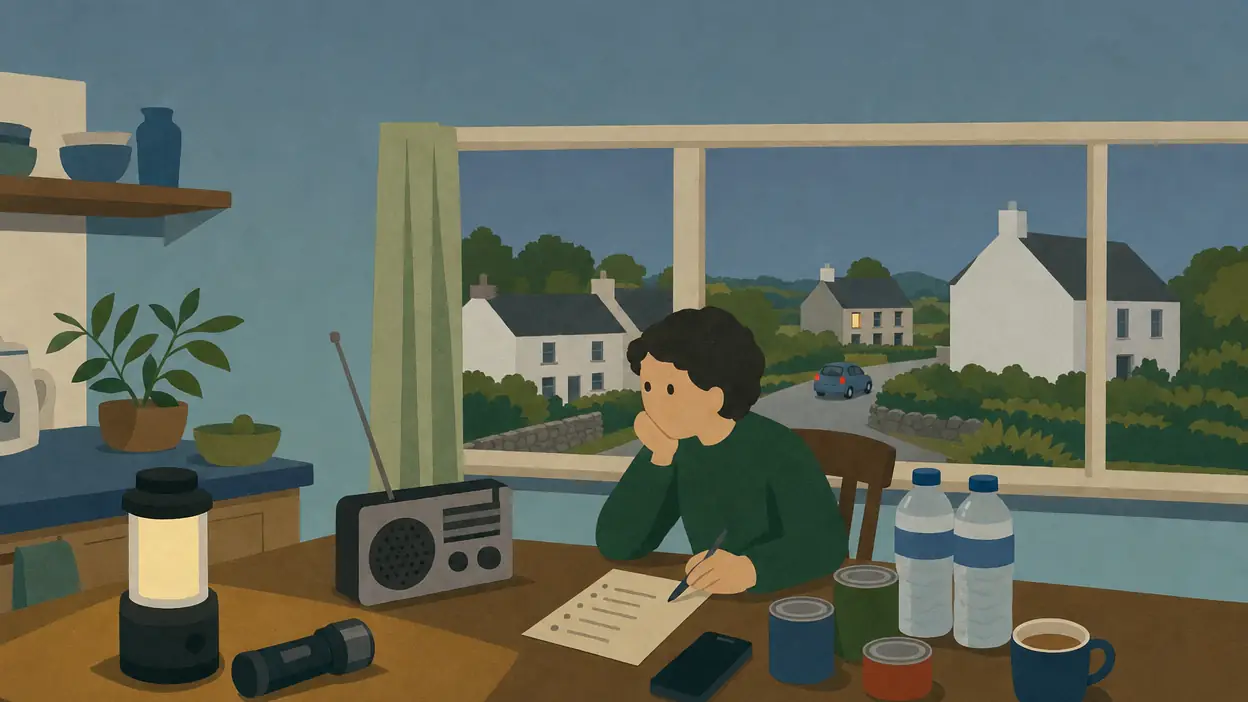
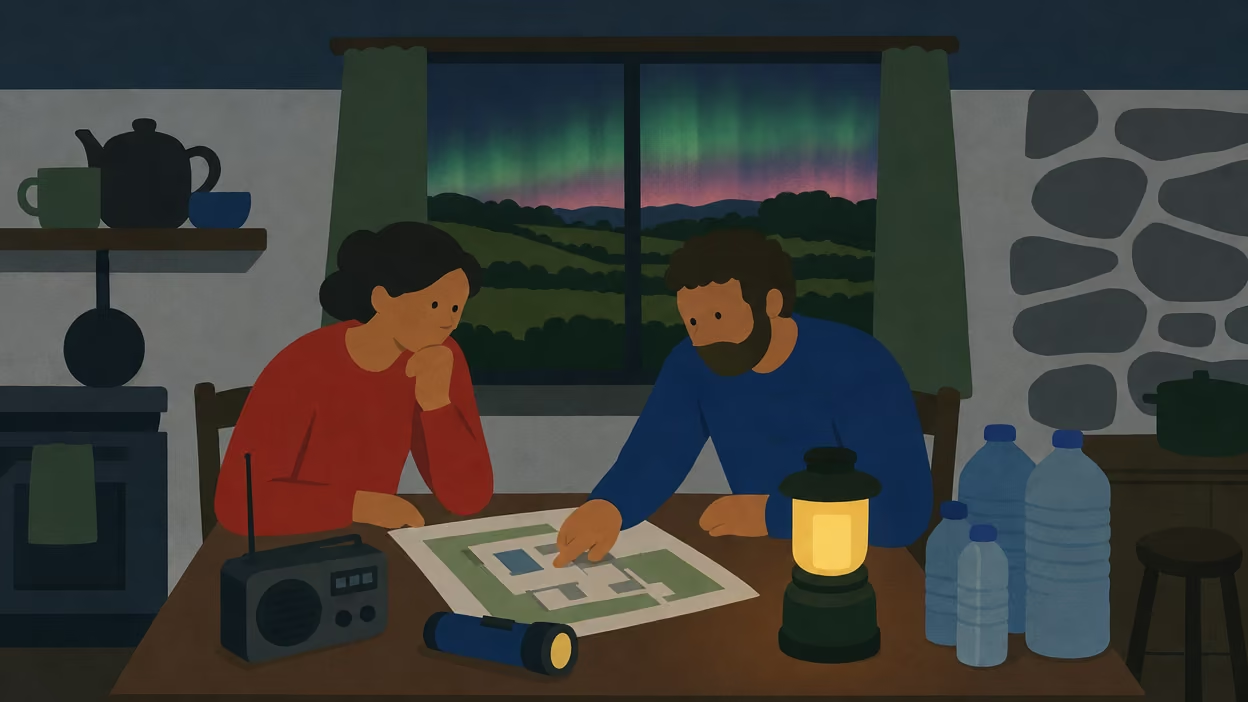
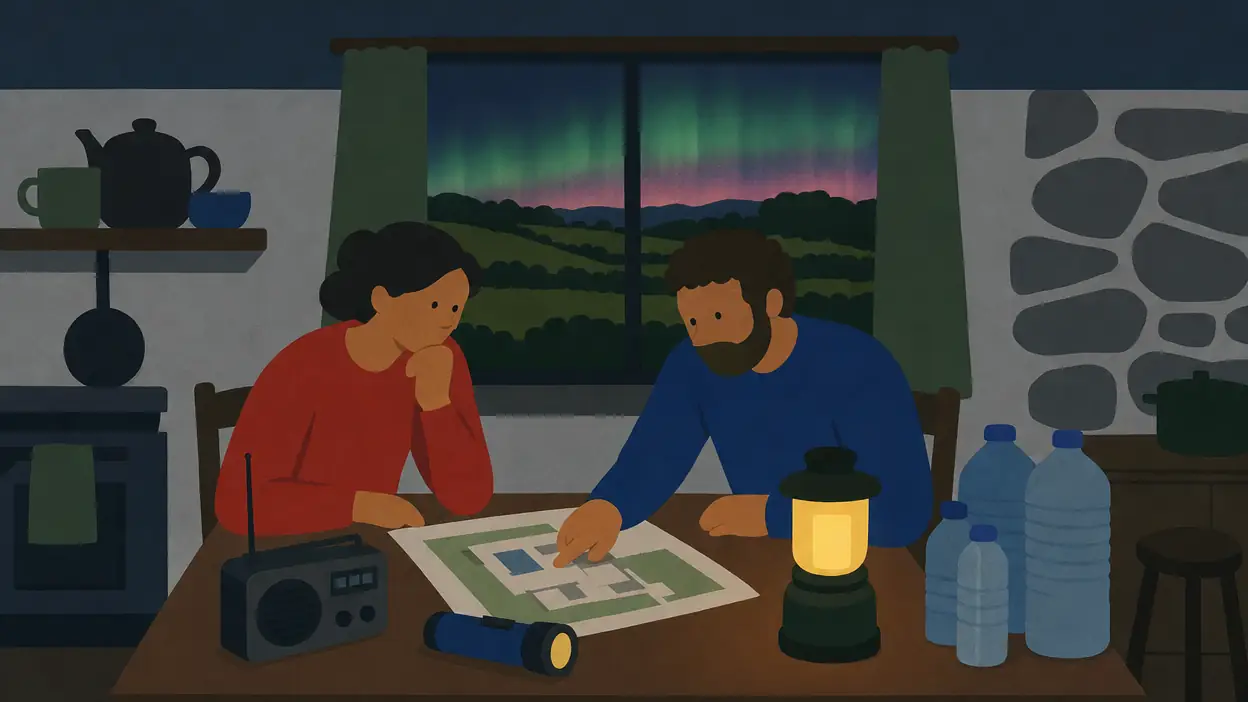
Picture a household hearing reports of a severe solar storm. The practical concern is whether electricity and communications will work. Those are services space weather can disrupt. A radio, light and written household plan give you ways to manage a service failure.
What Ireland’s assessments actually say
The National Risk Assessment for Ireland 2023 places space weather among Low Probability High Impact risks, monitored at departmental or agency level.
The 2024 overview of strategic risks, section 4.3, names space weather as a risk to electricity, transport, satellites and global connectivity.
The 2017 assessment said space weather fell below the threshold for inclusion and remained under review.
What could happen, and what has happened
Long power lines can pick up currents caused by changes in Earth’s magnetic field. Satellites and radio signals can also be affected. GPS depends on satellite signals, so navigation can become unreliable without the phone itself being destroyed.
In March 1989, a storm left six million people in Québec without power for nine hours. The Danish Emergency Management Agency records that in 2003, up to 50,000 people in Malmö lost electricity for half an hour to an hour and a half. These are recorded events, not forecasts for Ireland.
In May 2024, ESA reported no damage to its spacecraft. Increased drag in the atmosphere complicated keeping satellites in orbit and tracking debris. ESA’s experience does not tell us that every satellite operator escaped disruption.
EMP: what is known, and what is myth
A nuclear EMP has several parts. The fast part, called E1, can threaten electronics. E2 resembles lightning. The slower E3 affects long conductors, such as power lines.
Myth: every car stops permanently
The US EMP Commission tested 37 cars made from 1986 to 2002. It observed no subsequent effects in cars exposed while switched off. In running tests, three cars stalled at approximately 30 kV/m or above, a measure of electric field strength. Dashboard electronics in one car needed repair.
Testing stopped when a car showed an unusual response, so the fields were not pushed higher. These limited tests do not guarantee that modern cars or electric vehicles would survive. They also do not support the claim that every car would stop permanently.
Myth: a Faraday bag label proves protection
A Faraday bag is intended to shield equipment from electromagnetic energy. Performance varies, and gaps at closures can let energy through. CISA guidance recommends evidence that the complete bag was tested. Check the complete-bag test evidence before relying on it for EMP protection.
Myth: the grid would certainly be gone for years
The UK risk register describes a severe solar-storm scenario, not a certainty. It separates a storm lasting one to two weeks from power recovery. Some urban safety trips could recover in hours. Replacing transformers in remote coastal areas could take several months, with backup generation envisaged during replacement.
These are UK planning assumptions, not Irish restoration forecasts. Recovery times depend on the damage and location.
Prepare for a long loss of power and communications
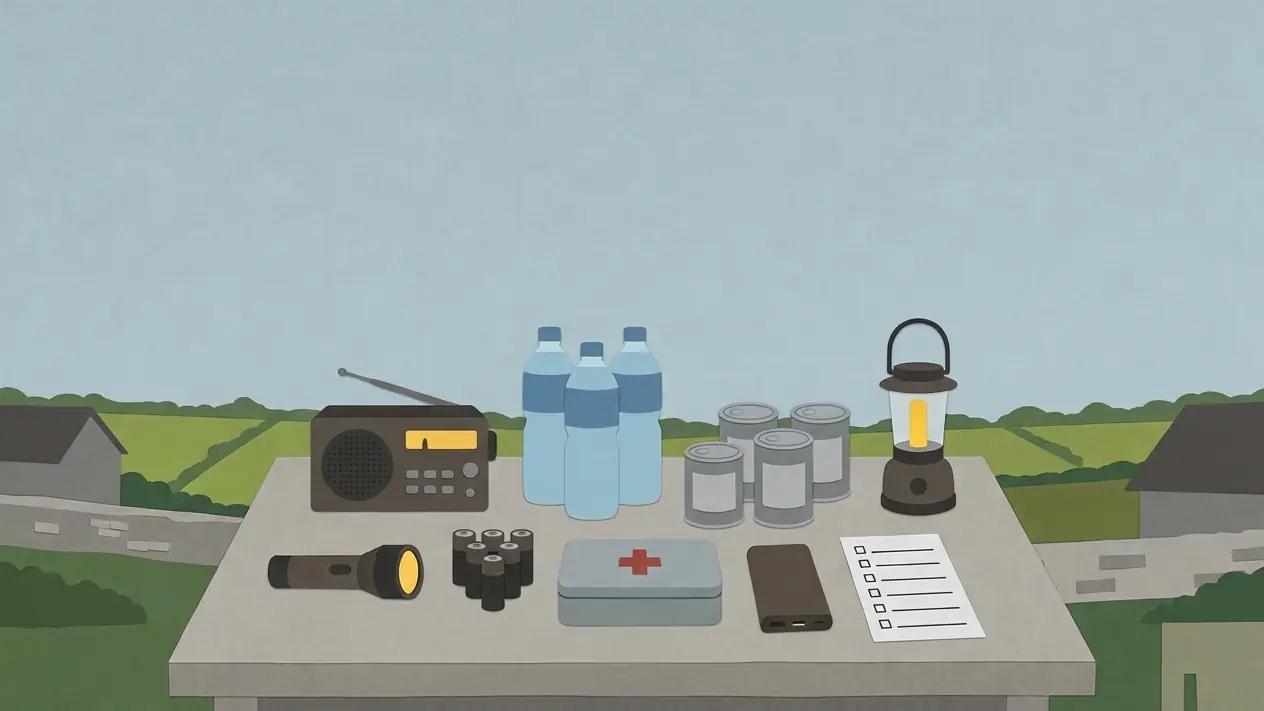
Use the ordinary emergency checklist: drinking water, stored food, medicines, warm clothing, a torch, radio, power banks, written contacts and a household plan. Keep a road map available too. The checklist supports these practical preparations without requiring specialist shielding products.
Plan around what your household needs when a service is unavailable.
Common questions
Would a solar storm destroy my phone?
Solar storms can affect satellites, radio and long power lines. Losing a signal and having a broken phone are different problems.
Is it dangerous to go outside during a solar storm?
ESA says Earth’s atmosphere and magnetic field protect people at the surface. Aviation and space need separate consideration.
Should I buy special bags before ordinary supplies?
Start with the official household checklist and a plan for lost services. CISA calls for evidence of complete-bag testing.