Put staff safety and the closure decision ahead of trading. At Red, follow the authorities’ instructions. The HSA asks employers to plan for adverse-weather driving and says workers should never feel pressured to complete a dangerous journey.[1][2] Decide in advance what happens to payments, cold stock and customer records. Check insurance wording before relying on lost-income cover.[4][5][7]
The scene this guide is for
It is the evening before a storm. Your café has an early delivery, two people are due to open, and the card terminal uses the same broadband connection as the till. The fridge is full. You are home with the only copy of the alarm code.
A useful continuity plan answers the morning’s questions before anyone starts travelling: are we opening, who decides, who tells staff, and what can safely wait?
Start with the jobs that cannot wait
Local Enterprise Office Kildare’s archived continuity guidance examines staffing, safety, suppliers, operations, finance, cash flow, insurance and communication.[6] Those headings still make a useful planning checklist. The old programme and voucher mentioned on that page are historical, not a current funding offer.
For your business, write down:
- The essential activity: what must happen to avoid harm or a serious loss?
- The people and inputs it needs: staff, premises, power, water, internet, suppliers and records.
- The safe fallback: reduced service, remote work, rescheduling or closure.
- Who has authority: a named decision-maker and somebody who can act if they are unavailable.
- How people hear: staff, customers, delivery drivers and the landlord where relevant.
This is an editorial worksheet built from those continuity headings. Fill it with actual names and contact details. “The manager will deal with it” is incomplete if nobody can reach the manager.
Warnings, staff safety and travel
The HSA’s weather-warning guidance says Red means taking action to protect people and property and following the authorities’ advice. Its driving guidance asks whether a journey is necessary and whether it should be changed or delayed.[1][2]
- Before the warning starts, decide opening arrangements and tell staff before their normal departure time.
- During Red, follow the current official instructions for your area and activity. Do not send staff out merely to check whether the premises are all right.
- For any necessary work journey, assess the actual route and conditions. Give staff a contact and an arrival arrangement.[2]
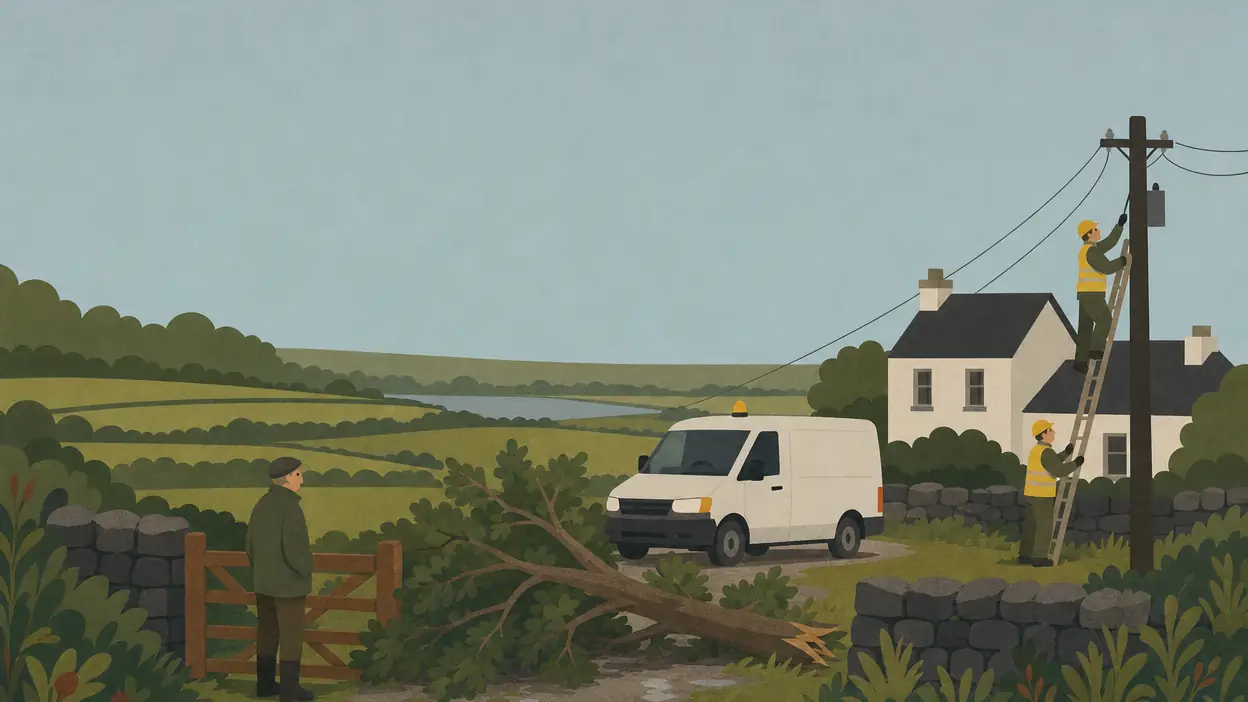
- After the warning, check access again. A warning ending does not clear fallen trees or make damaged electrics safe.[8]
The RSA’s Storm Éowyn advice urged people not to travel during that storm’s Red warning, and to avoid unnecessary travel after it passed.[3] Use current warning instructions for the next event, rather than treating a colour as permission to improvise.
Agree pay, leave and remote-working arrangements in advance with appropriate employment advice. This guide gives no general promise about pay during closure: safety instructions and employment entitlements are separate questions.
One page that still works offline
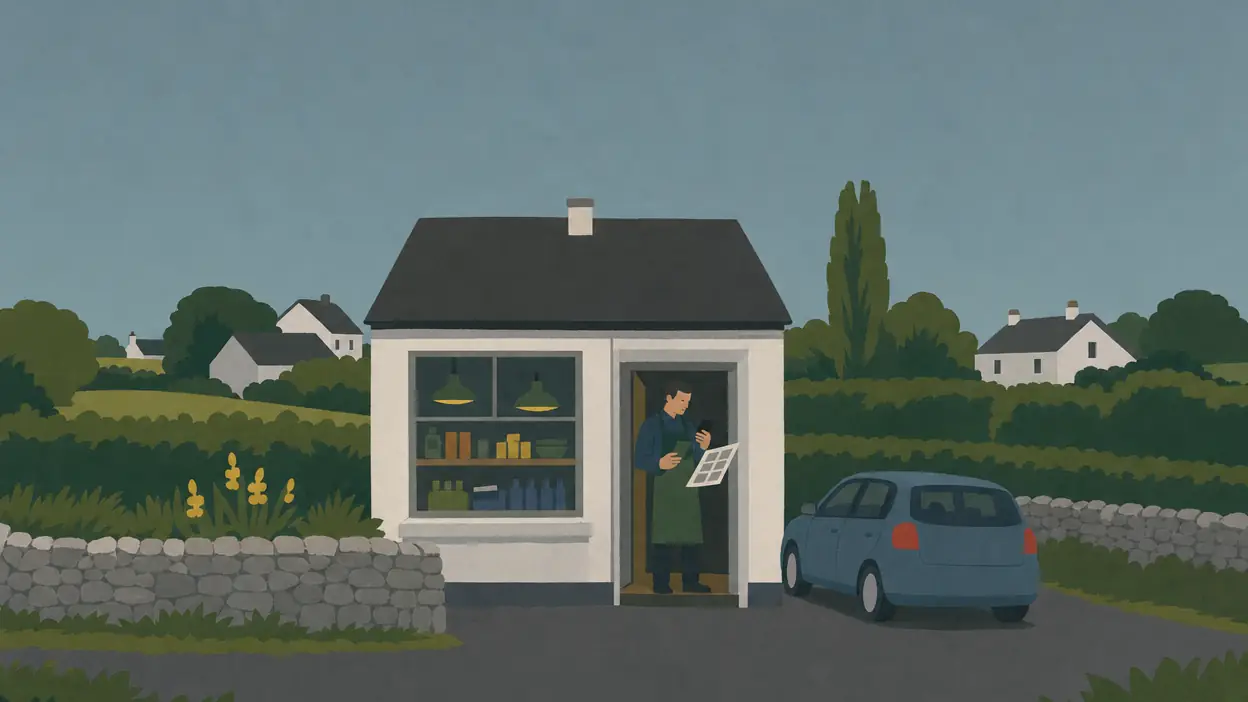
Keep a protected paper copy of the immediate-response information where authorised staff can reach it. Keep another accessible copy away from the premises. This is a practical way to make the continuity and communication work in LEO’s guidance usable during a connection failure.[6]
| Information | What to record |
|---|---|
| Staff | Contact method, decision-maker and backup person |
| Premises | Landlord, keyholder, alarm contact and safe access arrangements |
| Utilities | Account references and official fault contacts |
| Suppliers | Who can stop or reschedule deliveries |
| Payments | Terminal provider, merchant support and approved fallback arrangements |
| Insurance | Policy number, broker and claims contact |
| Technology | Support contact and how authorised staff recover essential records |
Keep access codes and customer information restricted to those who need them. A response sheet does not need a complete customer database. Review it when staff, suppliers or systems change.
If the card terminal or till stops working
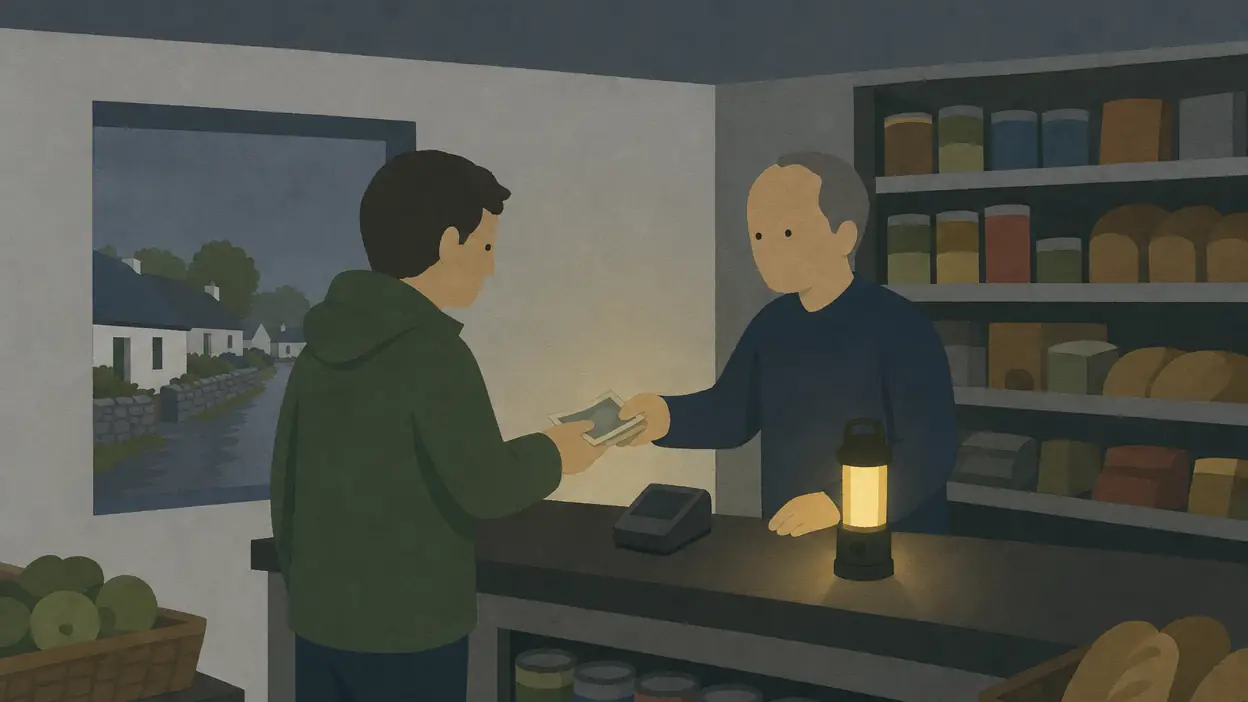
Plan this with your payment provider before the outage. A terminal, till and broadband connection are separate things to check; do not assume that changing one restores the entire sale.
- Ask the provider what your equipment can do without its normal connection, and what transactions it permits.
- Choose a fallback you can actually operate: cash with change and receipts, rescheduling, or temporarily stopping sales.
- Tell customers before they order which payments you can accept.
- Keep a record of completed sales, then reconcile them when systems return.
- Do not invent a card-recording workaround. Obtain your provider’s instructions before the event.
These are operating decisions to agree, not claims that every terminal has an offline mode. There is no universal transaction limit in this guide. See Cash and payments during an outage in Ireland and When phones and internet are down in Ireland.
Cold stock: measure, record, decide
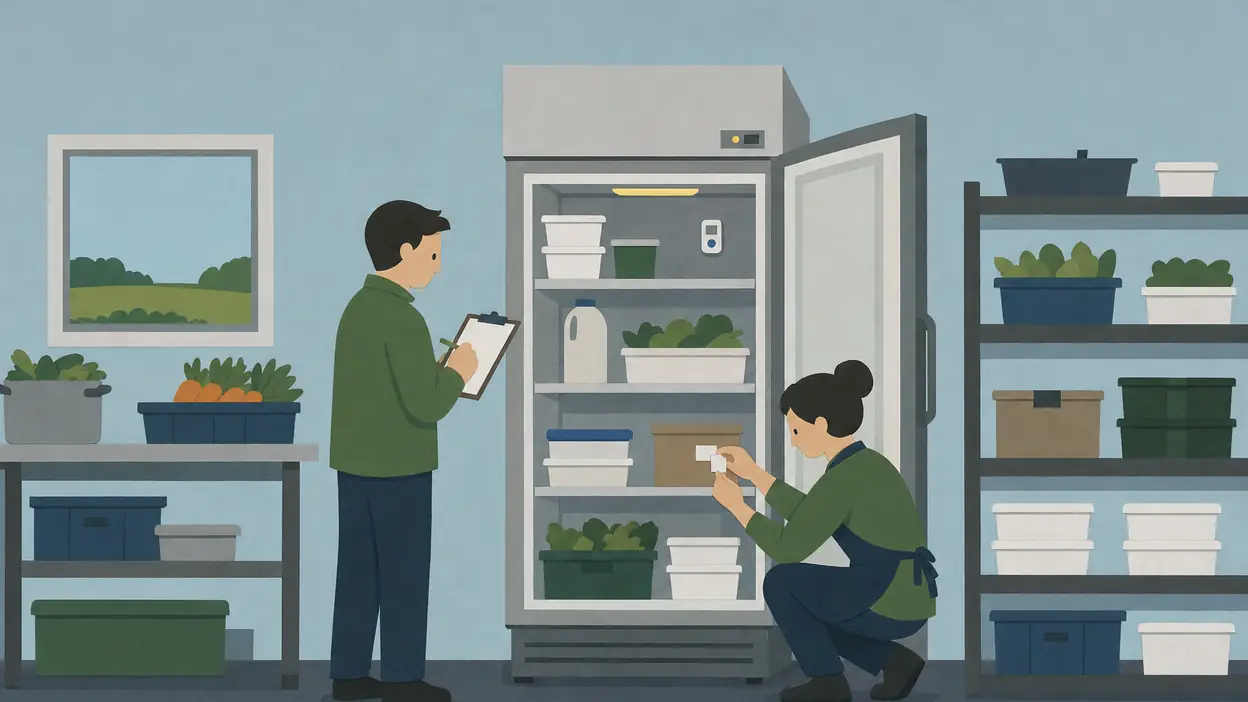
The Food Safety Authority of Ireland (FSAI) gives specific advice for food businesses during a power outage. Check fridge and freezer temperatures. If chilled food is likely to have been above the safe chilled limit for longer than four hours, discard it. Fully defrosted meat, fish or dairy from the freezer must also be discarded.[4]
- Record the outage and the readings you have, including uncertainty about the time.
- Use the FSAI limits, rather than assuming a cabinet is safe because power has returned.
- If in doubt, throw it out. That is the FSAI’s stated rule.[4]
- Before restocking, check that the equipment works properly and has reached the correct temperature, especially after flooding.[4]
How we worked this out
This is the FSAI’s published limit, not a calculated prediction of fridge performance. Chilled food must be kept at 0 to 5 degrees Celsius. If it was likely above 5 degrees Celsius for longer than four hours, discard it. Food remaining frozen can continue to be frozen while below minus 18 degrees Celsius. There is no assumption here that every closed fridge stays cold for four hours.[4]
Use your food-safety procedures to document what was discarded. Photograph affected stock safely and keep the records for the insurer; do not retain unsafe food simply to preserve evidence. For home supplies, see Power cuts in Ireland: what to do.
Insurance: ask about the trigger, not just the title
Insurance Ireland explains that business interruption policies generally cover lost income following physical damage caused by a risk named in the policy.[5] Its explanation was published during the pandemic; the general description is useful, but the policy wording remains decisive.
Do not assume that a storm warning, a supplier’s failure or a power cut away from your premises automatically qualifies. Ask your broker or insurer to explain your own cover in writing.[5]
- What event triggers payment? Must there be insured damage at your premises?
- What about utility failure or blocked access? Ask whether these are covered and under what conditions.
- Are spoiled stock and machinery covered separately?
- How long does lost-income cover last, and what records prove the loss?
- What must you do immediately after an incident? Record the claims contact and notification procedure.
Keep the answer with the plan. A reassuring policy title is less useful than knowing the conditions that apply to your business.
Backups: recover a record before you need it
Ireland’s National Cyber Security Centre (NCSC) distinguishes cloud storage from a backup: a backup preserves a recoverable copy from a point in time. It says business backups should be secure and not directly connected to the business network, because attackers may try to damage them too.[7]
- Identify what must be recoverable: orders, accounts, bookings and documents needed to restart.
- Ask your support provider where the separate backup is, who can use it and how recovery works.
- Check that a needed file can be recovered, rather than stopping at a successful backup message.
- Keep the recovery contact available offline.[7]
The file-recovery check is a practical verification step, not a frequency mandated by NCSC. Choose a review schedule that reflects how often your essential information changes. See Make getting ready a project.
Reopen deliberately
The HSA advises leaving immediate storm clean-up to competent emergency and professional operators. It warns about fallen trees tangled with power lines, chainsaw work and working at height.[8]
- Check the premises and approach for damage. Keep people away from hazards and arrange competent assessment where needed.
- Check food equipment and stock before resuming food service.[4]
- Confirm the service you can provide, including payment and staffing arrangements.
- Tell customers and suppliers what is reopening and what remains delayed.
- Record what failed in the plan and assign the next action to somebody.[6]
Use After the storm: damage, claims and financial help for household recovery. For the business, the useful end point is a safe service that staff can explain and operate, with the missing arrangements written down for repair.
Sources (8), all checked 2026-10-29
All checked 2026-10-29. All Irish. Insurance Ireland is an industry body; safety advice uses official public bodies.
- HSA, weather warnings.
- HSA, driving for work in winter.
- RSA, Storm Éowyn Red-warning travel advice, January 2025.
- FSAI, power outage in a food business.
- Insurance Ireland, information and guidance, 20 March 2020.
- LEO Kildare, archived manufacturing business-continuity guidance.
- NCSC Ireland SMECORE, backing up information.
- HSA, safety during storm clean-up, 24 January 2025.
prepared.ie is independent public information, published by Gallan Software. It is not affiliated with the HSA, FSAI, NCSC or any business-support body. In an emergency call 112 or 999.