Most winter mould in Irish homes starts with condensation: warm, moist air meeting a cold wall or window.[1][2] The cheapest fixes cost nothing: less moisture in the air, a little steady heat, and vents left open. A dehumidifier can help, but it does not fix a leak, a cold wall or a blocked vent. If you rent, the landlord has to keep the home free from damp.[3]
The scene this guide is for
It is November. Black spots are back on the bedroom ceiling and behind the wardrobe. Washing is drying on the radiators, the windows stream every morning, and someone suggests taping over the wall vent to keep the heat in. A child in the house has a cough that will not clear.
Condensation, a leak, or something else?
Dublin City Council’s condensation leaflet sets out how to tell them apart:[1]
- Condensation shows up on or near windows, in corners, and in or behind wardrobes and cupboards: cold places with little air movement. It happens in cold weather even when it is dry outside.
- A “tidemark” around the edge of a damp patch points to another cause, such as a plumbing leak, loose roof tiles or rising damp. Fixing condensation will not cure it.
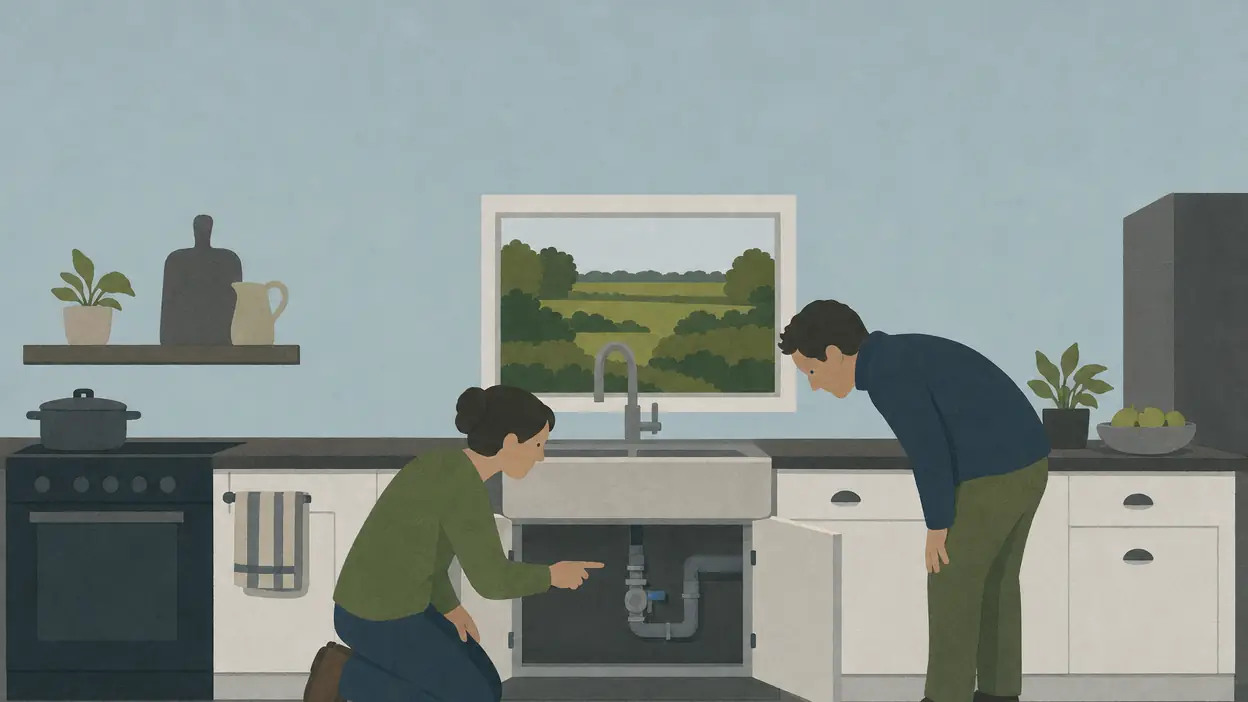
A patch that grows after rain, sits under a bathroom or near a pipe, or stays wet in dry weather needs the leak found and repaired. If you rent, that is the landlord’s job (see if you rent).[3][4]
Cut the moisture you make
A household puts a lot of water into the air. The council’s leaflet estimates that drying clothes indoors adds about 9 pints a day, cooking and the kettle about 6, and two people at home about 3.[1]
- Cook with lids on and turn the heat down once the water boils.[1]
- Wipe the windows and sills dry each morning, and wring the cloth out rather than drying it on a radiator.[1]
- Avoid bottled gas heaters. The council’s leaflet says they put about 8 pints of moisture into the air from an average cylinder, and some tenancy agreements ban them.[1]
Keep the vents open, even in winter
Closing a fixed vent to keep the heat in is a common mistake, and it can be dangerous. The Government’s ventilation guide says:
“Always leave trickle vents and wall vents open and unblocked by curtains or furniture, even in winter. You will use a little more energy to heat your home but you will have fresh air to prevent illnesses.”[2]
An open fire, and any stove, gas fire or cooker that takes its air from the room (an open-flued appliance), needs permanent ventilation, SEAI says: for example a vent fixed in the open position that cannot be closed.[7] Gas Networks Ireland’s advice is: “Ensure the rooms in your home containing heating appliances are properly ventilated - never block vents.”[8] Blocked flues and chimneys, and appliances that are badly ventilated, are among the causes of carbon monoxide poisoning the HSE lists.[9]
- Draught-proof gaps, not vents. Do not draught-proof a room with a condensation problem, a room with a heater or cooker that burns gas or solid fuel, or the kitchen and bathroom windows.[1]
- Clean vents and extractor fans at least every six months, following the maker’s instructions.[2]
- Do not let building work block a vent or flue. This includes new insulation or windows.[10][2]
- Fit a carbon monoxide alarm as well as keeping the vents open. See carbon monoxide alarm kit options: Carbon monoxide alarm, and where alarms go and what to do if one sounds.
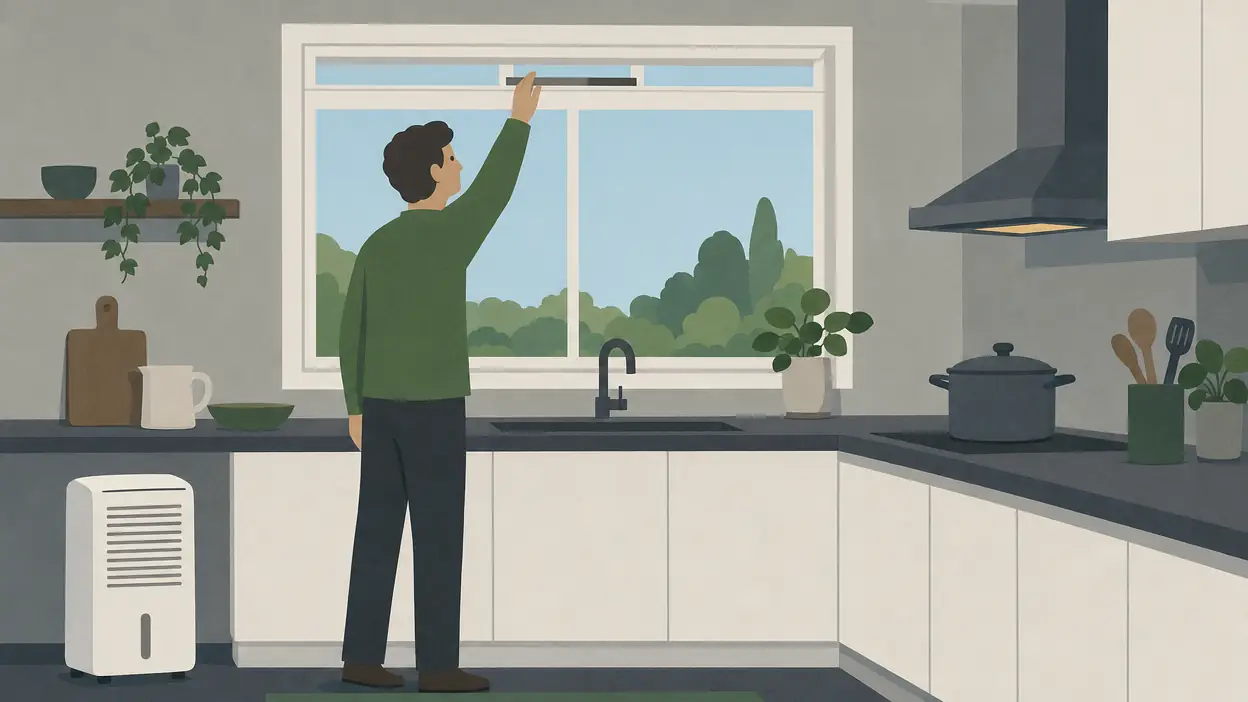
To air the house quickly, open a small window downstairs and one upstairs on opposite sides for about 30 minutes, with the inside doors open.[1] Do not leave everything wide open all day in the cold: that cools the walls and makes condensation more likely.[1]
Heat helps
Cold walls collect water. The council’s leaflet says a medium-to-low heat through the whole house works better than one hot room and cold bedrooms, and keeping the heating on low all day in cold weather helps control condensation. Keep an eye on the meter so you know what it costs.[1] Insulation and draught-proofing warm the walls too, as long as the vents stay open.[1][7] If the cost is the problem, see help with the cost.
Cleaning mould safely
Clean the mould, then deal with the damp, or it will come back.[1]
- Wipe or spray, do not brush or vacuum. The council’s leaflet says not to remove mould with a brush or vacuum cleaner. Use a mould or fungicidal cleaner and follow the instructions on the label.[1]
- Never mix cleaning products. The National Poisons Information Centre warns that bleach and toilet cleaners react together and release dangerous gases. Open a window as you work. If you breathe in fumes, get to fresh air and get medical advice if symptoms do not settle.[11] Symptoms can be delayed. The Poisons Information Line is 01 809 2166, 8am to 10pm every day.[11]
- Dry-clean mildewed clothes and shampoo carpets, the council’s leaflet says.[1]
- Repaint with a fungicidal paint after treatment. Ordinary paint or wallpaper over it cancels the effect.[1]
- If you have asthma, the HSE says to wear a dust mask when you are dusting or cleaning. If you can, ask someone else in the house to do the mould.[5]
If the mould keeps coming back, spreads after you clean it, or follows a leak or a flood, the cause is in the building. Get it found and fixed. After a flood, follow the flooding guide before you start cleaning.
How damp affects health
The Government’s ventilation guide says condensation and mould “can cause illness for you and your family, such as coughs, colds and other illnesses”.[2] The HSE says mould spores can cause an allergic reaction. Mould releases them when the temperature rises suddenly in a damp place, for example when the heating comes on in a damp house or wet clothes dry near a fire.[6] Mould and damp are also a trigger for asthma.[5]
If you or a child has a cough, wheeze or breathlessness that keeps coming back, talk to your GP and mention the damp. The Asthma Society of Ireland gives practical advice on making a home asthma friendly on freephone 1800 44 54 64.[5]
If you rent
By law, a rented home must not have damp and must be structurally sound inside and out. Every room must be adequately ventilated, with heating the tenant can control.[3][4] These minimum standards apply whether your landlord is a private landlord, a local authority or an approved housing body, except for communal housing let by the HSE or an approved housing body.[4]
The RTB’s steps are:[3]
- Tell your landlord in writing. Allow the landlord reasonable time to investigate and repair it. It helps to say where the damp is and how long it has been there, and to keep dated photos.
- If nothing happens, apply to the RTB for dispute resolution.
Citizens Information says you can refer a dispute to the RTB without being penalised for it.[12] You have duties too: keep vents clear, use the extractor fans, open windows during the day, keep the home heated and dry clothes outside or in a dryer.[2]
For free advice, call Threshold on freephone 1800 454 454, 9am to 9pm, Monday to Friday.[13] The RTB is on 0818 30 30 37 or 01 702 8100, 9am to 5pm, Monday to Friday.[14]
Help with the cost
Damp and cold homes often go together, and heating costs money. Start with what you may already be entitled to:
- Fuel Allowance is €38 a week in 2026, paid for 28 weeks from late September. It rises to €43 a week from the week beginning 4 January 2027.[15]
- Additional Needs Payment can help with a rise in your fuel or electricity costs. A Community Welfare Officer assesses it, and you can apply on MyWelfare.ie or on a paper form.[16]
- MABS, the free money advice service, is on 0818 07 2000, 9am to 8pm, Monday to Friday.[17]
Free insulation if you own your home. SEAI’s Warmer Homes Scheme gives free upgrades such as attic and wall insulation and draught-proofing. You must own and live in a home built and lived in before 2006 and get a qualifying payment, such as Fuel Allowance, Working Family Payment, One Parent Family Payment or Carer’s Allowance.[18][19] A surveyor then checks that your home is suitable for the work, and some homes do not qualify.[18] Citizens Information says it takes about 15 months from applying to hear from a contractor, so apply early.[19]
The Warmth and Wellbeing Scheme is closed. It was a pilot for people with chronic respiratory conditions in parts of Dublin 8, 10, 12, 22 and 24. It closed to applicants in February 2022.[20]
Common questions
Should I close the wall vents in winter to keep the heat in?
No. The Government’s ventilation guide says to leave trickle vents and wall vents open and unblocked even in winter, and a room with an open fire, or a stove, gas fire or cooker that takes its air from the room, needs a vent that cannot be closed.[2][7]
Is my landlord responsible for damp and mould?
A rented home must be free from damp by law, so tell your landlord in writing and allow reasonable time to fix it. If nothing happens, apply to the RTB or ask your local authority to inspect.[3]
How do I clean mould off a wall?
Wipe or spray it with a mould cleaner and follow the label, but do not brush or vacuum it. Never mix bleach with other cleaning products.[1][11]
Can mould in the house make you ill?
The HSE says mould spores can cause allergic reactions, and damp and mould are a trigger for asthma. See your GP if a cough or wheeze keeps coming back.[6][5]
Is there a grant to fix a damp, cold house?
SEAI’s Warmer Homes Scheme gives free insulation and draught-proofing to homeowners on certain payments, such as Fuel Allowance, whose homes were built before 2006. It takes about 15 months from applying to hear from a contractor.[18][19]
Data sources (20), all checked 2026-11-01
Footnotes
-
Dublin City Council, Controlling condensation and mould (leaflet). Tidemarks, moisture figures, drying clothes, cross-ventilation, heating, draught-proofing limits, treating mould. Checked 1 November 2026. ↩ ↩2 ↩3 ↩4 ↩5 ↩6 ↩7 ↩8 ↩9 ↩10 ↩11 ↩12 ↩13 ↩14 ↩15 ↩16 ↩17 ↩18 ↩19
-
Department of Housing, Local Government and Heritage with SEAI, Why you need proper ventilation in your home, from the Home Ventilation page (last updated 26 November 2025). Vents open in winter, tenants’ and landlords’ duties, cleaning vents every 6 months. Checked 1 November 2026. ↩ ↩2 ↩3 ↩4 ↩5 ↩6 ↩7 ↩8
-
Residential Tenancies Board, Minimum standards for rental properties. No damp, heating and ventilation tenants can control, the three steps for tenants, Improvement and Prohibition Notices. Checked 1 November 2026. ↩ ↩2 ↩3 ↩4 ↩5 ↩6
-
Citizens Information, Minimum standards for rented housing. Damp, ventilation, private, local authority and approved housing body landlords, inspections and enforcement. Checked 1 November 2026. ↩ ↩2 ↩3 ↩4
-
HSE, Living with asthma. Mould and damp, indoor air, dust mask when cleaning, Asthma Society freephone. Checked 1 November 2026. ↩ ↩2 ↩3 ↩4 ↩5
-
HSE, Preventing allergic rhinitis, mould spores section. Checked 1 November 2026. ↩ ↩2 ↩3 ↩4
-
SEAI, Ventilation systems. Background and permanent ventilation, open-flued appliances, insulated homes. Checked 1 November 2026. ↩ ↩2 ↩3
-
Gas Networks Ireland, Carbon monoxide safety precautions. Quoted wording on vents. Checked 1 November 2026. ↩
-
HSE, Carbon monoxide poisoning. Causes, including blocked flues and chimneys and badly ventilated appliances. Checked 1 November 2026. ↩
-
Gas Networks Ireland and partners, carbonmonoxide.ie: Prevention. Never block room ventilators; building work must not interfere with ventilation or flues. Checked 1 November 2026. ↩
-
National Poisons Information Centre of Ireland, Bathroom safety. Bleach and toilet cleaners must never be mixed. Checked 1 November 2026. ↩ ↩2 ↩3
-
Citizens Information, Tenants’ rights and responsibilities. Referring disputes to the RTB without being penalised. Checked 1 November 2026. ↩
-
Threshold, Get help. Freephone 1800 454 454, 9am to 9pm, Monday to Friday. Checked 1 November 2026. ↩
-
Residential Tenancies Board, Contact us. Phone numbers. Checked 1 November 2026. ↩
-
Citizens Information, Fuel Allowance. €38 a week in 2026, 28 weeks, €43 from 4 January 2027. Checked 1 November 2026. ↩
-
Citizens Information, Additional Needs Payment. Increased fuel or electricity costs, Community Welfare Officer, how to apply. Checked 1 November 2026. ↩
-
MABS, Contact MABS. Helpline 0818 07 2000, 9am to 8pm, Monday to Friday. Checked 1 November 2026. ↩
-
SEAI, Fully funded energy upgrades for eligible homeowners (Warmer Homes Scheme). The four criteria. Checked 1 November 2026. ↩ ↩2 ↩3
-
Citizens Information, Warmer Homes Scheme. Upgrades covered, qualifying payments, about 15 months to contractor contact. Checked 1 November 2026. ↩ ↩2 ↩3
-
Department of Climate, Energy and the Environment, Warmth and Wellbeing Scheme (last updated 10 June 2025). Pilot area, closed to applicants February 2022. Checked 1 November 2026. ↩
prepared.ie is independent public information. It is not affiliated with the Government of Ireland, the RTB, the HSE, SEAI or any agency.